
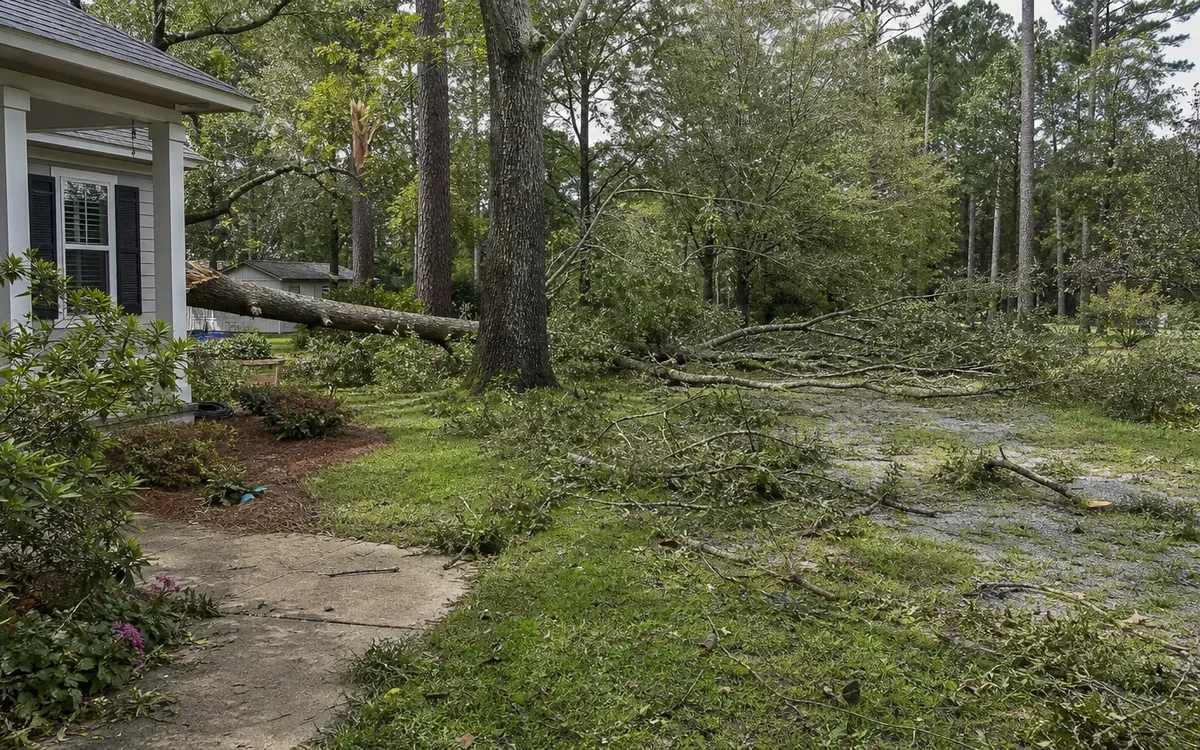
After a South Carolina storm, organize property cleanup by addressing immediate hazards first, photographing conditions before moving items, and separating vegetation from damaged household belongings and construction debris. Check instructions from your local government, insurer, and relevant professionals before placing material at the curb or authorizing repairs. Household members can sort ordinary belongings and make retention decisions, but utility dangers, unstable structures, hazardous materials, insurance coverage, and code requirements belong with the qualified provider or responsible authority.
Quick answer: Keep people away from downed lines, floodwater, unstable trees, damaged roofs, and compromised structures. Once authorities say entry is safe, photograph each affected area, make a room-by-room inventory, and divide debris into locally accepted categories. Confirm collection instructions before moving piles to the roadside, and do not mix vegetation, household contents, appliances, electronics, chemicals, or contractor debris unless the local authority specifically permits it.
What should you do before touching storm debris?
Safety and documentation come before sorting. A debris pile may conceal sharp metal, broken glass, nails, contaminated materials, insects, or electrical hazards. Standing water can also hide holes and displaced objects.
Do not approach downed or sagging utility lines. Treat every line as energized, including lines touching fences, trees, vehicles, or standing water. Report the condition to the appropriate utility or emergency authority and keep others out of the area.
Stay outside a building if you notice signs that it may be structurally unsafe, such as major wall movement, a shifted foundation, a sagging ceiling, or a partially collapsed roof. A qualified building professional or responsible public authority should determine whether entry is appropriate. A cleanout team does not make structural safety determinations.
Before moving nonhazardous items, document what happened:
- Take wide photographs of each affected room and outdoor area.
- Capture closer images of damaged belongings and building components.
- Photograph identifying details on major items when safe and useful.
- Record where each item was found.
- Make a written inventory without speculating about value or coverage.
- Preserve receipts and communications related to emergency work.
Ask the insurer what documentation it requires and whether damaged property should remain available for inspection. The household can create records, but an insurance representative decides policy coverage and claim requirements. A qualified appraiser determines value when a formal appraisal is needed.

How should storm debris be separated?
Separate debris according to local collection guidance rather than making one mixed pile. Requirements can differ among municipalities, counties, utilities, waste facilities, community associations, and special storm-response programs. Coastal and inland South Carolina properties may also face different storm effects and collection conditions.
Useful working categories include:
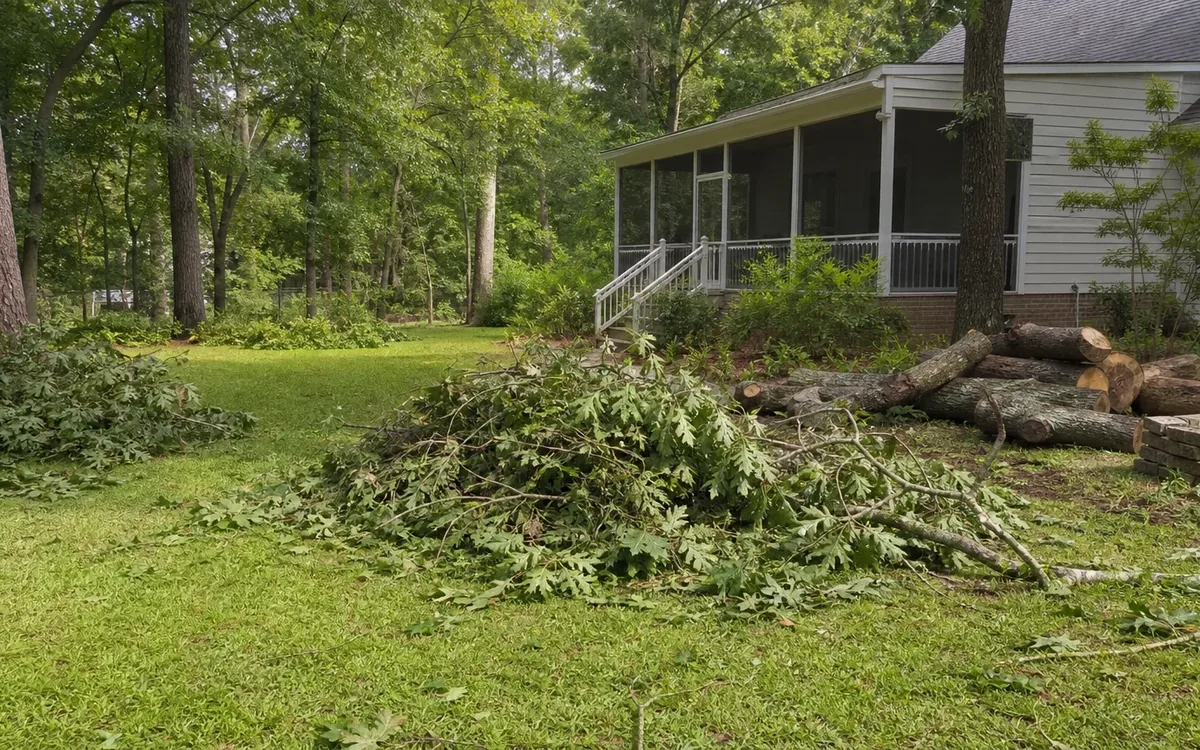
- Vegetative debris: Limbs, leaves, brush, and sections of tree material.
- Damaged household contents: Furniture, rugs, mattresses, clothing, and ordinary personal property.
- Construction and demolition material: Drywall, shingles, lumber, siding, insulation, flooring, and cabinetry.
- Appliances: Refrigerators, freezers, washers, dryers, and similar equipment.
- Electronics: Televisions, computers, monitors, printers, and related devices.
- Household chemicals: Fuel, oil, paint, pesticides, pool chemicals, cleaners, and pressurized containers.
- Potentially hazardous or regulated material: Items that the applicable authority or qualified professional identifies as requiring special handling.
Keep salvageable items apart from disposal material. Use a dry, secure area only if the building is safe and the stored items will not block exits, equipment access, or repairs. Storage is a household decision made with a separate storage provider when one is needed. It should not be treated as an automatic part of cleanup.
Clutter Cleaner of South Carolina offers code compliance support for property cleanouts statewide. A practical team may discuss sorting, access, staging, and preparation around known requirements. The agency or official with jurisdiction decides whether a property complies and what corrective action is required.
Who decides what can be saved or discarded?
The owner or legally authorized decision-maker controls ordinary keep, donate, sell, store, and discard choices. If ownership is disputed, an estate is involved, or another person has legal authority over the property, pause before removing contested items and consult the appropriate attorney, personal representative, insurer, lender, or other responsible party.
Use four decision groups for ordinary belongings:
- Retain: Important documents, sentimental objects, functional essentials, and items selected for the household.
- Review: Property that may have financial, historical, legal, or personal significance.
- Release: Items the authorized decision-maker has approved for donation, sale, recycling, or disposal.
- Restricted: Materials that require direction from a hazardous-material provider, local authority, utility, or other qualified professional.
Do not assume that wet, dirty, or broken property has no value. Photographs, documents, jewelry, collections, artwork, antiques, and family records may deserve review before disposal. If value affects an estate, insurance claim, tax matter, or sale, use an appropriate appraiser or adviser. A cleanout or move team can help isolate items for review but should not substitute its opinion for a formal appraisal.
Storm cleanup may overlap with an inherited or estate-owned property. The guide on the best way to clean out an estate explains how authority, records, valuables, and family decisions can shape that process.
Build a property-specific debris map
A simple debris map prevents repeated handling and makes responsibilities visible. Sketch the lot and building, then mark damaged rooms, blocked routes, unsafe zones, utility equipment, gates, stairs, and possible staging areas.
Assign each safe area a purpose:
- Documentation pending
- Personal review
- Salvage or drying review
- Vegetation staging
- Household debris staging
- Contractor material
- Restricted access
Use labels that remain legible in damp conditions. Avoid placing materials against utility equipment, hydrants, drains, mailboxes, neighboring property, or travel lanes. Do not cover warning markings or block access needed by emergency personnel, inspectors, utility crews, contractors, or collection equipment.
Confirm right-of-way and curb-placement instructions before staging anything. Local authorities determine where debris may be placed, which materials are accepted, how piles must be separated, and whether a special storm collection is active. A homeowners association may have additional site rules, but it does not replace government, utility, insurance, or safety requirements.
What can a practical cleanout or move team discuss?
Once the site is safe and the household has decision-making authority, a practical team can discuss the physical organization of ordinary contents. The conversation may cover access, room order, item categories, decision stations, and how to avoid mixing documented belongings with disposal material.
Topics may include:
- Which safe areas need to be cleared first for access
- Who has authority to approve removal
- Which belongings must remain for an insurance inspection
- How family review items will be labeled and protected
- Whether ordinary contents should be grouped by room or material
- How known local collection instructions affect staging
- Which items need referral to another provider
- Whether the property also needs organizing, move management, or home sale preparation
Clutter Cleaner of South Carolina has a physical business location in Mount Pleasant and serves properties across South Carolina, with Charleston as its primary market. Available services include estate cleanouts, downsizing and organizing, auctions and estate sales, move management, home sale preparation, and code compliance support. The appropriate scope depends on property conditions and the household’s authorized decisions.
A cleanout discussion should not be treated as authorization to enter an unsafe building, remove disputed property, perform repairs, determine insurance coverage, appraise items, interpret law, or certify compliance. Those decisions remain with the responsible professional or authority.
Keep contractor debris separate from household cleanup
Storm damage often creates overlapping work areas. A roofer may remove shingles, a tree contractor may cut hazardous limbs, and a restoration contractor may remove damaged building materials. Their debris should not automatically be combined with household contents or public collection piles.
Before work begins, ask each contractor:
- What material will the project generate?
- Who is responsible for removing it?
- Where may it be staged without blocking access?
- Does the written scope address disposal?
- Are any materials subject to special handling rules?
Contractor selection, licensing questions, permits, repair methods, and jobsite safety stay with the property owner, contractor, insurer, building professional, or authority responsible for those matters. Clutter Cleaner should not be presented as providing construction, tree work, mold remediation, electrical repair, environmental testing, or structural inspection.
Keep invoices, written scopes, disposal records, and photographs together. This creates a clearer record of which party handled each category and helps prevent household debris from being confused with repair material.
Coordinate collection and disposal without guessing
Collection rules can change after a storm, so use current instructions from the city, county, waste authority, utility, or other agency serving the property’s exact address. Do not rely on a social media post that lacks an identifiable official source.
Verify these points before setting out debris:
- Accepted material categories
- Required separation between piles
- Approved placement location
- Restrictions involving bags, containers, or mixed loads
- Instructions for appliances and electronics
- Rules for chemicals, fuel, paint, and batteries
- Treatment of contractor-generated material
- Any required appointment, drop-off process, or documentation
If public collection does not accept an item, the household may choose an appropriate private hauler, recycling facility, donation organization, hazardous-material provider, or other disposal option. Confirm acceptance before transport. The receiving facility or authority decides what it will accept and under what conditions.
Never burn storm debris or place it in a drainage area without confirming that the action is lawful and safe. Fire restrictions, air-quality rules, property conditions, and local ordinances may apply. The responsible fire authority, environmental agency, or local government provides controlling direction.
Prepare for an insurance, inspection, or compliance visit
Organization can make a professional visit more productive, but it should not alter evidence or conceal conditions. Keep documented damaged items available when instructed by the insurer, and preserve safe access to areas that need examination.
Prepare a compact property file containing:
- Photographs and videos
- An item inventory
- Dates when damage was observed
- Correspondence with insurers and authorities
- Contractor proposals and completed-work records
- Disposal or donation receipts
- Notices from a municipality, county, association, or other authority
- Questions requiring a professional answer
An insurance adjuster addresses the claim under the policy. A home inspector reports within the scope of the inspection. A licensed or otherwise qualified contractor evaluates work in that contractor’s field. An appraiser develops an opinion of value. An attorney interprets legal rights and responsibilities. A code official or other responsible authority determines compliance.
The household can choose who receives records and can ask for explanations in writing. A cleanout team may organize documents supplied by the household or discuss physical access, but it does not replace any of these professionals.
Avoid common storm-cleanup mistakes
Several preventable choices can complicate cleanup:
- Moving everything before photographing the original condition
- Combining branches, furniture, drywall, chemicals, and electronics
- Entering a building that has not been cleared as safe
- Throwing away ownership, insurance, tax, or estate records
- Allowing unauthorized people to make disposal decisions
- Blocking roads, sidewalks, drainage routes, utility equipment, or contractor access
- Assuming curb placement guarantees collection
- Treating contractor debris as ordinary household waste
- Donating water-damaged items without confirming that an organization accepts them
- Using a cleanout decision as a substitute for an appraisal or legal review
A controlled process is more useful than rapid, undocumented movement. Stop when an item presents a safety concern, ownership question, potential value issue, or regulatory uncertainty. Route that decision to the person qualified to make it.
Short FAQ
Can tree limbs and damaged furniture go in the same pile?
Do not combine them unless the authority serving the property’s address expressly allows it. Vegetation and household contents are commonly treated as different categories, and mixed material may not meet collection instructions.
Should damaged belongings be discarded before an adjuster sees them?
Ask the insurer. Photograph conditions and make an inventory first when it is safe to do so. The insurer determines what documentation and inspection opportunity the policy requires.
Who handles chemicals, fuel, batteries, or suspicious materials?
Follow the direction of the appropriate local authority, waste program, or qualified hazardous-material provider. Do not place these materials into an ordinary debris pile without confirmed instructions.
Can a cleanout team decide whether a building is safe?
No. Structural, electrical, environmental, and utility hazards require the relevant qualified professional or responsible authority.
What if the property has a code notice after the storm?
Read the notice carefully and contact the issuing authority for requirements or clarification. A practical team may help organize ordinary debris and access around known instructions, but the authority determines compliance. To discuss an appropriate cleanout-related scope with Clutter Cleaner of South Carolina, call (843) 972-7020.



