
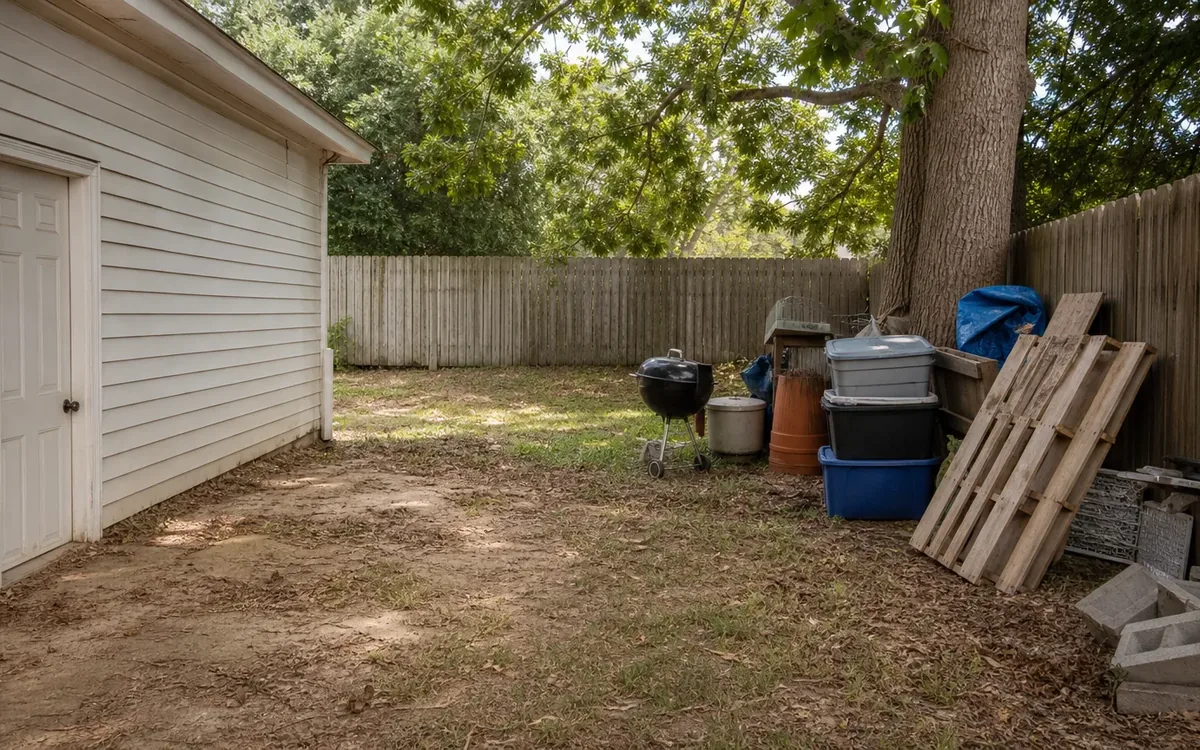
If a property notice names furniture, appliances, building materials, or other items stored on a porch, under a carport, or in a yard, begin with the exact wording of the notice. Inventory each named item, decide whether it will be kept, moved indoors, sold, donated, recycled, or discarded, and document the resulting condition. The household controls decisions about its belongings, while the issuing authority determines whether the correction satisfies the notice.
Quick answer: Match each outdoor item to the notice, photograph its original location, assign one clear outcome, complete that action, and take final photographs. Ask the issuing office about unclear requirements or proof. A practical cleanout or move team may discuss sorting, removal logistics, and documentation, but it cannot interpret the law, approve a correction, or close the case.
What does an open outdoor storage notice usually require you to address?
The controlling information is the notice itself, not a general cleanup rule. Read it closely for the cited condition, affected area, listed items, response instructions, and contact details. A notice may focus on specific objects, how or where they are stored, or a broader exterior condition.
Separate what the document actually says from assumptions about what an inspector might prefer. Highlight:
- Each item or category named
- Every location identified, such as a front porch, side yard, or carport
- Any case, parcel, or reference number
- Instructions for contacting the issuing office
- Any stated correction or reinspection requirement
- Directions for submitting photographs, receipts, or another form of proof
Do not assume that placing a tarp over an item, moving it behind a fence, or arranging it more neatly resolves the cited condition. Whether an item can remain outside, must be enclosed, or must leave the property is a compliance question for the responsible authority.
Clutter Cleaner of South Carolina offers code compliance support for household cleanout needs throughout South Carolina. That support can help with the physical project, but the issuing office retains authority over interpretation, extensions, inspections, and case closure.
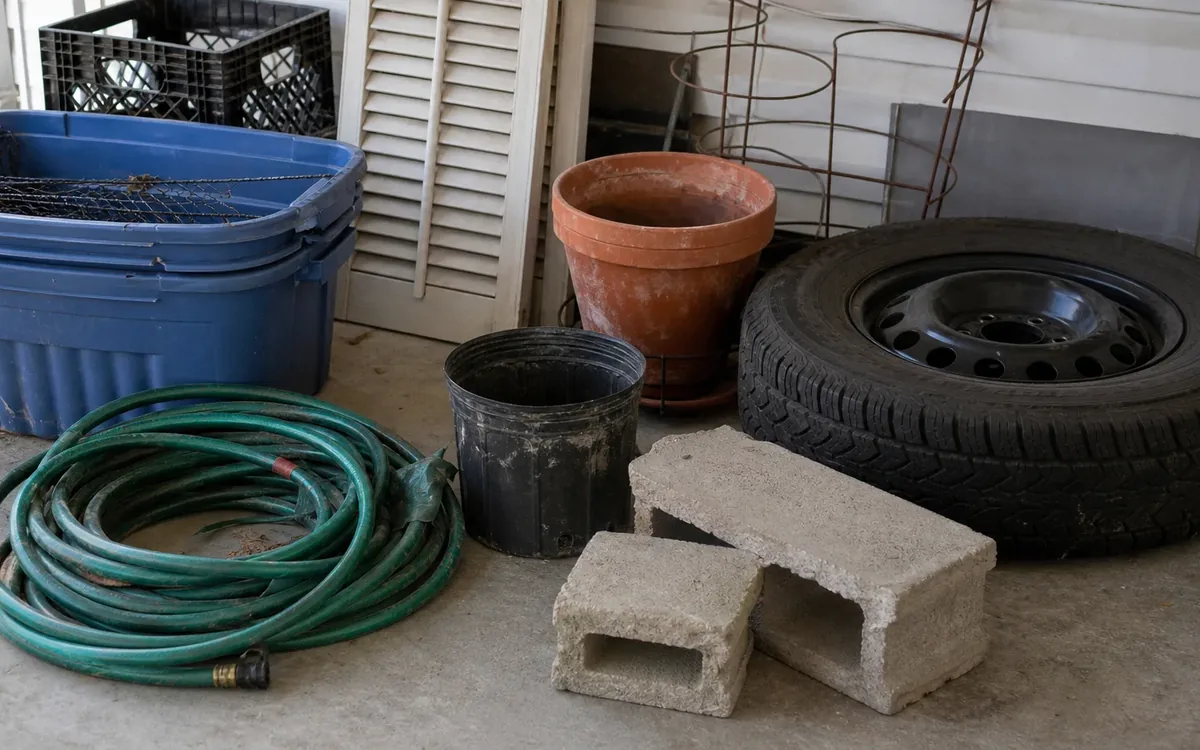
Build an inventory tied directly to the notice
A useful inventory does more than list everything outdoors. It connects the notice to visible objects and gives each object a decision. Start with the specific porch, carport, side yard, driveway edge, shed area, or backyard section mentioned in the document.
Use a table or spreadsheet with these fields:
| Field | What to record |
|---|---|
| Item ID | A simple label such as C-01 for carport item 1 |
| Description | What it is, including distinguishing details |
| Location | Its exact outdoor location |
| Notice wording | The phrase or category that may apply |
| Condition | Usable, damaged, incomplete, unsafe to handle, or unknown |
| Ownership | Known owner, shared property, tenant property, or uncertain |
| Decision | Keep, move indoors, sell, donate, recycle, or dispose |
| Action status | Not started, pending, or completed |
| Proof | Photograph name, receipt, or other record |
Photograph wide views before moving anything, then take closer images of named objects. Keep the original files when possible. Avoid staging items in a roadway, sidewalk, neighboring property, common area, or another location where they may create a separate problem.
Assigning IDs with removable labels can reduce confusion. For example, label a damaged chair P-03 if it is the third porch item. The same ID can appear in the inventory and photograph filename.
If the property is part of an estate, ownership and authority may need to be settled before belongings are sold, donated, or discarded. The guide on how estate cleanouts work explains practical sorting and removal roles. The personal representative, attorney, court, or other responsible party must resolve legal authority where it is uncertain.
How should you decide what stays, moves, or leaves?
Treat every item as a separate decision. A single porch may contain usable patio furniture, broken household appliances, contractor materials, family property, and documents that should never enter a disposal pile together.
Use the following six outcomes:
-
Keep in an allowed location. The household decides whether an item is worth retaining. The authority decides whether its proposed location and storage method comply.
-
Move indoors. Identify a suitable interior area before moving the object. Confirm that the route and destination can accommodate its size and weight. Indoor placement should not block exits, panels, utilities, stairs, or necessary access.
-
Place in separate storage. Off-site storage is a household arrangement with an independent storage provider. Compare access terms, prohibited goods, insurance questions, transport needs, and ongoing cost before committing.
-
Sell. The owner decides whether sale is appropriate. An auctioneer, estate-sale provider, marketplace, or appraiser may advise on value or sale method. A cleanout crew should not make appraisal conclusions unless separately qualified and retained for that work.
-
Donate or recycle. Ask the receiving organization what it accepts before loading. Condition, material, contamination, missing parts, and transportation requirements may affect acceptance.
-
Dispose. Confirm the appropriate waste stream. Appliances, electronics, paint, chemicals, fuel containers, batteries, tires, and construction debris may require different handling from ordinary household contents.
Do not create a vague “decide later” pile outdoors. If a decision must wait, list the decision-maker and place the item somewhere that the responsible authority confirms is acceptable.
Sentimental or disputed belongings should be isolated from the removal area. Mark them clearly, photograph them, and identify who has authority to decide. This prevents a property-correction project from becoming an accidental loss of important possessions.

Separate household choices from professional decisions
Several roles may overlap around a property notice, but their authority does not. Keeping those boundaries visible helps prevent misunderstandings.
The household or authorized representative can decide
- Which belongings it wants to retain
- Whether to pursue sale, donation, recycling, or disposal
- Who may enter the property and handle items
- Whether to rent storage or hire transportation
- Whether to request clarification from the issuing office
- How to organize records and photographs
These choices remain subject to ownership rights, leases, estate authority, court orders, association rules, and applicable law.
A practical cleanout or move team may discuss
- An item-by-item sorting plan
- Safe sequencing for accessible household contents
- Labor and vehicle considerations
- Separating keep items from outgoing items
- Coordination with household-selected donation, sale, storage, or disposal options
- Before-and-after documentation methods
- Preparing cleared areas for review
The team can discuss physical project logistics. It should not promise that a particular action will satisfy an inspector or guarantee case closure.
The responsible professional or authority decides
- Issuing authority: what the notice means, whether an arrangement complies, whether more proof is needed, and whether the case is closed
- Attorney, court, or authorized fiduciary: disputed ownership, estate authority, tenant issues, deadlines with legal consequences, and appeal rights
- Appraiser or qualified valuation professional: formal value conclusions
- Real-estate professional: listing strategy, buyer expectations, and transaction advice within that professional’s role
- Inspector or specialist: structural, electrical, fire, environmental, pest, or safety findings within the applicable scope
- Contractor: repair methods, materials, permits, and construction execution within the contractor’s role
- Waste or recycling provider: acceptance rules and handling requirements for specific materials
If removing stored items reveals damaged wiring, unstable structures, leaks, contamination, or pest activity, stop treating the issue as ordinary sorting. Restrict access and contact an appropriate professional.
What should you ask when the notice is unclear?
Contact the office or official identified on the notice rather than relying on a neighbor’s past experience. Properties, ordinances, cited conditions, and enforcement procedures can differ.
Prepare focused questions such as:
- Which exact objects or categories are included?
- Is the concern the item itself, its condition, or its outdoor location?
- Would moving a usable item into an enclosed area address the cited issue?
- Are screened porches, sheds, or other enclosures treated differently?
- What documentation is accepted after correction?
- Is a reinspection required?
- How should appliances, construction materials, or inoperable equipment be handled?
- Who can discuss access, scheduling, or a formal extension request?
- How will the property owner learn whether the case is closed?
Record the contact date, the name or department of the person contacted, and the response. If the answer affects important decisions, ask whether written confirmation or a published rule is available.
A cleanout provider may help turn clarified instructions into a work plan. It cannot issue a legal interpretation, negotiate rights as an attorney, or speak for an authority unless the authority expressly permits a limited logistical contact.
Plan the physical work around access and risk
Outdoor accumulations can conceal hazards. Walk the area before lifting, opening, or shifting objects. Look for broken glass, nails, sharp metal, unstable stacks, insects, animals, standing water, chemical containers, and compromised electrical cords.
Create three distinct zones where lawful and practical:
- Keep zone: protected items approved by the household for relocation
- Decision zone: items awaiting an authorized person’s choice
- Outgoing zone: objects already assigned to sale, donation, recycling, or disposal
Do not mix hazardous or unknown materials into ordinary outgoing contents. Keep labels attached to chemicals, fuels, pesticides, paint, and similar products. Do not open unmarked containers to identify them by smell.
Large appliances and heavy furniture require route planning. Measure gates, doors, steps, and narrow passages. Disconnecting gas, water, hardwired electricity, or built-in equipment may require an appropriate contractor or utility professional. A cleanout plan should not assume those tasks are simple lifting work.
Building materials also require care. Boards, masonry, roofing products, fixtures, and equipment may belong to an active contractor or be reserved for a permitted project. Confirm ownership and intended use before removing them. Questions about permits, approved materials, or construction compliance belong with the contractor and relevant authority.
How do you document that the outdoor items were addressed?
Documentation should show what changed without overstating what it proves. Final photographs can demonstrate that an item was removed or relocated, but only the responsible authority can determine compliance.
Create a clear record in four parts:
- Original condition: Wide and close photographs showing the cited area before work.
- Inventory decisions: The item list, authorized decisions, and any unresolved ownership notes.
- Disposition records: Available donation receipts, sale records, disposal receipts, storage paperwork, or contractor documents.
- Final condition: Photographs from approximately the same viewpoints as the original images.
Use consistent filenames, such as carport-before-01 and carport-final-01. Keep the notice, correspondence, photographs, inventory, and receipts together. Preserve copies outside the immediate work area so records are not lost during sorting.
Do not edit photographs in a way that changes the represented condition. A crop for clarity may be useful, but retain the original image. Do not claim an item was donated or recycled without an accurate supporting record when one is available.
Submit materials only through the process identified by the issuing office. If no process is stated, ask what it accepts and whether the property owner must request reinspection or confirmation.
Prevent the same storage pattern from returning
Once the named items are addressed, examine why they accumulated outdoors. The goal is not to redesign the whole property. It is to prevent the corrected space from becoming the default holding area again.
Useful household rules may include:
- No outdoor item without an assigned owner
- No broken appliance waiting indefinitely for a decision
- No contractor material stored without a project contact and destination
- No donation item placed outside before acceptance and transport are confirmed
- No new “temporary” pile without a documented next action
- Regular review of porches, carports, and yard edges
If indoor capacity is the underlying problem, the household can choose organizing, downsizing, or external storage. Those are separate decisions. A storage unit moves possessions but does not determine what is legally permitted at the property. Organizing improves access but does not establish compliance. Disposal reduces volume but does not replace inspection or authority approval.
For practical help sorting and removing household contents connected to a notice, Clutter Cleaner of South Carolina can be reached at (843) 972-7020. The business is physically located in Mount Pleasant and serves households across South Carolina, with Charleston as its primary market. Scope and logistics should be discussed for the specific property and notice.
Short FAQ
Can I just move everything from the front yard to the backyard?
Not without clarification. Moving items out of view may fail to correct an outdoor-storage condition. Ask the issuing authority whether the proposed location and storage method are allowed.
Should I discard every item named in the notice?
Not necessarily. Depending on the notice and the item’s ownership, condition, and lawful destination, moving it indoors, selling it, donating it, recycling it, or otherwise properly relocating it may be possible. The authority decides whether the correction satisfies the notice.
Who determines whether an old appliance has value?
The owner decides whether to seek valuation. A qualified appraiser, auctioneer, resale specialist, or buyer may provide relevant input. A cleanout team can separate and move the item but should not present a formal appraisal unless separately qualified and retained.
What if some items belong to a tenant, contractor, or family member?
Do not dispose of property solely because it is outdoors. Document it, identify the apparent owner, and obtain guidance from the authorized decision-maker. An attorney or responsible authority should address disputed rights or required notices.
Do final photographs prove compliance?
They show the final visible condition and may support a response. They do not themselves close a case. Follow the issuing office’s process and obtain confirmation from the authority responsible for the notice.



