
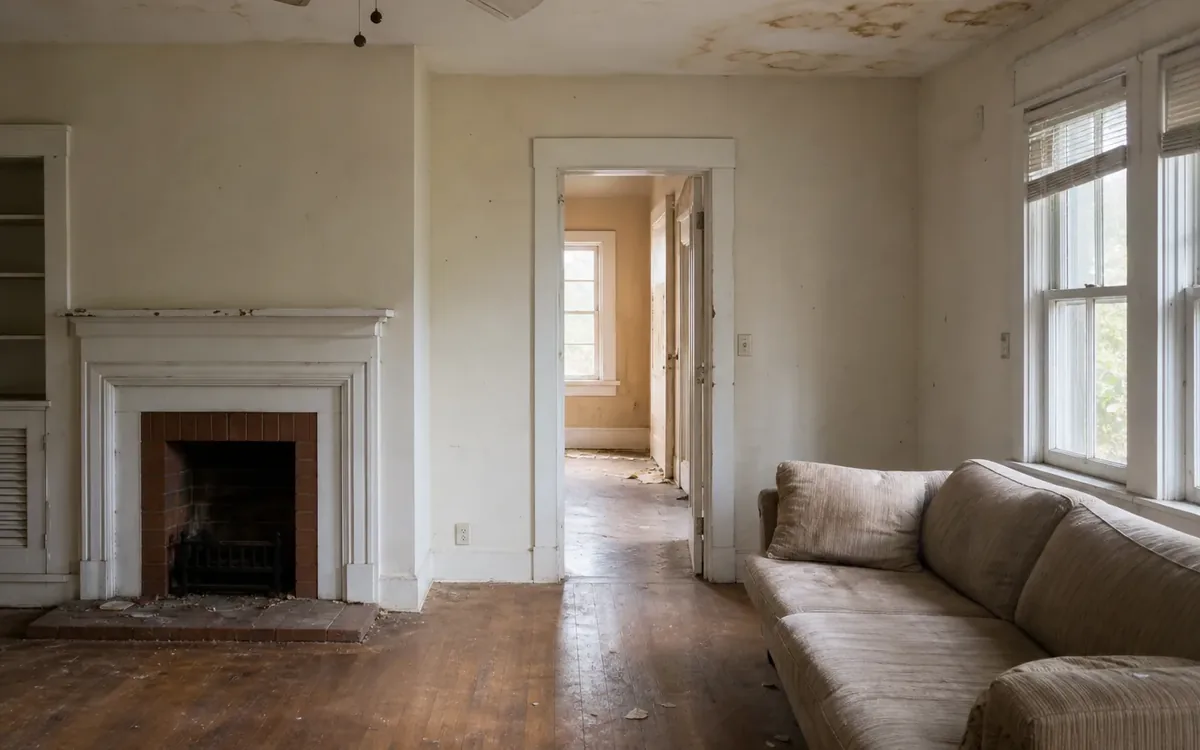
If you inherit a South Carolina property with an existing code notice, first locate the complete notice, identify the issuing office and deadline, and confirm who has authority to act for the estate. Contact the office listed on the notice before discarding items or authorizing repairs. The household can organize belongings and cleanup priorities, but only the responsible authority can interpret the notice, approve corrective work, grant an extension, or close the case.
Quick answer: Preserve the notice, confirm estate authority, ask the issuing office for the current case status, separate cleanup from repair work, and document each completed step. Do not assume that removing clutter automatically resolves the notice. Written confirmation from the issuing authority is the reliable way to determine whether compliance has been achieved.
What should you do immediately after finding the notice?
Treat the notice as an active estate document rather than ordinary mail. Even if it appears old, do not assume the case expired, transferred automatically, or was resolved by the former owner.
Start with these five actions:
- Keep every page and envelope. The envelope may help establish when the notice was mailed, while attachments may identify specific violations or required corrections.
- Photograph the property before changing it. Capture the exterior, posted notice, affected rooms, yard, structures, vehicles, debris, and visible hazards from safe locations.
- Record the case details. Note the case or reference number, property address, issuing office, inspector or contact name, listed conditions, response instructions, and deadline.
- Confirm who may act for the estate. An heir is not always the person legally authorized to direct property work. The personal representative, executor, administrator, trustee, or another authorized party may need to make decisions.
- Contact the issuing office. Ask whether the notice remains open, whether an inspection has occurred, and what communication or documentation the office needs after the owner’s death.
Avoid moving posted documents, entering unsafe structures, or disturbing suspected hazardous materials merely to begin cleaning. If the notice identifies an immediate danger, follow the issuing office’s instructions and keep people away from the affected area.
Clutter Cleaner of South Carolina offers code compliance support for property cleanouts across South Carolina. That practical support can be coordinated with an estate plan, but it does not replace the issuing authority, an attorney, a licensed contractor, an appraiser, or another qualified professional.

How do you verify the notice and its deadline?
Read the notice literally before interpreting what it means. A posted sheet, letter, inspection report, citation, hearing notice, or correction order may represent a different stage of the local process. Look for language explaining how to respond and whether the deadline applies to contact, correction, inspection, appeal, or a hearing.
Contact the department named on the document using independently verified contact information. If the notice is damaged or incomplete, ask for a complete copy and the current case record available to the responsible party. Provide the property address and case number, but do not claim authority you do not have.
Useful questions include:
- Is the case currently open?
- What conditions are listed as unresolved?
- What date controls the next required action?
- Is the requirement to respond, correct a condition, schedule an inspection, or attend a hearing?
- Has responsibility or correspondence information been updated since the owner’s death?
- What proof of estate authority does the office require?
- Does the office accept progress photographs or other documentation?
- Must an inspection be requested after work is completed?
- Is there a formal procedure for requesting more time or challenging the notice?
Write down the date, contact name, department, and substance of each conversation. Follow up through the office’s accepted written channel when possible. If staff explains a requirement by phone, ask where that requirement appears in the notice or applicable process.
Only the issuing office or other responsible authority can determine the official status, interpret its requirements, change a deadline, or confirm closure. A cleanout team can help identify physical tasks connected to the notice, but it cannot make those rulings.
Who has authority when an owner has died?
Family relationships and legal authority are not always the same. Multiple heirs may have an interest in the estate, yet only a designated representative may be able to hire providers, approve disposal, authorize entry, sign documents, or communicate as the estate’s responsible party.
Before substantial work begins, establish:
- Who holds keys and controls access
- Whether probate or another estate process is underway
- Who may approve labor, disposal, donations, sales, and repairs
- Whether the property has multiple owners or beneficiaries
- Whether an insurer, lender, homeowners association, court, or other party must receive notice
- Where decisions and receipts will be recorded
An estate attorney or probate professional can advise on authority, title, disputes, and required filings. A cleanout provider should not decide who owns an item, interpret a will, resolve beneficiary disagreements, or determine whether an heir has legal power to act.
If authority is uncertain, secure the property without making irreversible decisions. Reasonable protective measures might include controlling access and preserving paperwork, provided the authorized party and any applicable requirements allow them. Do not sell, donate, discard, or relocate disputed belongings until the appropriate decision-maker has approved the action.
For broader planning context, review the guide to how estate cleanouts work. Its estate-process framework can help the family place notice-related cleanup within the larger sequence of sorting, distribution, property preparation, and sale decisions.

How should you contact the issuing office about the change in responsibility?
Be concise and factual. Explain that the owner has died, identify the estate representative if known, and ask how the office updates its record. Do not promise a completion date before the scope, authority, property condition, and provider availability are understood.
A practical written message can include:
- The property address
- The notice or case number
- The former owner’s name
- The date the notice was discovered
- The name and role of the current contact
- A request for the open-item list and current deadline
- A request for instructions on submitting authority documents
- A request for the required follow-up or inspection procedure
Ask whether future correspondence can be sent to the authorized representative. Keep copies of anything submitted. If the office requests probate papers, identification, a death certificate, or another record, confirm how sensitive documents should be transmitted.
A change in ownership or responsibility does not necessarily erase a property condition or stop an existing process. Likewise, notifying an office does not guarantee an extension. The responsible authority decides how its procedure applies.
If the deadline cannot reasonably be met, ask whether a formal extension or compliance plan exists and how to request it. Do not rely on an informal assumption that visible progress is enough.
Separate cleanup work from repairs and formal compliance
Many notices include several kinds of conditions. Breaking them into separate workstreams helps the estate avoid assigning the wrong task to the wrong provider.
Household and estate decisions
The authorized household or estate representative can usually decide which belongings should be retained, distributed, evaluated, sold, donated, recycled, or discarded, subject to estate obligations and applicable rules. The family also sets access permissions and approves spending.
Practical cleanout or move support
A cleanout or move team may discuss sorting, removal sequencing, room access, hauling logistics, donation preferences, sale preparation, and documentation of the areas it handles. Clutter Cleaner of South Carolina may discuss estate cleanouts, move management, home sale preparation, and code compliance support within the agreed scope.
Contractor work
Electrical, plumbing, roofing, structural, mechanical, pest, environmental, and other specialized corrections may require separate qualified contractors. The property representative chooses those providers and confirms any permit requirements with the appropriate authority. A cleanout should not be presented as a substitute for technical repair.
Appraisal and sale decisions
Valuable or uncertain property may need review by an independent appraiser or other appropriate specialist before disposal. Real-estate agents can advise on listing strategy and market preparation. Neither an appraiser nor an agent determines code closure unless separately authorized by the issuing authority to perform a specific function.
Inspection and legal decisions
The inspector or issuing authority determines whether cited conditions meet the applicable requirements and whether follow-up is necessary. Attorneys advise on estate authority, liability, hearings, appeals, title, and legal deadlines. These decisions remain outside a cleanup provider’s role.
How can required cleanup fit into the estate plan?
Build the cleanout around the verified notice instead of treating compliance as a final sweep. This reduces the chance that an important area will be overlooked or that evidence needed by the estate will disappear.
Use four coordinated tracks:
- Preservation. Secure legal papers, financial records, photographs, keys, medications, identification, sentimental property, and items named for beneficiaries.
- Notice-related cleanup. Prioritize removable conditions expressly identified in the notice, such as accumulated household contents, exterior debris, or blocked access, when those tasks can be handled safely and legally.
- Specialist referrals. Place repairs, hazardous materials, valuation questions, title issues, and disputed possessions on separate lists for the appropriate professionals.
- Property transition. Coordinate remaining sorting, distribution, potential sale channels, moving, storage, and home preparation after urgent issues are addressed.
Storage is a household choice, not an automatic solution. Moving everything into a storage unit may clear the property but can create ongoing costs and postpone decisions. The authorized representative should select the facility, sign its agreement, insure items if appropriate, and maintain an inventory.
Auctions and estate sales may be options for suitable contents, but the household should determine what may legally be sold and whether valuation is needed. Items should not be routed to a sale simply because they obstruct cleanup.
A working task sheet can include the cited condition, location, responsible person, planned action, provider, approval status, completion evidence, and authority follow-up. This connects physical work to the notice without confusing completion of a task with official acceptance.
Document the property before, during, and after cleanup
Documentation helps the estate track decisions and communicate with professionals. It does not, by itself, prove legal compliance.
Create a file containing:
- The original notice and attachments
- Photographs labeled by date and location
- A room-by-room inventory where appropriate
- Written approvals from the estate representative
- Contractor proposals, invoices, permits, or completion records
- Donation, recycling, disposal, storage, auction, or sale records
- Messages exchanged with the issuing office
- Inspection requests and resulting reports
- A log of property access
Take after-photos from roughly the same safe viewpoints as the initial images. If work reveals a new concern, pause that part of the project and refer it to the appropriate professional rather than concealing or improvising around it.
Keep records factual. Instead of writing “violation fixed,” describe the physical action, such as “loose household contents removed from the rear room.” Reserve compliance conclusions for the authority empowered to make them.
Prepare for reinspection or another official review
When the listed work is complete, follow the notice’s instructions for reporting or requesting review. Confirm whether the office needs photographs, contractor records, permit information, an appointment, or access to specific areas.
Before an inspection, verify that:
- The authorized contact knows the appointment details
- Required areas are safely accessible
- Animals, locks, gates, and keys are addressed
- Relevant documents are organized
- Contractors have completed their separate scopes
- No estate contents were moved back into cited areas
Do not represent the property as cleared by the authority merely because it looks cleaner. Ask for written confirmation of the result, any remaining items, and the case status. If the authority identifies additional work, add it to the plan and assign it to the household, cleanout team, contractor, attorney, or other professional based on its nature.
Real-estate marketing and closing decisions should remain with the owner, estate representative, real-estate professional, attorney, lender, title professional, and other responsible parties. A pending sale does not substitute for compliance, and cleanup completion does not guarantee that a property is ready to list or close.
Common mistakes to avoid
Several avoidable errors can complicate an inherited-property notice:
- Discarding the notice before recording its case number
- Assuming the owner’s death canceled the matter
- Letting an unauthorized relative approve disposal
- Emptying the property before checking for estate records or valuables
- Treating cleanup as proof that repairs are complete
- Hiring one provider for tasks outside that provider’s qualifications
- Moving all contents to storage without an inventory or exit plan
- Missing formal response instructions while focusing only on physical work
- Assuming a verbal conversation changed the deadline
- Advertising or selling the property as compliant without official confirmation
The most useful discipline is role clarity. The household directs authorized estate choices. A practical team handles agreed physical tasks. Contractors address their technical scopes. Appraisers assess value. Real-estate professionals advise on the transaction. Attorneys address legal questions. The issuing authority interprets and closes its case.
Short FAQ
Can heirs start cleaning before probate is complete?
That depends on who has authority and what actions are permitted in the estate’s circumstances. Ask the estate attorney or probate professional before authorizing disposal, sale, major work, or contracts. Immediate safety restrictions from an authority should also be followed.
Does removing clutter close a code case?
Not automatically. Cleanup may address one or more listed conditions, but the issuing authority decides whether requirements are satisfied and whether inspection or documentation is still needed.
Should everything valuable be appraised?
The household or authorized representative decides when valuation is appropriate. Items with uncertain value, beneficiary disputes, or estate significance may warrant an independent appraisal before sale or disposal.
Can a cleanout team request an extension?
The responsible party should follow the authority’s procedure. A team may provide practical scope information if authorized, but it cannot grant an extension or guarantee that one will be approved.
Who decides where removed items go?
The authorized estate representative approves retention, family distribution, sale, donation, recycling, disposal, or storage. Applicable restrictions and the notice may limit some options.
How can Clutter Cleaner of South Carolina help?
The company can discuss practical support within its approved South Carolina services, including estate cleanouts, move management, home sale preparation, auctions and estate sales, downsizing and organizing, and code compliance support. For scope questions, contact Clutter Cleaner of South Carolina at (843) 972-7020. The business is physically located in Mount Pleasant, South Carolina, with Charleston as its primary market and statewide service territory.



