

The best way to prevent a repeat property maintenance violation is to identify exactly what the notice requires, correct the underlying cause rather than only the visible symptom, document the work, and assign ongoing responsibility for the property. The household can organize cleanup and maintenance, but the responsible code authority determines whether a condition complies and whether a case is closed.
Quick answer: Read the notice carefully, confirm unclear requirements with the issuing authority, separate cleanup from repair work, document conditions before and after correction, request any required inspection, and create a written maintenance plan. Do not assume that removing clutter, mowing once, or completing a repair automatically closes the matter.
Why do property maintenance violations come back?
A repeat violation often happens because the initial response addresses what can be seen without resolving why the condition developed. For example, removing bags from a yard may improve the property, but it will not prevent recurrence if the household has no workable waste routine. Clearing access to a damaged area also does not repair the damage.
Recurring conditions can stem from:
- Unclear responsibility among owners, occupants, relatives, or managers
- Accumulation that exceeds the household’s ability to sort and remove it
- Deferred repairs or unresolved moisture and drainage concerns
- Missed waste, vegetation, or exterior maintenance
- Vacant-property oversight gaps
- A temporary cleanup without a continuing plan
- Misunderstanding what the notice actually requires
The first goal is therefore not simply to make the property look better. It is to separate the cited condition, its cause, and the action needed to keep it from returning.
Clutter Cleaner of South Carolina offers code compliance support for property cleanout and organization throughout South Carolina. That practical support is distinct from enforcement decisions, construction work, legal advice, or an official determination that a property complies.

What should you confirm before starting work?
Start with the written notice rather than assumptions about what an inspector wants. Rules, procedures, and enforcement decisions can differ by authority and property. The notice and the issuing office are the appropriate sources for case-specific requirements.
Record these six items:
- The exact cited conditions. List each condition separately rather than treating the notice as one general cleanup request.
- The affected locations. Note whether the concern involves a yard, porch, interior room, accessory structure, driveway, or another area.
- The responsible party named in the notice. Ownership, occupancy, lease, estate, or management arrangements may affect who must respond.
- Any response or correction date. Use the date printed on the notice and ask the issuing authority about questions or extensions.
- The stated follow-up process. Determine whether the notice calls for photographs, written communication, a reinspection, permits, or another step.
- The issuing contact and case reference. Keep these details with all records related to the correction.
Do not discard the envelope, notice, attachments, or prior correspondence. If language is unclear, contact the named authority and ask focused questions. A cleanout team may discuss access, sorting, removal logistics, and site organization, but it should not interpret an ordinance as legal counsel or promise that its work will satisfy an inspector.
If accumulated household contents are part of a larger inherited-property situation, the guide to what happens if you get a code enforcement violation explains the practical sorting and removal process. Authority over estate property should still be confirmed before anyone sells, donates, relocates, or discards items.
How do you distinguish cleanup from repairs and official compliance?
A useful prevention plan separates work by decision-maker. Mixing these categories can lead to incomplete correction, unauthorized disposal, or misplaced expectations.
Household or authorized decision-maker
The owner, occupant, estate representative, or other authorized person can usually decide practical matters within their authority, such as:
- Which ordinary household items to keep, donate, sell, relocate, or discard
- Who will handle routine yard and waste tasks
- Where retained belongings will be stored
- How often the property will be checked
- Which vendors to contact for estimates
- Who will maintain records and communicate with the authority
These choices must account for ownership disputes, leases, probate restrictions, court instructions, insurance requirements, and other applicable obligations. When authority is uncertain, obtain guidance from the appropriate attorney, court representative, insurer, landlord, property manager, or public office before acting.
Practical cleanout or move team
A practical team may discuss:
- Sorting zones and safe working access
- Removal order and staging
- Donation, sale, disposal, or relocation preferences
- Contents that need separate handling
- Packing and movement of retained property
- Organizing areas so future upkeep is manageable
- Photographs or inventories requested by the client
Availability and acceptance rules should be confirmed with each donation site, disposal facility, hauler, auction provider, estate-sale provider, or storage facility. Not every item can be handled through an ordinary cleanout.
Licensed, qualified, or responsible professionals
Other decisions remain with the appropriate professional or authority:
- A code official determines compliance and case status.
- A lawyer advises on ownership, probate, tenant, contract, or liability questions.
- A qualified contractor assesses and performs work within the contractor’s scope.
- A permit office determines permit and inspection requirements.
- An appraiser or qualified valuation professional provides formal valuations.
- A real-estate professional advises on listing and transaction strategy.
- A property inspector reports conditions within the inspection scope.
- Environmental, hazardous-material, utility, fire, or public-health authorities address matters under their jurisdiction.
Cleanup can create access for these professionals, but it does not replace their assessments or approvals.
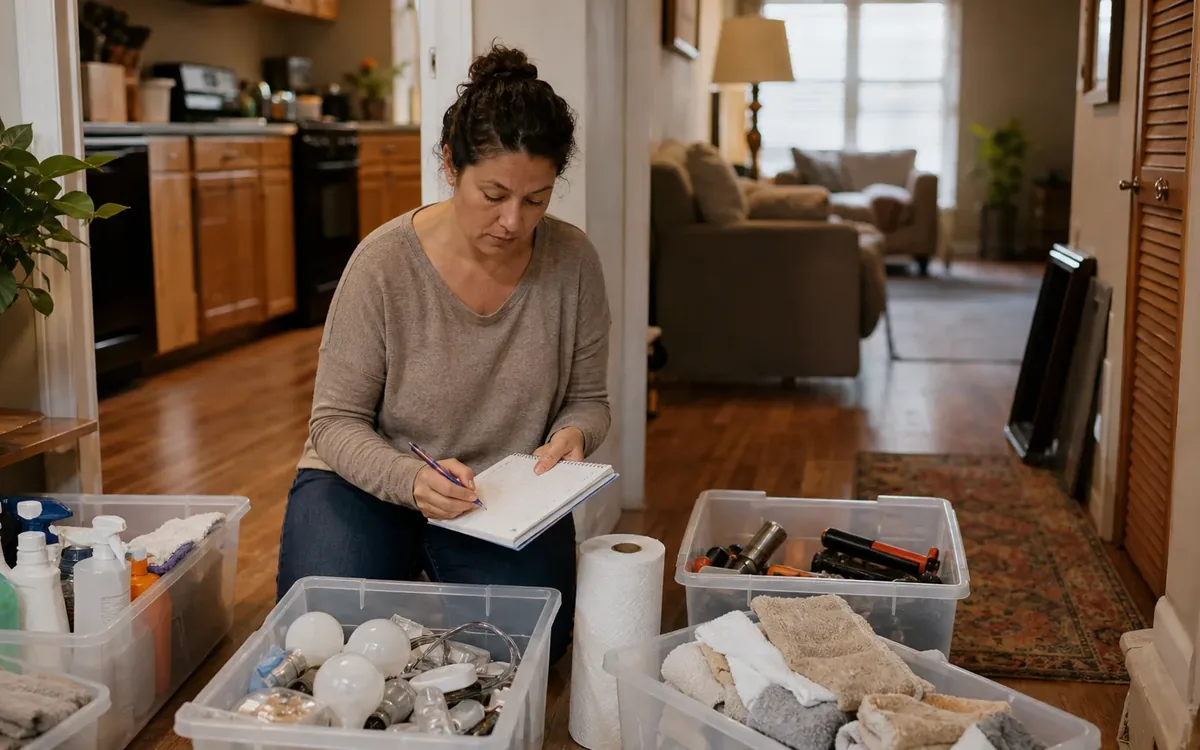
Correct the cause, not just the visible condition
For every cited item, write down three separate points: what is visible, what caused it, and what will prevent recurrence. This turns a one-time response into a maintenance system.
Consider these examples:
- Exterior accumulation: Remove authorized items, then establish usable containers, a disposal routine, and a rule against setting new materials in the cleared area.
- Overgrown vegetation: Arrange the immediate work, then assign recurring responsibility and a backup contact.
- Blocked access: Clear the route, then avoid using it as temporary storage. Repairs or egress determinations belong to the relevant contractor, inspector, fire official, or code authority.
- Stored vehicles or equipment: Confirm applicable rules and ownership before arranging movement. Towing, title, registration, and disposal questions belong to the relevant provider or authority.
- Damaged exterior components: Remove nearby clutter for access, but send repair assessment, permits, and workmanship to qualified professionals.
- Waste around a vacant property: Remove authorized waste and establish property checks, secure waste containers, and a named local contact where appropriate.
Some conditions should not be disturbed casually. Suspected hazardous materials, unknown chemicals, sharps, biological contamination, unstable structures, pests, downed utilities, or fire hazards call for guidance from a suitable specialist or authority. Keep people away from an unsafe area until the responsible professional determines the next step.
What documentation helps prevent another violation?
Documentation creates continuity when several people share responsibility or when a property changes occupants, managers, or representatives. It can also help the issuing authority understand what was addressed, although only that authority can decide whether the evidence is sufficient.
Build one property record containing:
- The original notice and all attachments
- The case or reference number
- Contact information for the issuing office
- Dated photographs of cited areas before work
- A written list of actions taken
- Dated photographs after cleanup or repair
- Receipts, work orders, and disposal records that are available
- Contractor, hauler, storage, or facility information
- Permit and inspection records, when applicable
- Emails, letters, and notes from calls
- The maintenance plan and assigned contacts
- Written confirmation of closure, if the authority provides it
Photograph the same area from similar positions before and after work. Include enough surrounding context to identify the location. Do not rely only on close-up images that hide the broader condition.
Keep factual notes. Record who communicated, when contact occurred, and what follow-up was requested. Avoid rewriting an official’s words as a conclusion. Preserve the original correspondence whenever possible.
Build a maintenance system someone can actually follow
A prevention plan fails when it depends on one overwhelmed person remembering every task. Make responsibilities visible and specific.
A workable plan should identify:
- Task: What must be checked or completed
- Area: Where the task applies
- Owner: The person responsible for arranging or performing it
- Trigger: A calendar date, property visit, weather event, occupancy change, or other prompt
- Backup: Who steps in if the primary person is unavailable
- Record: Where photographs, receipts, and notes are stored
- Escalation: Who contacts a contractor, manager, attorney, or authority when routine upkeep is not enough
Use a simple property log rather than scattered messages. Entries might cover vegetation, waste containers, exterior storage, visible deterioration, access routes, mail accumulation, and signs of dumping or unauthorized occupancy. The relevant authority or property professional should identify which conditions matter for the particular property.
For a vacant or inherited home, decide who is authorized to enter and make decisions. Provide lawful access only to appropriate people. Do not place valuables, original legal documents, medications, firearms, or sensitive records in an unattended staging area.
Handle retained belongings without recreating the problem
Moving everything from a cited location into another room, shed, vehicle, or off-site unit may shift the accumulation rather than solve it. Storage is a separate household decision and should have a defined purpose.
Before relocating an item, ask:
- Is there confirmed authority to move it?
- Does the household have a specific future use for it?
- Is its destination lawful, secure, and suitable?
- Can the destination accommodate it without blocking access?
- Is paid storage consistent with the household’s longer-term plan?
- Does the item require appraisal, specialty transport, or restricted disposal?
Items believed to be valuable should be set aside for an appropriate appraisal or sales professional if the authorized decision-maker wants formal valuation or market advice. A cleanout team can help isolate or organize items selected by the client, but it should not present sorting judgments as formal appraisals.
Contractor materials and tools also need boundaries. Agree on staging areas before repair work begins, and determine who removes debris when the job ends. The contractor and client should document that responsibility in their own agreement.
Verify closure instead of assuming it
Finishing physical work and closing an enforcement matter are not the same event. Follow the process stated in the notice or provided by the issuing authority.
Use these four closing steps:
- Compare the completed work with each cited condition.
- Submit requested documentation through the accepted channel.
- Arrange or permit any required inspection with the responsible authority.
- Retain written confirmation of the outcome when it is available.
If the authority identifies remaining work, ask for clarification in writing when possible. Update the task list and route each issue to the right party. Additional sorting may belong to the household or cleanout team, structural correction to a qualified contractor, legal questions to an attorney, and final compliance to the code authority.
Do not remove official postings, enter restricted areas, conceal conditions, or represent a matter as closed without confirmation. If ownership changes or the property is listed, disclose and manage the issue as advised by the appropriate legal and real-estate professionals.
A focused plan for South Carolina properties
South Carolina properties fall under different local jurisdictions and may also be affected by state requirements or private obligations. Do not assume that a procedure used for one property applies to another, even within the same county.
The practical sequence remains consistent:
- Preserve the notice.
- Identify the issuing authority.
- Confirm the cited conditions and required process.
- Establish who has authority over the property and contents.
- Separate cleanup, repair, valuation, legal, and inspection tasks.
- Correct underlying causes where possible.
- Document actions and follow-up.
- Assign continued maintenance.
- Obtain the authority’s decision on compliance or closure.
Clutter Cleaner of South Carolina is physically located in Mount Pleasant, with Charleston as its primary market and a statewide South Carolina service territory. For practical support, households can call (843) 972-7020 to discuss the property’s contents, access, organization, and cleanout needs. The issuing authority remains the source for compliance requirements and case decisions.
Short FAQ
Can a cleanout company guarantee that a violation will be cleared?
No. A cleanout may address accumulation or improve access, but the responsible authority determines compliance. Repairs, permits, inspections, hazardous conditions, and legal issues may require separate professionals.
Should everything named in or near a cited area be discarded?
No. Confirm ownership and decision-making authority first. Separate items to keep, relocate, donate, sell, appraise, or discard. Follow facility rules and professional guidance for restricted or hazardous materials.
Is an after-photo enough to prove correction?
Not necessarily. Photographs are useful records, but the authority decides what documentation, inspection, or other action is required. Follow the instructions associated with the specific case.
Who should manage upkeep when an owner lives elsewhere?
The authorized owner or representative should name a dependable person or property provider, define the tasks, arrange lawful access, and keep records. Legal authority, contracts, and property-management questions should be reviewed by the appropriate professional.
What if cleanup reveals damage or unsafe conditions?
Pause work in the affected area and keep people away when needed. Contact the appropriate contractor, utility, environmental specialist, emergency service, inspector, or public authority based on the condition. Cleanup workers should not make technical safety or compliance determinations outside their role.
What is the most important prevention step after closure?
Assign each recurring task to a named person and keep a property log. A cleared area is less likely to deteriorate again when responsibility, triggers, backup contacts, and escalation steps are explicit.



