

Preparing for a code compliance reinspection means matching each cited item to a completed correction, organizing proof, and making every relevant area safely accessible. Use the original notice as your controlling document, confirm requirements with the responsible authority, and avoid hiding unresolved conditions with temporary cosmetic work.
Quick answer: Create a correction file for every cited item. Include the notice, permits or contractor records when applicable, dated photos, receipts, and notes about what changed. Before the repeat visit, remove access obstacles, test ordinary household features you are qualified to check, and ask the issuing authority about any unclear requirement. Only the inspector or responsible authority can determine compliance.
This guide focuses on evidence and access for a repeat visit in South Carolina. It does not interpret a local code, decide whether work requires a permit, or predict an inspection result.
What should you review before a code reinspection?
Start with the exact notice, report, order, or correction list you received. Do not rely on memory or on a general online checklist. Requirements can differ by property, condition, jurisdiction, and the code section involved.
Read the document once for the full picture. Then review it again to identify five things:
- Every cited condition or correction item.
- The location of each item on the property.
- Any stated correction or response date.
- Instructions about permits, documentation, or scheduling.
- Contact information for questions and follow-up.
Turn those details into a working tracker. A simple table can include the item number, quoted requirement, room or exterior area, person responsible, current status, supporting documents, and remaining question.
Keep the authority’s wording intact in your tracker. A shortened paraphrase can accidentally omit an important limitation or required action.
If the notice is unclear, contact the issuing department or official listed on it. Ask focused questions, such as whether a particular area must be accessible, whether documents should be sent in advance, and whether a permit record needs to be available during the visit.
Clutter Cleaner of South Carolina offers code compliance support throughout South Carolina for practical property clearing and organization needs. That support is separate from determining whether a correction satisfies a code, approving work, or speaking for an enforcement authority.

Build an item-by-item correction file
A reinspection is easier to manage when each cited item has its own evidence packet. This can be a digital folder, a paper binder, or both. Name files consistently so that they are easy to retrieve during the visit.
For each item, consider gathering:
- A copy or image of the cited requirement
- Dated before-and-after photos
- Wider photos showing the item’s location
- Close-up photos showing the correction clearly
- Receipts for purchased materials
- Contractor invoices or completion records
- Permit or approval records, if applicable
- Product instructions or specifications when relevant
- Notes about who performed the work
- Correspondence with the authority or another responsible professional
Photos should document rather than persuade. Include enough surrounding context to identify the room, wall, yard section, structure, or equipment involved. Avoid filters, heavy edits, or angles that conceal nearby conditions.
Keep original documents. If you annotate a notice, work on a copy or use a separate notes page. Save emails and record the date and purpose of phone conversations, but do not represent personal notes as an official decision.
A property with inherited belongings may need a different sorting process before cited areas can be reached. The guide on what is a code compliance inspection explains how decision-making and removal can be separated, which is useful when ownership or sentimental items complicate access.
Who decides whether a correction is complete?
The household can decide how to organize belongings, who may enter the property, what nonrequired cosmetic work to perform, and which qualified providers to hire. Owners or authorized representatives can also decide how to store records and how to prepare accessible routes.
A practical cleanout or move team may discuss:
- Which belongings block access to cited areas
- How to create sorting zones
- Which items the household wants to keep, donate, sell, recycle, or discard
- How to sequence clearing around contractor appointments
- How to label containers and protect retained property
- How to stage documents so they are easy to find
Those practical discussions do not determine compliance.
The responsible code official or authority decides whether cited conditions satisfy applicable requirements. A licensed or otherwise qualified contractor decides what work falls within that provider’s scope and how it should be performed. The permitting authority decides whether a permit is required and whether permit-related conditions are met.
Likewise, appraisers determine value opinions within their professional role. Real-estate professionals advise on listing and transaction matters. Inspectors report within the scope of their inspection. Attorneys advise on legal obligations, ownership, disputes, deadlines, and representation.
Do not ask a cleanout team to certify structural, electrical, plumbing, environmental, fire, zoning, occupancy, or legal compliance. If a correction involves one of those subjects, direct the question to the appropriate professional or authority.
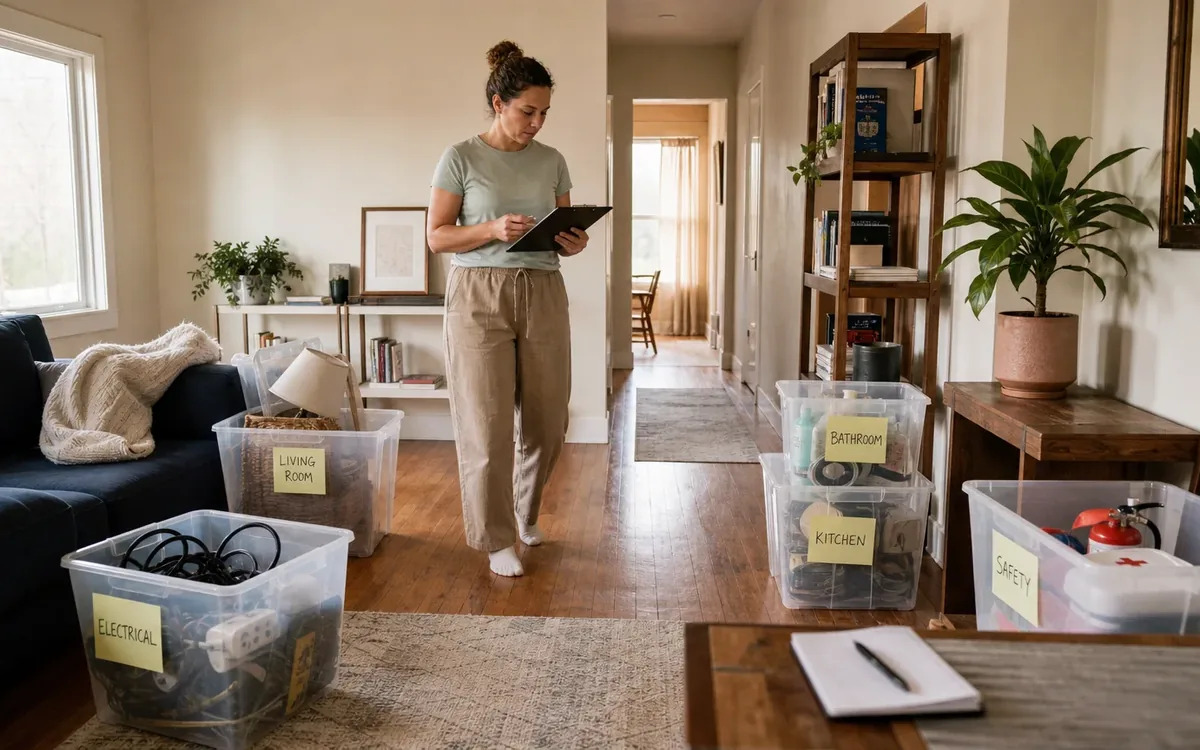
Make every cited area visible and reachable
Access is not the same as appearance. A freshly cleaned room can still be difficult to inspect if furniture blocks a wall, boxes cover an outlet, vegetation hides an exterior condition, or a locked space cannot be opened.
Walk through the property using the notice as your route map. For each cited location, check the path from the likely entry point to the condition itself.
Common access barriers include:
- Bags or boxes in hallways
- Stored items in front of panels, appliances, or utilities
- Furniture pressed against affected walls
- Locked gates, sheds, rooms, or utility spaces
- Vehicles or equipment blocking exterior areas
- Loose cords, unstable stacks, and floor hazards
- Overgrown vegetation that prevents a clear view
- Pets that cannot be safely separated from visitors
Move only what you can handle safely and lawfully. Do not disturb suspected hazardous materials, active utility components, unstable structures, or evidence involved in a dispute. Ask the responsible authority or qualified professional how to proceed if access itself could create risk.
Keep exits and ordinary walking routes clear. Place keys, gate instructions, and access information where the authorized property representative can retrieve them. If a tenant, heir, property manager, or other party controls part of the property, confirm access rights rather than assuming permission.
How should clutter and stored belongings be handled?
Use the correction list to guide clearing. The goal is not to empty the entire property unless that is separately necessary. Focus first on belongings that obstruct cited areas, create unsafe routes, or prevent the responsible worker from completing an identified correction.
Sort into clearly labeled categories:
- Keep at the property
- Move to another approved location
- Review before deciding
- Donate, if accepted by the chosen organization
- Sell through a separately selected method
- Recycle where accepted
- Discard through an appropriate disposal provider
- Hold for professional guidance
The last category matters. Keep medications, personal records, financial documents, firearms, chemicals, fuels, paint, unknown containers, and potentially hazardous materials separate from ordinary household discards. Appropriate handling depends on the item, property, local rules, and selected provider.
Storage is a household decision made with the chosen storage provider. Confirm access terms, security features, prohibited items, insurance questions, and payment obligations directly with that provider. Moving belongings into storage may improve access, but it does not correct the underlying condition or prove compliance.
Disposal is also a separate choice. Confirm that the selected hauler, facility, recycler, donation organization, or municipal program accepts the material involved. Do not place questionable materials into ordinary trash merely to clear the area before inspection.
Coordinate contractor work without losing the evidence trail
Some corrections may require contractor work. Select a provider whose qualifications and scope fit the task, and verify any permit or licensing questions with the appropriate South Carolina or local authority. Clutter Cleaner of South Carolina does not replace a trade contractor, inspector, attorney, or code official.
Before work begins, connect the contractor’s scope to the cited items. Give the provider the relevant wording from the notice, but do not ask the contractor to make the authority’s final compliance decision.
Request records that accurately describe the completed work. Depending on the project, these may include:
- A written scope or estimate
- Change orders
- Invoices marked with work performed
- Product or model information
- Permit numbers or inspection records, when applicable
- Photographs taken before an area is closed or covered
- Warranty information
- Contact information for follow-up questions
Do not cover work merely for visual neatness if an official or another responsible professional may need to see it. Ask the authority or contractor whether any portion should remain exposed until a required review occurs.
If the contractor identifies a condition beyond the original scope, document it and ask the appropriate authority how it affects the reinspection. Avoid guessing that an unrelated repair must be completed, or that it can be ignored.
Conduct a document-and-access rehearsal
A rehearsal helps reveal missing evidence and blocked areas without pretending to conduct the official inspection. The property owner or authorized representative can walk the route and practice locating each correction file.
Use this six-part review:
- Read the first cited item aloud.
- Go to the exact location without moving new obstacles.
- Confirm that the condition is visible and safely reachable.
- Open the supporting file and verify that documents match the item.
- Record any unresolved question without declaring the item compliant.
- Repeat the process for the remaining cited items.
Look for inconsistencies. A receipt alone may not show where a material was used. A close-up photo may not establish which room it depicts. An invoice may use wording that does not match the cited location. Supplement records with clear labels and context, but never alter official or contractor documents.
Keep unrelated private records out of the inspection packet. The goal is quick access to relevant material, not disclosure of every household document.
What should happen on the day of the repeat visit?
Have the owner or authorized representative available according to the arrangements made with the authority. That person should understand the property’s access plan and know where the correction file is stored.
Before the visit, check practical details:
- Confirm the appointment information using the authority’s instructions
- Clear ordinary entry and walking paths
- Unlock authorized areas that must be viewed
- Secure pets appropriately
- Turn on available lighting in relevant areas
- Place the correction file in an easy-to-reach location
- Keep contractor contact details available
- Remove temporary sorting piles from access routes
- Avoid starting unrelated disruptive work
Answer questions factually. If you do not know who completed a task or whether a permit applies, say so and refer to the available records. Do not offer a legal conclusion or claim that an item was approved unless the responsible authority provided that determination.
Take notes about any instructions, remaining items, or requested documents. Ask how formal results will be communicated. If additional action is required, use the written follow-up from the authority as the basis for the next plan.
Keep property preparation separate from legal and sale decisions
A reinspection may occur during an estate settlement, move, rental transition, or home sale. Those circumstances create overlapping decisions, but they should not be blended together.
The household or authorized fiduciary decides what happens to personal property, subject to ownership rights, estate documents, court orders, contracts, and legal advice. An attorney should address disputed ownership, probate authority, tenant rights, appeals, enforcement matters, and legal deadlines.
An appraiser provides an opinion of value. A real-estate professional advises on marketing and transaction strategy. A home inspector or specialty inspector reports within the agreed scope. A contractor evaluates and performs work within that provider’s role. The code authority determines the outcome of the compliance process.
A cleanout or move team can help organize belongings and coordinate practical property access. It should not decide whether an asset must be sold, whether a property is ready to list, whether repair work meets code, or whether a legal obligation has been satisfied.
Short FAQ
Should everything be removed before a reinspection?
Not necessarily. Prioritize clear access to every cited area and safe routes through the property. Ask the responsible authority if the notice requires broader removal or cleanup.
Are before-and-after photos enough?
They can support your records, but they do not guarantee approval. Permits, contractor documentation, product information, or an on-site view may also be relevant. The authority decides what evidence is sufficient.
Can belongings be placed in storage temporarily?
Yes, if the household authorizes it and the selected storage provider accepts the items. Storage can improve access, but it does not resolve a cited condition by itself.
Who should answer a question about permits?
Contact the permitting or code authority responsible for the property. A qualified contractor may discuss the work, but the applicable authority determines permit requirements and approvals.
Can Clutter Cleaner of South Carolina promise a property will pass?
No. The company may support practical clearing, organization, move management, or home preparation within its service scope. Only the responsible authority can determine the reinspection result.
What if the notice and contractor’s recommendation conflict?
Do not choose between them by guesswork. Share the relevant information with the issuing authority and ask for clarification. Seek legal or specialty professional advice when the issue falls within that professional’s role.



