

Safe access starts before a property cleanup crew enters the site. The household or responsible party should identify who may authorize entry, disclose known hazards, define work areas, secure people and pets, and establish a clear route from the entrance to the loading area. A cleanup or move team can discuss workflow and access needs, but officials and qualified professionals must address legal authority, structural safety, utilities, hazardous materials, and code requirements.
Quick answer: Confirm your authority to grant access, ask the crew what routes and work zones they need, remove avoidable obstacles, disclose known hazards, and keep unauthorized people away. Stop planning around any questionable structure, utility, contamination, or compliance condition until the appropriate inspector, contractor, environmental professional, attorney, or public authority has addressed it.
This sequence applies across South Carolina, whether the cleanup supports an estate transition, a move, preparation for sale, or correction of cited property conditions. Access planning is not the same as declaring a property safe or compliant.
What should you confirm before granting access?
Begin with authority. The person opening the property should know whether they are entitled to admit workers and approve removal decisions. Ownership disputes, probate questions, landlord-tenant matters, court orders, insurance restrictions, and municipal notices can affect what may happen at the property.
A household can gather and organize relevant documents, such as:
- Ownership or occupancy information
- Written authorization from the owner or estate representative
- Available inspection reports or violation notices
- Building access rules from an association or property manager
- Known utility shutoff information
- Existing inventories or lists of protected belongings
These records help the parties understand the situation, but a cleanup company does not determine title, probate authority, tenant rights, or the meaning of a court order. Direct those questions to the responsible attorney, court, property manager, insurer, or public authority.
If code issues are involved, review the scope of code compliance support services and compare it with the actual notice. Cleanup support may help address removable contents or site organization, but only the issuing authority can explain its requirements and decide whether a violation has been corrected.

Build an access plan in six steps
Use the following six-step sequence to turn a general cleanup request into a workable access plan.
-
Identify the decision-maker. Name the owner, authorized family representative, executor, administrator, landlord, property manager, or other person responsible for approving entry and item removal. Do not rely on informal family consensus if legal authority is uncertain.
-
Define the permitted work areas. List the rooms, outbuildings, yard sections, storage areas, and exterior routes the crew may enter. Mark excluded spaces clearly rather than assuming everyone understands verbal instructions.
-
Choose an entry and loading route. Identify the door, gate, stairway, elevator, driveway, or other path intended for routine movement. Consider door width, overhead clearance, steps, soft ground, low branches, parked vehicles, and shared access.
-
Record known hazards. Note unstable flooring, damaged stairs, exposed wiring, pests, leaks, mold-like growth, sharp debris, unsecured firearms, chemicals, oxygen equipment, aggressive animals, or suspected hazardous materials. Disclosure does not replace professional evaluation.
-
Separate protected property. Move or label medication, legal papers, photographs, jewelry, financial records, keys, firearms, identification, family keepsakes, and items involved in a dispute. If they cannot be removed, establish a clearly restricted zone.
-
Confirm site rules with the crew. Discuss parking, keys, alarms, locked gates, restroom expectations, communication contacts, weather concerns, and the process for pausing when an unexpected condition appears.
A written plan can be simple. A room list, marked sketch, photographs, and contact sheet may be easier to follow than a long narrative. Keep copies of any official notices separate from household sorting notes so that no one mistakes a family preference for a compliance requirement.
What can the household decide, and what can the crew discuss?
The household or legally responsible party controls ordinary preferences within the limits of applicable law and third-party rules. It may decide which authorized areas are included, which belongings are protected, who receives questions, and how family members communicate.
Household decisions may include:
- Which entrance should be used
- Which rooms are out of scope
- Which items require review before removal
- Whether family members or occupants will be present
- Where authorized vehicles may park
- Who may approve changes to the agreed scope
- Whether separate storage, donation, sale, or appraisal options will be explored
A practical cleanup or move team may discuss how those choices affect workflow. Topics might include carrying routes, staging space, container placement, access to heavy objects, locked rooms, parking limitations, and the need to pause around uncertain materials or unsafe areas.
For an estate-related property, the guide on what are the basic steps for a cleanup provides additional context for sorting authority, item decisions, and preparation. Access planning should still be specific to the present property rather than copied from a general process.
The crew should not be asked to resolve family ownership disputes, interpret legal papers, value collectibles, diagnose structural conditions, certify electrical safety, or decide whether official requirements have been met. Those responsibilities stay with the relevant decision-maker or professional.
How should known hazards affect the plan?
Known hazards should change access, not merely appear on a note. Block off the affected area, tell the crew before arrival, and obtain the appropriate evaluation when the condition falls outside ordinary contents handling.
Conditions that may require another professional or authority include:
- Sagging floors, damaged foundations, unstable ceilings, or compromised stairs
- Exposed conductors, damaged service equipment, or uncertain electrical conditions
- Gas odors, leaking fuel, or questionable utility connections
- Sewage, standing contaminated water, or significant biological material
- Suspected asbestos-containing material, lead hazards, or unidentified chemicals
- Fire damage or areas restricted by an insurer, fire official, or building authority
- Infestations that require pest-management decisions
- Containers with unknown contents or regulated disposal requirements
Do not move material simply to expose a route when moving it could release dust, liquid, fumes, or sharp debris. A qualified environmental provider, remediation company, trade contractor, utility, inspector, or public agency should assess conditions within its field.
Similarly, shutting off a utility is not automatically a cleanup task. The account holder, utility provider, licensed trade professional, property manager, or responsible authority should determine whether a shutoff is appropriate and how it must be completed.
Access can resume only after the responsible party decides that the required professional or authority has addressed the issue. A contractor’s repair, an inspector’s findings, and an agency’s compliance determination are different decisions and should not be treated as interchangeable.
Prepare the route without creating new risks
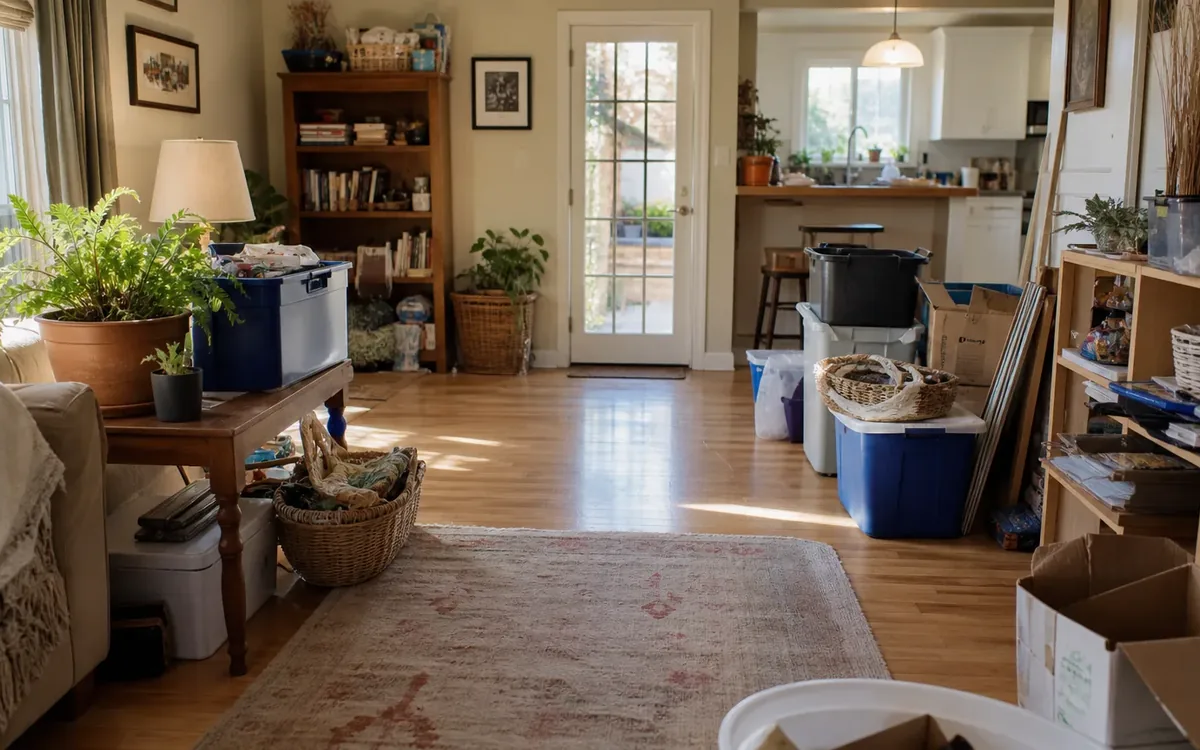
The goal is a route that allows controlled movement while preserving emergency access and protecting surfaces or areas that must remain untouched. Walk the proposed path from the property boundary to each authorized work area.
Check these practical points:
- Gates open and can remain secured as needed
- Entry doors operate without force or improvised supports
- Steps and landings are visible and unobstructed
- Hallways are not narrowed by loose piles
- Rugs, cords, and small objects are removed from carrying routes
- Lighting is available where it can be used safely
- Vehicles do not block hydrants, neighboring access, mail service, or posted zones
- Children, visitors, and pets cannot enter active work areas
- Keys, alarm codes, and lockbox instructions are controlled
- A meeting point is available away from loading activity
Do not create access by dismantling railings, modifying doors, cutting structural components, or building a makeshift ramp. Construction and repair decisions belong to an appropriate contractor and, where applicable, the permitting or inspection authority.
Weather and site conditions also matter. Rain can change soil stability, steps, ramps, and exterior carrying paths. The responsible party and crew can discuss whether a route remains practical, but a cleanup crew should not certify site engineering, drainage, or structural capacity.
For multifamily or managed properties, coordinate with the association, landlord, or manager about shared entrances, elevators, loading areas, and building rules. Their approval does not replace any permit or public requirement that may apply.
How do you protect items that are not being removed?
Do not rely on memory or phrases such as “keep anything important.” Separate protected property physically and document it clearly. The best method depends on who has authority and whether ownership is disputed.
Consider these safeguards:
- Remove high-priority documents and valuables before cleanup begins
- Use a locked room only if it is safe and access can remain restricted
- Place visible labels on retained furniture or boxed property
- Create photographs or a written inventory for household reference
- Name one authorized person to answer item-specific questions
- Establish a “stop and ask” category for anything uncertain
- Keep medications, firearms, ammunition, and sensitive records out of general sorting areas
Firearms require secure handling and decisions by a lawful owner or other properly authorized person. Questions about possession, transfer, an estate, or disposal should go to the appropriate attorney, law enforcement agency, licensed dealer, or other responsible authority.
Items intended for storage involve a separate household arrangement with a storage provider. The household should decide what will be stored, who will hold the contract, and how access will be controlled. Do not assume that storage is part of a cleanup scope.
Likewise, an appraisal is a separate professional service. A qualified appraiser should address value. A real-estate professional may discuss market preparation, but does not replace an appraiser, inspector, contractor, or code official.
Coordinate code compliance without confusing the roles
When a cleanup follows a code notice, use the notice as a source document rather than paraphrasing it from memory. Identify the issuing department, case or reference information, cited conditions, contact person, and any instructions the authority provided.
The responsible party can ask the authority:
- Which conditions are alleged or documented?
- Which portions involve removable contents or exterior debris?
- Are permits or trade professionals required for any corrections?
- What documentation does the authority want?
- Who decides whether the case can be closed?
A cleanup team may discuss removal and access logistics related to authorized contents. It may also help the household distinguish contents work from conditions that appear to require a contractor or another provider. It cannot rewrite the notice or guarantee that cleanup will satisfy an inspector.
Repairs, demolition, plumbing, electrical work, pest treatment, environmental remediation, and structural correction should be discussed with providers qualified for those scopes. Permit requirements and inspection outcomes remain with the applicable South Carolina or local authority.
Keep photographs, receipts, contractor records, disposal documentation, and correspondence if they are relevant to the matter. Ask the issuing authority what it accepts. The household, attorney, contractor, or other responsible professional should submit records according to the authority’s directions.
Create a clear arrival-day handoff
The handoff should make the written plan usable. The authorized contact can meet the team, identify boundaries, explain known hazards, and confirm how questions will be handled.
Cover five points during the handoff:
- Access: Demonstrate the approved entrance, keys, gates, alarms, and loading route.
- Boundaries: Point out included areas, excluded rooms, protected items, and any disputed property.
- Hazards: Repeat known concerns and show all blocked or professionally restricted areas.
- Communication: Identify the person who can approve ordinary scope questions and the person to contact for legal or property-management issues.
- Stop conditions: Agree that work pauses if workers find an unstable surface, unidentified material, active leak, utility concern, weapon, sensitive record, or item whose status is unclear.
Avoid adding unplanned participants after work begins. Relatives, buyers, neighbors, contractors, and real-estate professionals may each have legitimate interests, but active work zones are not the place to resolve competing instructions.
If the scope changes, document the change before proceeding. A request to enter another building, remove built-in material, handle questionable waste, or cross a neighbor’s property may introduce legal, safety, or disposal questions that need separate review.
Plan disposal, sale, donation, and contractor work separately
A safe route does not answer where every item should go. The responsible party should make destination decisions and confirm any provider requirements before material is moved.
Keep these categories distinct:
- Ordinary disposal: Confirm what the selected facility or hauler accepts.
- Regulated or questionable material: Ask the appropriate environmental provider, disposal facility, or authority for direction.
- Donation: Verify acceptance directly with the chosen organization.
- Sale: Use an auction, estate-sale, or other qualified sales provider under a separate arrangement.
- Appraisal: Ask an appropriate appraiser to provide valuation advice before items are removed if value matters.
- Storage: Contract separately with a storage provider and define transport, inventory, and access responsibilities.
- Repairs: Hire the appropriate contractor and determine whether permits or inspections apply.
Clutter Cleaner of South Carolina lists estate cleanouts, downsizing and organizing, auctions and estate sales, move management, home sale preparation, and code compliance support within its statewide scope. The specific services suitable for a property should be discussed directly. Availability, acceptance of particular materials, and third-party outcomes should never be assumed.
FAQ
Should the owner be present during cleanup?
That is a household and scope decision. If the owner or authorized representative will not be present, provide written access instructions, a reachable decision-maker, clear removal boundaries, and a process for uncertain items.
Can a cleanup crew decide that a building is safe to enter?
No. A crew can identify a concern and decline or pause access. Structural, electrical, environmental, fire, and similar safety determinations belong to the appropriate inspector, contractor, utility, environmental professional, or public authority.
Who confirms that a code issue is resolved?
The authority responsible for the notice or case decides whether its requirements have been met. Cleanup records may support that review, but they are not a compliance determination.
What if family members disagree about an item?
Set the item aside and stop any removal decision involving it. The legally authorized representative should resolve ordinary instructions. Ownership, probate, or other legal disputes may require an attorney or court.
How can a South Carolina household discuss access needs?
Clutter Cleaner of South Carolina has a physical business location in Mount Pleasant and serves properties statewide, with Charleston as its primary market. Call (843) 972-7020 to discuss the property, authorized work areas, known hazards, and requested scope. Legal authority, inspection findings, appraisals, repairs, regulated disposal, and official compliance decisions remain with the responsible household member, provider, professional, or authority.



