
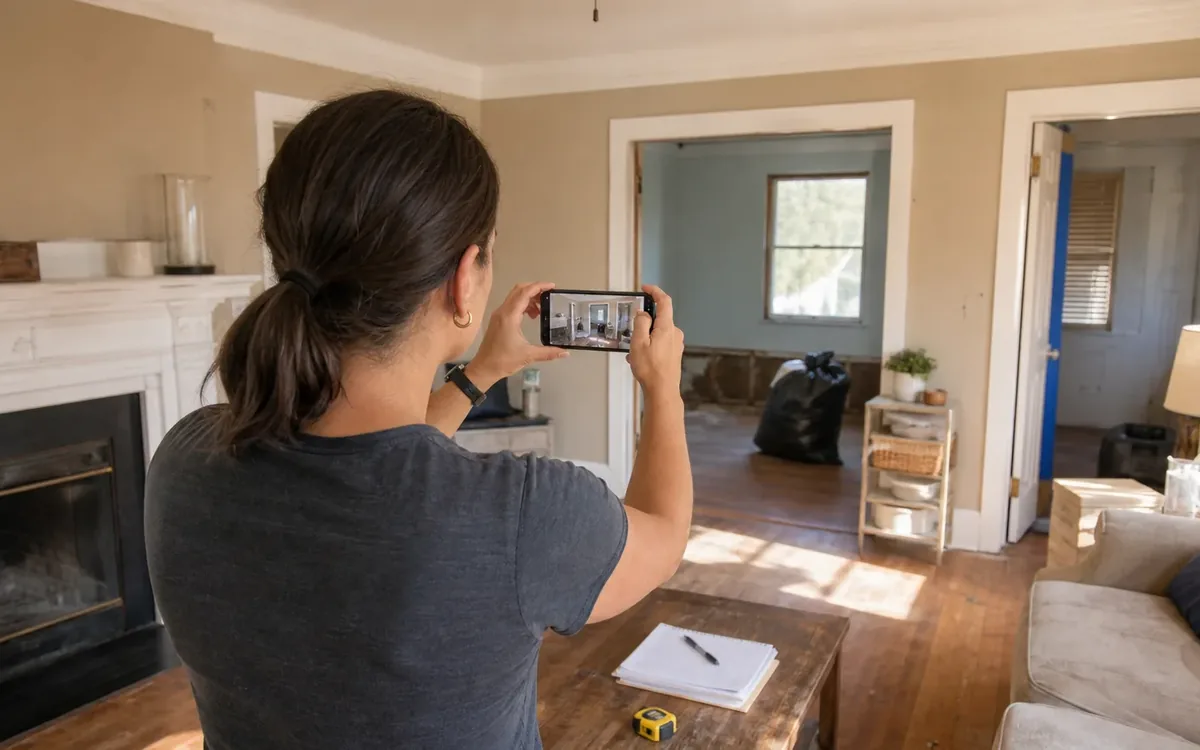
Photograph cleanup progress by first recording the full condition of each cited area, then capturing the same viewpoints during work and after completion. Include wide views, close-ups, identifying landmarks, and any required receipts or records. Keep original files organized by location and date, but ask the responsible inspector or authority what evidence it accepts. Photos support a reinspection. They do not prove legal compliance or replace an inspector’s decision.
Quick answer: Read the notice, identify every cited condition, and photograph each area before disturbing it. During cleanup, document removed material and newly visible problems. Afterward, retake the original views in similar lighting and add close-ups showing completed work. Preserve the original files, label copies clearly, and confirm submission requirements with the authority handling the case.
What should you confirm before taking cleanup photos?
Start with the written notice, inspection report, correction order, or other document identifying the issue. Build the photo plan around that document rather than photographing the property randomly.
The household can decide who will take the photos, how files will be stored, and whether to create a shared folder. The responsible authority decides what must be corrected, what proof may be submitted, and whether another inspection is required.
Before cleanup starts, confirm these points when possible:
- The exact areas or conditions cited
- The correction language used in the notice
- Any listed reinspection or response date
- Whether evidence must be submitted through a portal, email, or another method
- Whether photos, receipts, contractor records, permits, or other documents are requested
- Whether work must remain visible until it is inspected
- The correct contact for procedural questions
Do not infer requirements from a neighbor’s case or an old notice. Procedures can vary by authority and case. If wording is unclear, request clarification from the named inspector, department, property manager, attorney, or other responsible party.
For help separating physical cleanup tasks from official decisions, review Clutter Cleaner of South Carolina’s code compliance support service. A practical team may discuss sorting, removal sequencing, access, and visible cleanup needs. It cannot declare a property compliant or promise that evidence will be accepted.

How do you create useful before photos?
Before photos establish what was present when the project began. They are most useful when another person can understand where the condition was located and how extensive it appeared.
Use this five-part sequence for every cited area:
- Photograph the approach. Capture the path or entry leading to the area so its location is recognizable.
- Take a wide view. Show the room, yard section, structure, or surrounding space rather than only the cited object.
- Add medium views. Record the condition in relation to walls, doors, fences, fixtures, or other fixed reference points.
- Capture close-ups. Show labels, accumulation, deterioration, obstruction, or another relevant detail without losing context.
- Record alternate angles. Photograph anything hidden by the first viewpoint, such as material behind a shed, beside a stairway, or along a property boundary.
Stand in a safe, stable position. Do not climb unstable piles, enter a structurally questionable area, open unknown containers, or move hazardous material merely to improve a photograph. A qualified inspector, contractor, environmental professional, utility, or emergency authority should address conditions within its expertise.
Avoid relying on extreme zoom, portrait mode, heavy image enhancement, filters, or screenshots. These can remove context or make details harder to evaluate. Keep the original files even if you create cropped or annotated copies later.
If an estate or inherited property is involved, cleanup documentation may overlap with decisions about belongings. The guide to what is a code compliance inspection explains practical sorting roles without treating photographs as proof of ownership or permission to discard an item.
Build a photo log around the cited conditions
A photo log links each image to the relevant place and issue. It does not need elaborate software. A spreadsheet, document, notebook, or clearly named digital folder can work if the entries remain consistent.
Consider recording:
- File name
- Date and time shown by the device
- Property area or room
- Direction of the camera view
- Condition depicted
- Notice item or reference number, if one exists
- Work completed since the prior image
- Related receipt, invoice, permit, or contractor record
- Questions requiring professional review
Use neutral descriptions. “Loose material removed from west side of detached structure” is more useful than “problem completely fixed.” The second statement makes a conclusion that may belong to an inspector or other qualified professional.
Create separate folders for original images, working copies, submitted evidence, and related documents. Avoid renaming or editing the only copy of a file. If several family members or workers take pictures, choose one person to collect and organize them so images do not remain scattered across phones and text messages.
Privacy matters as well. Check frames for children, neighbors, license plates, personal records, access codes, medication labels, financial documents, and unrelated valuables. Preserve the original if it may be relevant, but ask the receiving authority whether a redacted copy is appropriate. Never alter an image to conceal a condition relevant to the case.
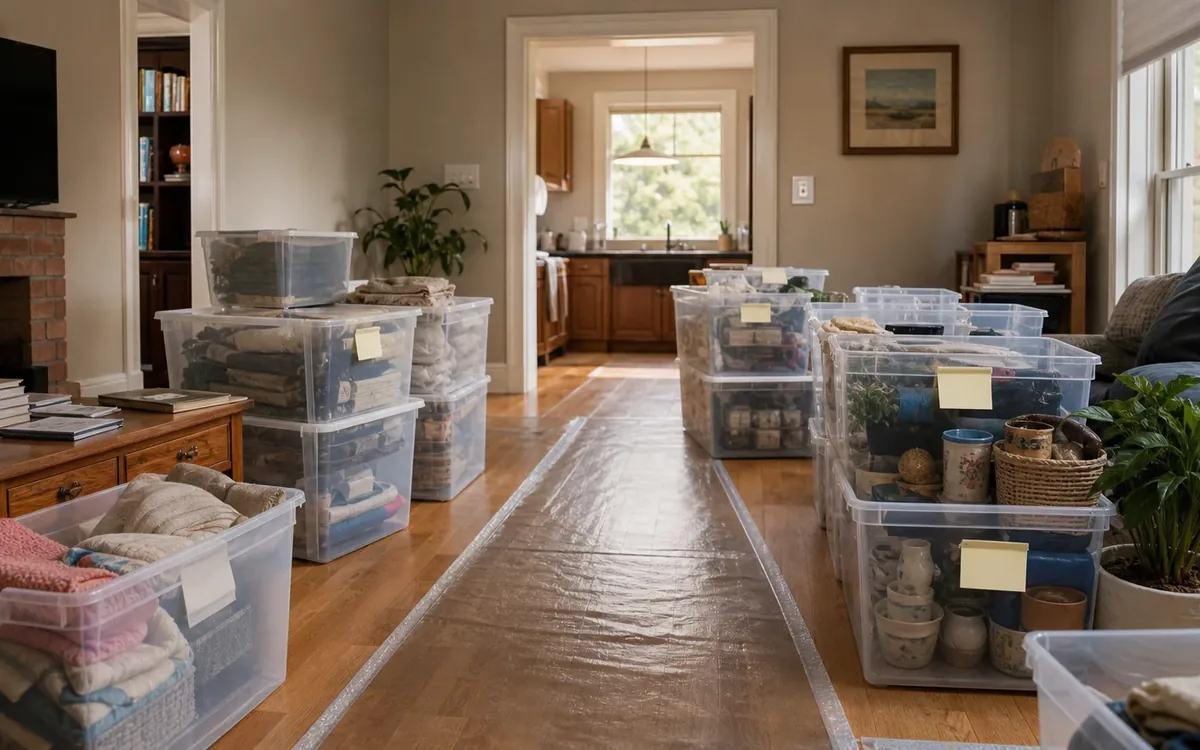
What should you photograph while cleanup is underway?
Progress photographs explain what changed between the original condition and the finished appearance. They can also record conditions that become visible only after belongings, debris, vegetation, or damaged material are removed.
Photograph meaningful stages, including:
- A cited area before any material is moved
- Sorted groups before removal when their disposition matters
- Cleared access to doors, equipment, panels, stairs, or walkways
- Material loaded for lawful disposal or transfer
- Newly exposed damage, leakage, pests, wiring, mold-like growth, or structural concerns
- Contractor work before it is covered, when the contractor or authority requests documentation
- The cleaned area before belongings are returned
Pause if cleanup reveals a condition outside the planned scope. For example, clearing stored items might expose damaged wiring or an unstable wall. The household can secure access and contact an appropriate professional. A cleanup or move team may discuss leaving the area undisturbed and adjusting the removal sequence. Electrical, structural, environmental, permit, and safety decisions belong to the relevant contractor, inspector, department, or other qualified authority.
Do not stage a misleading result. Moving everything outside the camera frame, placing waste on another part of the property, or temporarily opening a required access route does not document a durable correction. Photograph where removed material went when that information is relevant, and retain legitimate disposal or transfer records.
Retake matching views after the work
A strong after set allows direct comparison with the before set. Return to the same camera position when it is safe to do so. Match the angle, orientation, approximate distance, and visible reference points.
Each finished area should generally include:
- A wide image showing the overall result
- A matching view corresponding to the original photo
- A close-up of the corrected condition
- An image showing access around or through the area
- Another angle if the first view could hide remaining material
Use adequate light and check each image before leaving. Blurry, dark, overexposed, or obstructed photos may fail to show the relevant condition. Clean the camera lens and avoid placing a finger over part of the frame.
Take an additional overview of the property only if it helps establish location or the relationship among cited areas. More images are not automatically better. A concise, ordered set is easier to understand than a folder filled with near-duplicates.
Keep the wording of labels factual: “After removal,” “View from driveway,” or “Access to electrical panel.” Avoid labels such as “approved,” “passed,” “fully compliant,” or “hazard eliminated” unless the responsible authority has made that determination.
Which records should accompany the photographs?
The notice or reviewing authority should guide the evidence package. Photos may be enough to show visible cleaning, but other corrections may require documents from the professional who performed or evaluated the work.
Possible supporting records include:
- Disposal, recycling, or donation receipts
- Contractor invoices describing completed work
- Permit or inspection records issued by the relevant authority
- Pest, environmental, plumbing, electrical, or structural reports
- Correspondence clarifying the requested correction
- A property sketch identifying photo locations
- A short index matching files to notice items
Keep these roles distinct. A household chooses what belongings to retain, donate, sell, store, or discard, subject to ownership rights and legal restrictions. A hauler or disposal facility determines what material it accepts. A contractor evaluates and performs work within its field. An appraiser determines value for the purpose of the appraisal. A real-estate professional advises on listing and transaction matters. An inspector or enforcement authority determines whether the cited condition has been corrected.
If ownership, probate, tenancy, insurance, court orders, or access rights are disputed, consult the appropriate attorney, court, insurer, property owner, or other responsible party before removing property. Cleanup documentation should not be treated as authorization.
How should you submit evidence for a reinspection?
Follow the instructions supplied by the authority handling the case. If none were provided, ask before sending large files or assuming that email submission cancels an in-person visit.
A clear submission package can contain these four parts:
- A brief cover note. Identify the property, case or notice number, and sender without adding unsupported conclusions.
- An issue index. List each cited item and the corresponding before, progress, and after filenames.
- The image files. Use consistent names such as “Item-02_East-Yard_After_01.”
- Requested supporting records. Attach relevant receipts, reports, or permit documents in an organized order.
Ask whether the authority has file-size limits, accepted formats, naming rules, or a required portal. Confirm whether it wants original files, compressed copies, printed images, or documents from a contractor.
Save a copy of exactly what was submitted, along with the transmission email, portal confirmation, or delivery record. Submission does not mean acceptance. Continue following the official process until the responsible authority communicates the outcome.
What can a cleanup or move team discuss?
A practical cleanout or move team may help the household translate a physical cleanup goal into an orderly work sequence. Discussion can include:
- Which cited areas need to remain visible for photos
- How to separate retained property from removal items
- How to clear safe access without mixing ownership decisions
- When to pause for family, fiduciary, contractor, or inspector input
- How to group photographs by room or exterior area
- Which newly exposed conditions should be referred elsewhere
- Whether storage, sale, donation, recycling, or disposal requires a separate provider or household decision
Clutter Cleaner of South Carolina has a physical business location in Mount Pleasant and serves households across South Carolina, with Charleston as its primary market. Any project discussion should define the requested physical support and its limits.
A cleanout or move team does not replace a code official, attorney, appraiser, real-estate professional, home inspector, engineer, environmental specialist, licensed trade contractor, or disposal authority. It also cannot guarantee that cleanup will resolve a citation, that photographs will satisfy an authority, or that a property will pass reinspection.
Common documentation mistakes to avoid
Several preventable problems make a photo set less useful:
- Taking close-ups without a wider location view
- Beginning removal before documenting the original condition
- Photographing only part of a cited area
- Using inconsistent angles that prevent comparison
- Deleting original files after making edited copies
- Mixing unrelated properties or dates in one folder
- Claiming compliance rather than describing visible work
- Failing to record hidden damage exposed during cleanup
- Assuming a contractor invoice replaces a required inspection
- Moving questionable property without confirming ownership or authority
- Sending files without a case number or image index
- Treating silence after submission as approval
The goal is an accurate, traceable visual record. It should help the reviewing person see what existed, what work occurred, and what remains for professional or official determination.
Short FAQ
Do timestamped photos prove when cleanup occurred?
Device metadata and visible timestamps can support organization, but they are not automatically conclusive. Preserve original files and ask the receiving authority what it accepts.
Can I edit reinspection photos?
Keep unedited originals. Cropping, rotating, or adding labels to copies may improve readability, but do not alter the depicted condition. Confirm whether annotated images are acceptable.
Should people appear in progress photos?
Usually the condition and location matter more than the worker. Avoid unnecessary faces and personal information. Do not omit a person or object if doing so would misrepresent the condition.
Are photographs a substitute for permits or contractor reports?
No. If a correction requires a permit, trade evaluation, report, or official inspection, photographs do not replace that requirement. The relevant authority or professional determines what documentation is necessary.
Who decides whether the property passes reinspection?
The official, department, association, property manager, court, or other entity with responsibility for the matter makes that decision under its applicable process. A household or cleanup team can document work but cannot issue approval.
What if the notice covers belongings with disputed ownership?
Pause before disposal. Contact the owner, estate representative, attorney, court, landlord, insurer, or other responsible party as appropriate. A citation does not by itself settle ownership or disposal authority.



