

When code notices arrive for multiple South Carolina properties, organize them by property first, then by notice, cited condition, deadline, responsible party, and follow-up status. Do not combine everything into one general cleanup list. Each municipal or county office may use different contacts, procedures, terminology, and documentation requirements, so the safest working system preserves the exact notice while giving the household one clear portfolio-level view.
Quick answer: Create one master tracker for all properties and a separate file for each address. Record every notice exactly as issued, including the case number, issuing office, cited condition, required response, deadline, contact person, and current status. Keep photographs, receipts, correspondence, and contractor records attached to the relevant property and condition. Confirm legal interpretations, extensions, inspections, and closure directly with the responsible authority or qualified professional.
Why should notices be organized by property rather than by task?
A task-based list might group together items such as yard work, debris removal, structural repairs, or vehicle issues. That can help coordinate labor, but it is not a reliable primary record. One property may have several notices, and one notice may contain several cited conditions with different paths to resolution.
A property-first system preserves context. It helps an heir, landlord, property manager, or absentee owner see which authority issued a notice, what address it concerns, and whether the reported condition has actually been reviewed or closed.
Create a digital or paper folder for each property using a consistent title:
- Street address
- Municipality or unincorporated county area, if known
- Owner or estate name
- Internal property ID, if the household uses one
Inside that folder, separate documents into these categories:
- Original notices and envelopes
- Contact log
- Photographs and videos
- Work estimates and contracts
- Receipts and disposal records
- Inspection or reinspection information
- Correspondence
- Closure or compliance confirmation
Preserve the original notice unchanged. Work from a copy or a separate summary so highlighting, notes, or assumptions do not obscure the official wording.
South Carolina households that need practical help coordinating property conditions can review code compliance support services. A cleanout or move team may discuss access, contents, sorting, removal priorities, and documentation practices. The issuing authority determines what satisfies a notice and whether a case is closed.

What belongs in the master code-notice tracker?
The master tracker should provide a portfolio view without replacing the underlying records. A spreadsheet is often useful because it can be sorted by deadline, jurisdiction, property, responsible person, or status.
Use these fields:
- Property address: Enter the complete address appearing on the notice.
- Owner or responsible entity: Record the named individual, estate, trust, or business exactly as shown.
- Issuing authority: Identify the municipal or county department listed on the document.
- Case or notice number: Copy every character carefully.
- Notice date: Distinguish the issue date from the date received.
- Cited condition: Summarize each item without changing its meaning.
- Required action: Quote or closely transcribe the notice rather than guessing.
- Response or compliance date: Enter the stated date and note what it applies to.
- Authority contact: Include name, title, phone number, email, and office.
- Household lead: Assign one person to coordinate that property.
- Outside provider: List any cleanout team, contractor, attorney, appraiser, inspector, agent, or other professional involved.
- Current status: Use a controlled label rather than free-form wording.
- Last contact: Record the date and substance of the latest communication.
- Next step: State one specific action and who owns it.
- Evidence location: Link to the relevant folder, photo set, receipt, or letter.
- Closure confirmation: Note who confirmed closure and where that record is stored.
Useful status labels include new, under review, clarification requested, work being planned, work scheduled, work documented, inspection requested, awaiting authority response, and closed in writing.
Avoid using “done” for every completed task. A yard may be cleared while the case remains open. “Work documented” is more precise until the appropriate office confirms the next status.
How do you separate cited conditions within one notice?
Create a condition log inside each property file. Give every cited condition its own row, even when several appear in one letter. This prevents a visible cleanup from masking an unresolved repair, permit issue, or documentation request.
For each condition, record:
- Exact or closely transcribed wording
- Location on the property
- Photographs taken before work
- Clarifying questions for the issuing office
- Proposed response
- Person or provider responsible
- Related estimate, contract, or receipt
- Photographs taken after work
- Inspection or review status
- Final confirmation
Do not silently convert official language into a household interpretation. For example, “accumulated materials” should not automatically become “trash,” because some contents may be personal property, estate assets, recyclables, hazardous material, or items requiring specialized handling.
When belongings are involved, inventory and ownership questions should be resolved before removal. Heirs and representatives may find the process distinctions in how estate cleanouts work helpful when planning access, sorting, and documentation. That guide does not replace instructions from a probate attorney, personal representative, court, or code authority.
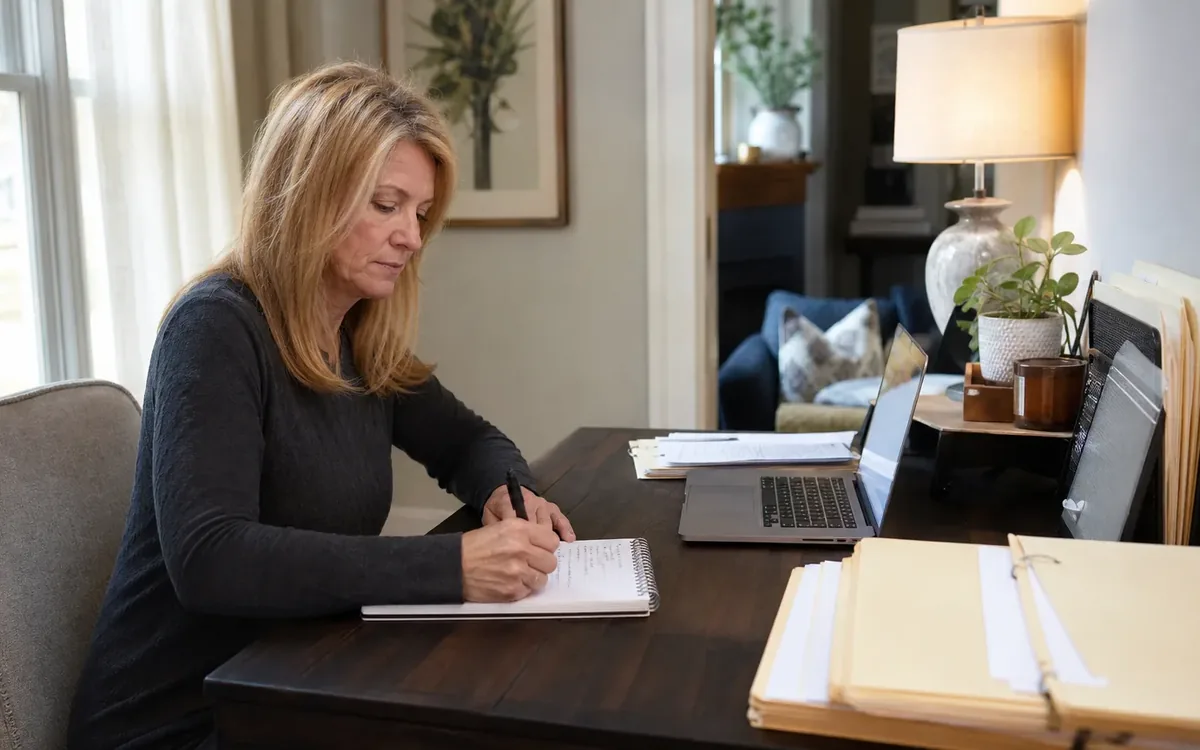
Build a reliable contact and communication record
Multiple properties can involve different municipal departments, county offices, associations, utilities, contractors, heirs, tenants, or property managers. A contact log creates a factual sequence when several people are communicating.
Record each interaction with:
- Date and method of contact
- Person who initiated it
- Office or company contacted
- Name and title of the recipient
- Case number discussed
- Questions asked
- Information provided
- Documents sent or received
- Commitments made by either party
- Follow-up action and owner
After a substantive phone call, write a neutral summary while the details are fresh. If appropriate, ask the office whether it accepts written confirmation or supporting documents by email or through a portal. Do not assume that sending photographs, leaving a voicemail, or completing physical work automatically pauses a deadline or closes a matter.
Keep personal notes separate from correspondence sent to an authority. Internal comments might contain uncertain information, family disagreements, or preliminary contractor opinions. Clearly label those notes so they are not mistaken for official records.
Who decides what must be done?
The household can make many practical decisions. It can select a recordkeeping system, designate a coordinator, arrange property access, decide what belongings may be retained, and obtain proposals from suitable providers. An authorized owner or representative may also decide which provider to hire and how to sequence nonregulated work.
A practical cleanout or move team may discuss:
- Access and key control
- Room-by-room sorting
- Contents designated to keep, donate, sell, recycle, or discard
- Removal priorities
- Photographic documentation of visible conditions
- Coordination around household-selected vendors
- Preparing accessible areas for a scheduled review
Other decisions stay with the responsible professional or authority:
- Legal questions: An attorney or authorized legal decision-maker should address ownership, probate authority, tenant rights, disputes, required notices, and document interpretation.
- Code determinations: The issuing municipal or county authority decides what its notice means, whether an extension is available, what evidence it accepts, and whether compliance has been achieved.
- Repairs and permits: Qualified contractors and the applicable permitting or inspection authorities address scope, methods, permits, regulated work, and approval.
- Appraisals: A qualified appraiser determines value when a formal appraisal is needed. A cleanout estimate or resale opinion is not an appraisal.
- Real-estate decisions: The owner and appropriate real-estate professionals decide listing strategy, disclosures, sale preparation, and transaction matters.
- Inspections: The authorized inspector or authority conducts and interprets an official inspection. Household photographs do not substitute for it.
- Disposal compliance: The household and selected provider should identify applicable facility rules and legal requirements. Specialized or regulated materials may need an appropriate provider.
- Storage: The household chooses whether to rent storage and signs directly with the storage provider unless another authorized arrangement is established.
Keeping these roles separate prevents a practical coordinator from being treated as a legal adviser, code official, appraiser, inspector, or licensed trade professional.
How should deadlines and follow-up be controlled?
Enter each date exactly as written and identify what the date represents. A response date, hearing date, inspection date, and compliance date are not interchangeable.
Use three connected views:
- Master deadline calendar: Shows every dated obligation across all properties.
- Property action list: Shows the work, questions, and records needed for one address.
- Follow-up queue: Shows matters awaiting a reply, inspection, document, estimate, or decision.
Set internal reminders according to the household’s risk tolerance and workload, but do not describe those reminders as official extensions. Only the appropriate authority can explain whether a deadline can change and how a request must be submitted.
When a deadline is unclear, contact the office shown on the notice. Ask which date controls, what must occur by that date, and whether confirmation is available in writing. Record the answer without embellishment.
A portfolio owner should also designate a backup contact. That person needs access to the tracker and records, but should not make ownership, legal, spending, or disposal decisions without proper authorization.
Keep evidence tied to the correct address and condition
Photographs are easier to use when they show context. Begin with the property exterior or room entrance, then capture the cited area and relevant details. Retain the original files when possible instead of keeping only screenshots or compressed copies.
Use a consistent file name such as:
PropertyAddress_ConditionID_Date_View
For example, a condition ID might be C03, with the tracker explaining what C03 means. Avoid putting confidential legal conclusions or sensitive personal information in file names.
Maintain a document index containing:
- File name
- Property
- Related condition
- Document type
- Date created or received
- Source
- Notes about what it shows
Receipts should identify the provider and service or material when available. Contractor records should remain separate from cleanout records, and appraisal reports should remain separate from resale, auction, or donation information. This makes it easier to provide only relevant documents to each authority or professional.
Back up the working files in a location accessible to authorized decision-makers. If paper records are used, scan important pages and retain the originals according to advice from the appropriate professional or authority.
Coordinate physical work without losing case control
A clean property is not necessarily a compliant property, and a code matter may involve more than contents. Before arranging work, compare every proposed task against the condition log.
The household coordinator can group tasks into practical lanes:
- Contents sorting and removal
- Yard or exterior clearing
- Building repairs
- Vehicle or equipment decisions
- Pest, environmental, or specialized concerns
- Permit or inspection questions
- Record gathering and submission
Assign each lane to the appropriate person or provider. A cleanout team may handle agreed contents-related work. A contractor should define repair scope. An attorney should address legal authority or disputes. An appraiser should perform a requested valuation. The relevant government office should answer compliance and closure questions.
Do not allow one provider’s completion note to become a substitute for another professional’s decision. A hauling receipt proves that a transaction occurred, not that every cited condition was corrected. Likewise, a contractor invoice does not establish code closure unless the responsible authority accepts the completed work and confirms the case status.
Protect decisions involving heirs, tenants, and absentee owners
Properties involving several stakeholders need a decision log in addition to the contact log. Record the decision, the person who made it, the basis of that person’s authority, the date, and any limits.
Before contents are moved, clarify:
- Who may authorize entry
- Who controls keys and access codes
- Whether a tenant or occupant has rights affecting access or property
- Which belongings are disputed or reserved
- Whether estate or court instructions apply
- Who may approve expenses
- Who receives official correspondence
These are not questions for a cleanup provider to resolve. Obtain guidance from the appropriate attorney, personal representative, property manager, court, or authority when responsibility is uncertain.
Absentee owners can reduce confusion by naming one local access contact while retaining decision authority. The tracker should distinguish the person who opens the property from the person authorized to approve work or dispose of belongings.
Close each matter deliberately
Do not archive a notice simply because the visible work appears complete. Review the condition log and identify what confirmation is still needed.
A closeout packet may contain:
- Original notice
- Condition-by-condition summary
- Before and after photographs
- Relevant receipts or contractor records
- Correspondence with the issuing office
- Inspection information
- Written status or closure confirmation
Ask the responsible office how it communicates closure. Store the response with the case record and update the master tracker. If some conditions close while others remain open, record them separately rather than changing the entire notice to “closed.”
After closure, preserve records according to guidance applicable to the property, ownership structure, insurance, transaction, or legal matter. A household may ask its attorney, accountant, insurer, property manager, or real-estate professional what retention obligations or practical needs apply.
Short FAQ
Should all notices be forwarded to one person?
One coordinator can reduce duplication, but authorized owners and representatives should retain appropriate access to the records. Establish who may receive notices, speak for the owner, approve expenses, and make legal or property decisions.
Can photographs prove that a property complies?
Photographs can document visible conditions and completed work. They do not by themselves determine compliance. The issuing authority decides what evidence it accepts and whether inspection or other confirmation is required.
Should estimates be stored with the notice?
Yes, but label them as estimates and connect them to the relevant condition. Keep cleanout proposals, contractor estimates, appraisals, storage agreements, and real-estate documents in separate categories because they serve different purposes.
What if two offices use different instructions?
Do not merge the instructions or choose one informally. Record each office, case number, contact, and requirement separately. Ask the responsible authorities or a qualified legal professional to clarify conflicts, jurisdiction, or priority.
Can Clutter Cleaner of South Carolina interpret a code notice?
A practical team may discuss the visible property conditions, contents-related work, organizing, and documentation. Interpretation of an official notice, legal rights, inspection findings, and final compliance remains with the appropriate authority or qualified professional.
Clutter Cleaner of South Carolina is physically located in Mount Pleasant and serves households across South Carolina, with Charleston as its primary market. For questions about practical code-compliance coordination, call (843) 972-7020.



