

The right code enforcement office is usually the department serving the government jurisdiction where the property physically sits, not necessarily the jurisdiction shown in its mailing address. Start by confirming the parcel’s location and governing municipality or unincorporated county area. Then contact that jurisdiction and ask which department handles the specific concern, such as property maintenance, unsafe structures, zoning, building permits, or accumulated waste.
Quick answer: Look up the property through the county parcel or GIS system, determine whether it lies inside municipal limits, and call the identified city or county government. Provide the parcel address and tax map or parcel number. Ask the staff member to confirm the responsible department before discussing corrective work or removing anything.
Why can the mailing address point you to the wrong office?
A postal city is used for mail delivery. It does not always identify the local government with jurisdiction over a parcel. A property may use a familiar city name in its mailing address while sitting outside that city’s incorporated limits.
That distinction matters because incorporated municipalities and county governments can have separate departments, ordinances, permit systems, and enforcement responsibilities. Calling the office associated with the postal address may result in a referral rather than a definitive answer.
In the Charleston area, do not assume that every property with a Charleston mailing address is governed by the same local authority. The same principle applies throughout South Carolina. Confirm the parcel’s actual jurisdiction before relying on instructions, forms, or contact information.
The correct contact may also depend on the issue. “Code enforcement” is a useful starting phrase, but the responsible unit might have another name, including:
- Property maintenance or neighborhood services
- Building inspections or building services
- Planning and zoning
- Environmental services or solid waste
- Fire prevention
- Public works
- Business licensing
- An unsafe-building or nuisance division
A practical cleanout team can help address physical belongings, debris, and accessible household contents when those tasks fit the agreed scope. It cannot determine which government has jurisdiction, interpret an ordinance as legal advice, certify compliance, or promise that an enforcement matter will be closed. Learn more about the boundaries of code compliance support services.

Start with the parcel, not the violation notice
A notice is important, but the parcel record provides a reliable starting point for identifying the property. Search the county assessor, property records, or geographic information system commonly labeled “GIS.” Use the county where the land is located.
Gather these details before calling an office:
- Street address, including unit information if applicable
- County where the property lies
- Tax map number, parcel identification number, or TMS number
- Owner name as shown in property records
- Municipality or unincorporated-area designation, if listed
- Subdivision or neighborhood name, when relevant
- A copy of any notice, case number, or inspection report
Do not treat an online map as a final legal determination of boundaries. Parcel databases may contain disclaimers, and not every public search tool displays municipal limits clearly. If the result is uncertain, ask the county assessor, planning department, or other designated government contact to confirm the jurisdiction.
Also compare the parcel number on the notice with the parcel record. Adjacent lots, vacant parcels, accessory structures, and separately deeded land can create confusion. The responsible government office should determine which parcel and structures are part of its case.
If the property is part of an estate, ownership authority may require separate attention before anyone approves work or removes possessions. The household can review what happens if you get a code enforcement violation while the executor, personal representative, attorney, or probate professional handles authority and estate-specific decisions.
How do you tell whether the city or county has jurisdiction?
Use a verification sequence rather than relying on the place name in the address. These five steps keep the search focused:
- Identify the county. Find the county through the deed, tax bill, assessor record, or county parcel search.
- Locate the parcel record. Search by address, owner, or parcel number and save the identifying information.
- Check municipal status. Look for a municipality field, incorporated-boundary layer, or other jurisdiction indicator.
- Confirm with government staff. Call the municipality if the parcel appears incorporated. If it appears unincorporated, call the county department that receives code or property-maintenance questions.
- Ask for written direction. Request the department name, staff contact, case number, relevant document, and preferred method for submitting questions.
If the first office says it lacks jurisdiction, ask one precise follow-up question: “Which government and department should handle this parcel and this type of issue?” Record the answer, the date, and the staff member’s name.
Annexations, boundary irregularities, service districts, and overlapping responsibilities can complicate the search. A county might maintain a parcel database while a municipality enforces a local property code. A separate authority may address fire safety, utilities, stormwater, septic systems, or environmental concerns. Government staff should resolve those jurisdictional questions.
Homeowners, heirs, tenants, agents, and cleanout providers should not guess about enforcement authority. When two offices provide conflicting directions, request written clarification or consult a qualified South Carolina attorney for a legal interpretation.
Match the problem to the department
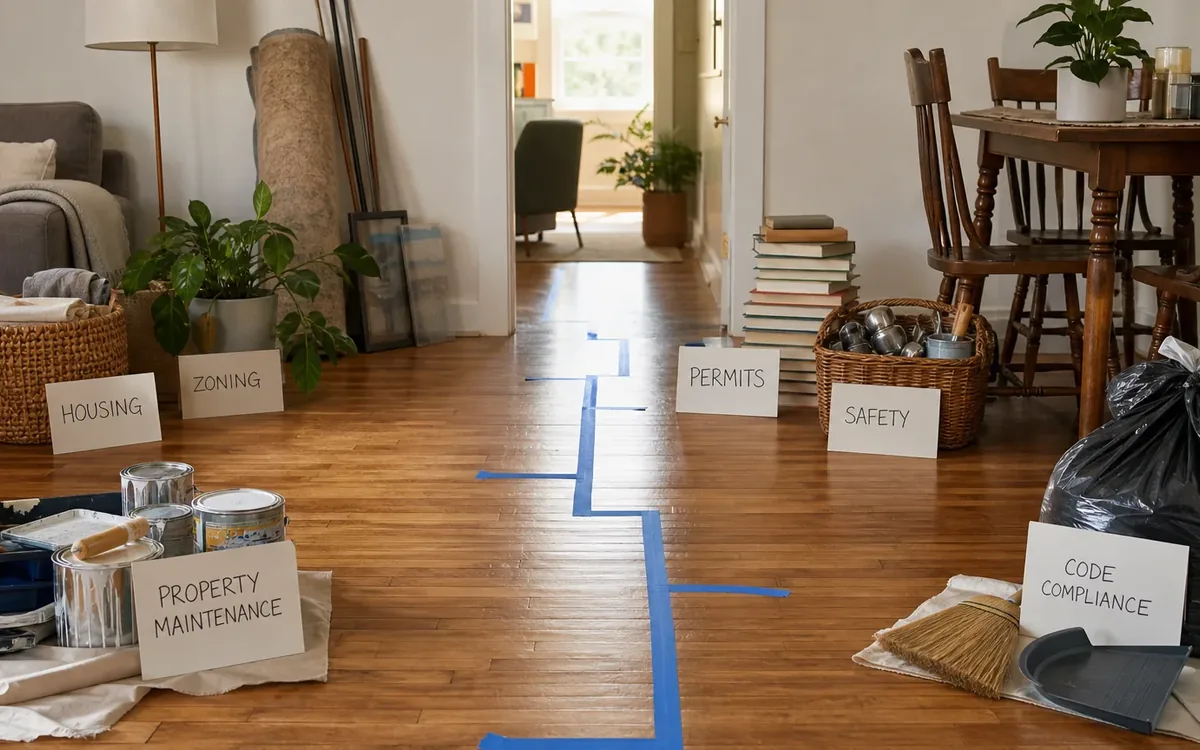
Finding the correct government is only half the task. Next, identify the department responsible for the particular condition described in the notice or observed at the property.
A general code enforcement office may address exterior property maintenance, overgrowth, abandoned items, inoperable vehicles, or nuisance conditions. A building department may handle permits, structural work, electrical issues, or unsafe-building procedures. Planning and zoning personnel may address land use, setbacks, signs, or unauthorized uses.
Other concerns can belong elsewhere:
- Fire hazards: The designated fire marshal or fire prevention authority
- Utility conditions: The relevant utility provider or public works department
- Septic or environmental health matters: The responsible state or local authority
- Illegal dumping: The jurisdiction’s designated enforcement or solid-waste contact
- Road or right-of-way issues: The government responsible for that road
- Association restrictions: The homeowners association or its management company, separate from government enforcement
Ask whether multiple departments are involved. Removing accumulated contents might improve access while leaving an unresolved permit, structural, land-use, or utility issue. Conversely, a contractor could complete approved repairs while personal property and debris remain.
Do not assume a citation authorizes entry, demolition, disposal, or removal of another person’s possessions. Those questions may involve ownership, tenancy, probate, court orders, or other legal rights. A qualified attorney and the responsible government authority should guide those decisions.
What should you ask the code enforcement office?
Once you reach the likely department, keep the conversation tied to the parcel and case. Broad questions can produce broad answers. Specific questions create a clearer path.
Ask these six questions:
- Does your office have jurisdiction over this exact parcel? Give both the street address and parcel number.
- What condition is alleged to violate which rule? Request the ordinance, code section, notice, photographs, or inspection summary the office can provide.
- What corrective result is required? Ask whether the concern involves removal, containment, repair, permitting, access, maintenance, or another action.
- Who can approve or inspect the correction? Identify the assigned officer or appropriate inspection department.
- Are permits or other approvals required before work begins? Do not let cleanup or repair activity unintentionally conflict with a permitting requirement.
- How should completion be documented? Ask whether the office requires a reinspection, photographs, receipts, contractor documents, forms, or another submission.
Let the office explain its own deadlines and procedures. If a notice lists a response date, verify it directly rather than assuming that arranging a cleanout pauses enforcement. Only the responsible authority can explain extensions, hearings, appeals, reinspections, penalties, or case closure.
Take notes without arguing about facts you have not yet verified. Write down names, contact details, case identifiers, requested corrections, and the source of each instruction. If directions change, ask for the current requirements in writing.
Separate household choices from official decisions
A household can make many practical decisions once it understands the stated concern. It can decide who will sort belongings, what authorized items to keep, where retained property will go, and whether to hire help for cleaning or hauling.
Subject to ownership and legal authority, the household may decide:
- Which accessible personal belongings are retained, donated, sold, recycled, or discarded
- Whether family members will sort items before outside help arrives
- Whether off-site storage is useful and affordable
- Which records, valuables, photographs, and sentimental items need separate review
- Whether to seek estimates from cleanout providers or specialized contractors
- Who will serve as the main contact for the property
Storage is a separate household arrangement with the chosen storage provider. Auctions, estate sales, donation acceptance, and disposal destinations also involve separate eligibility and provider decisions. An appraiser determines value when a formal appraisal is needed; a cleanout team should not substitute disposal judgment for qualified valuation.
Repairs belong to an appropriately qualified contractor selected for that work. The permitting authority decides whether a permit is required, and the inspector determines whether permitted or cited work passes inspection. A real-estate professional advises on listing and transaction strategy, while an attorney addresses ownership, probate, tenant rights, appeals, and legal exposure.
A practical cleanout or move team may discuss:
- Areas that are accessible for sorting and removal
- Categories of household contents present
- Items the authorized decision-maker has marked to retain
- Labor and equipment considerations for an agreed scope
- Disposal restrictions identified by receiving facilities or authorities
- Sequencing cleanup around contractor or inspection access
- Documentation the team can provide for its own completed work
It should not promise that removing contents will cure a violation. Official compliance and case closure remain decisions of the responsible government authority.
Build a scope from the official requirements
After confirming the jurisdiction and required result, translate the information into a physical work plan. Keep confirmed requirements separate from assumptions or optional improvements.
Create three categories:
- Officially required: Conditions specifically identified by the authority
- Needed to support the correction: Access clearing, authorized contents removal, or contractor preparation
- Optional household work: Organizing, downsizing, cosmetic cleanup, sale preparation, or storage moves not required by the case
This separation helps prevent a broad cleanout from overtaking the actual compliance issue. It also helps families avoid discarding useful or valuable property simply because the site feels urgent.
Photograph the relevant areas before work, unless an attorney advises otherwise. Preserve the original notice and correspondence. Track what was removed, what remained, who authorized each decision, and which contractors or providers handled separate tasks.
Hazardous materials, medical waste, chemicals, fuel, asbestos-containing materials, mold, sewage, pests, ammunition, and unknown substances may require specialized assessment or handling. Stop and ask the proper professional or authority what rules apply. Do not place questionable material into ordinary waste streams without confirmation from an appropriate receiving facility or regulator.
Coordinate cleanup without confusing it with compliance
Physical cleanup can support a correction by improving access and removing authorized items. It is not the same as a government determination that the property complies.
Use this division of responsibility:
- Household or authorized representative: Approves item decisions and access
- Cleanout or move team: Performs agreed physical tasks within its scope
- Contractor: Evaluates and completes specialized repairs or construction
- Appraiser: Provides qualified valuation when requested
- Real-estate professional: Advises on market preparation and sale strategy
- Attorney: Advises on legal authority, rights, notices, or disputes
- Government official or inspector: Interprets agency requirements and determines compliance
Before removal begins, confirm that no items are subject to an insurance claim, estate dispute, tenant claim, court instruction, law-enforcement hold, or requested inspection. When authority is unclear, pause the affected work.
After work is finished, follow the government office’s stated process. Send only the documentation it requested, arrange any required reinspection, and keep confirmation of the final status. A clean property is not proof of a closed case unless the responsible authority says so.
Clutter Cleaner of South Carolina is physically located in Mount Pleasant and serves households across South Carolina, with Charleston as its primary market. Its role in a code-related project is practical support within an agreed scope, not legal interpretation, structural inspection, permitting, or official certification.
What if you still cannot identify the correct office?
Return to the county parcel record and contact the county government’s main information line or planning department. Provide the parcel number and ask whether the land is inside an incorporated municipality. Then ask which government receives the specific type of complaint or notice.
If the property spans boundaries or involves several parcels, request clarification for each parcel. If a state agency, court, utility, fire authority, or homeowners association issued the notice, contact that issuing body directly rather than assuming municipal code enforcement controls it.
For an unclear, disputed, or high-consequence notice, consult a qualified South Carolina attorney. A cleanout provider can help organize physical work after authority and scope are established, but it cannot resolve jurisdictional conflicts or interpret appeal rights.
Short FAQ
Is the county assessor the code enforcement office?
Usually, the assessor’s role concerns property records and valuation rather than code enforcement. Its parcel system can help identify the land and jurisdiction, but another department may handle the complaint.
Can I rely on the city shown in the mailing address?
Not by itself. Confirm whether the parcel is within that municipality’s incorporated limits or in an unincorporated county area.
Will removing all clutter automatically close a case?
No. The cited issue might also involve repairs, zoning, permits, vehicles, vegetation, utilities, or another condition. Only the responsible authority can confirm compliance and closure.
Should disputed or valuable items be removed first?
Not until an authorized person approves the decision. Consider legal advice or a qualified appraisal when ownership or value is uncertain.
Who decides whether contractor work needs a permit?
The responsible permitting authority makes that determination. Ask before structural, electrical, plumbing, mechanical, demolition, or other regulated work begins.
Can a cleanout team speak with an inspector?
A team may discuss practical access or completed physical work when authorized, but the owner or authorized representative should remain responsible for official decisions and correspondence.



