

Document a vacant property cleanup by creating a dated record of its condition before work, the authorized scope, items removed or retained, work completed, and the final condition. Keep photos, written decisions, receipts, contractor records, and any notices together. Documentation can show what happened, but only the responsible authority can confirm code compliance or close a case.
Quick answer: Photograph each area before cleanup, confirm instructions in writing, maintain an item and vendor log, record changes during the project, and take matching completion photos. Send the owner an organized summary, then retain the original files. If a government notice, permit, inspection, estate, insurance claim, or tenant issue applies, ask the appropriate professional or authority what evidence it requires.
This guide focuses on documenting the physical cleanup for an owner who may not be present. It does not replace an inspection, appraisal, legal opinion, environmental assessment, or official compliance determination.
Why does a vacant property cleanup need documentation?
A vacant house can involve more people than the owner realizes. An owner, personal representative, property manager, real-estate professional, contractor, insurer, local official, or family member may each need different information. A single folder of casual photographs rarely answers every question.
Useful documentation creates a traceable account of three things:
- The property’s visible condition before work began
- The instructions and limits given to the cleanup team
- The visible result after the authorized work was completed
That record helps an absent owner review progress and distinguish cleanup from repairs, inspections, or other work. It may also help clarify whether an object was retained, relocated, donated, sold through a separate provider, recycled where accepted, or discarded.
Documentation does not prove that a structure is safe, establish market value, resolve ownership, or certify compliance. Those conclusions belong to qualified professionals or government authorities. If the property is connected to a notice or cited condition, review the scope of code compliance support while recognizing that the issuing authority controls its own inspection and closure process.
What should be recorded before anyone removes items?
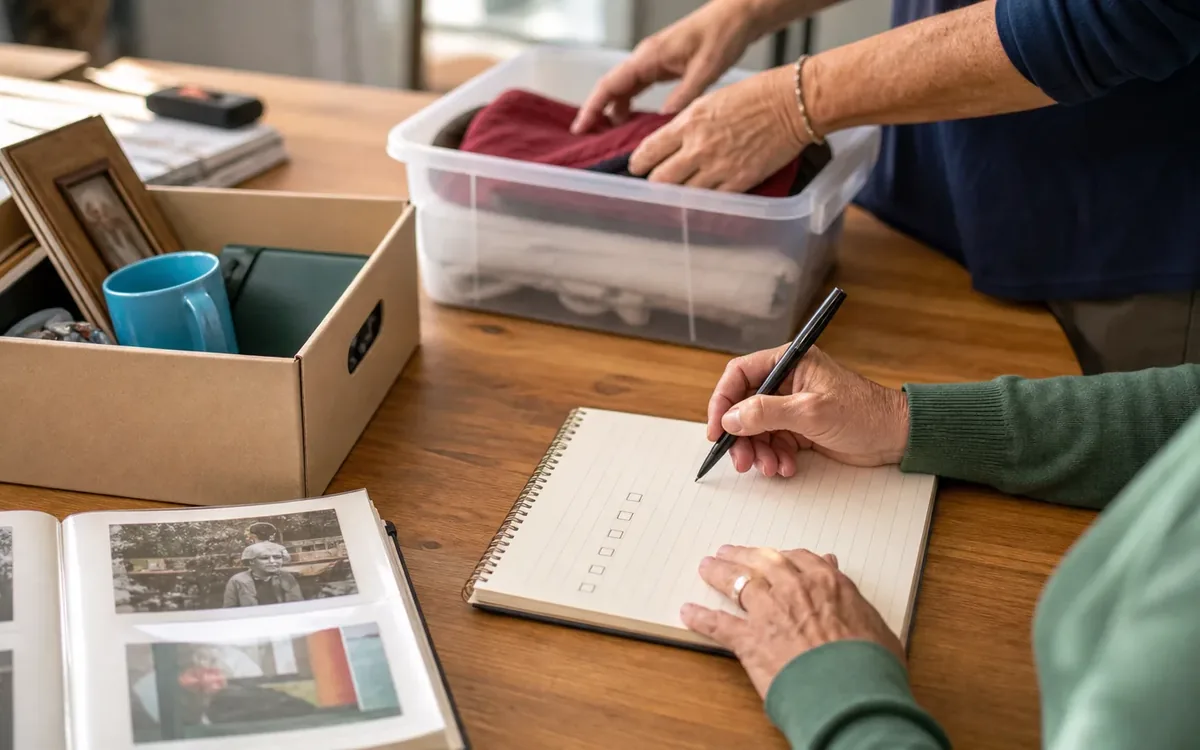
The starting record should show both general conditions and meaningful details. Capture the property before boxes are shifted, vegetation is cut, debris is loaded, or utilities are changed. If entry is unsafe or access is restricted, stop and obtain direction rather than entering only to complete the record.
Use these five documentation groups:
-
Property identifiers. Record the street address, owner’s name, date, person preparing the record, and authorized point of contact. If unit numbers, outbuildings, or parcels could be confused, identify them clearly without making assumptions about legal boundaries.
-
Exterior overview. Photograph each visible side of the structure, entry points, yard areas, driveway, porches, sheds, and material placed outside. Include wide views and closer images of relevant conditions.
-
Interior sequence. Move through the house in a consistent order. Label every room, including closets and attached spaces. Photograph the room from multiple positions before focusing on piles, fixtures, or visible damage.
-
Contents requiring a decision. Record documents, photographs, medications, keys, firearms, valuables, family keepsakes, potentially hazardous material, and anything named in the owner’s instructions. Do not assign value or ownership merely from appearance.
-
Existing concerns. Note visible leaks, staining, broken surfaces, pests, sharp objects, unstable piles, exposed wiring, odors, blocked access, or structural concerns. Describe only what is observable. Mold, asbestos, contamination, structural integrity, and similar issues require assessment by the appropriate qualified provider.
File names should be understandable without opening every image. A format such as kitchen-before-north-wall is more useful than a string of camera numbers. Preserve the original files and their metadata when possible rather than relying only on compressed images sent by text message.
If the vacant property is part of an estate, the what are the basic steps for a cleanup explains why authority, family decisions, and item sorting should be settled before removal.
How should the owner approve the cleanup scope?
An owner’s approval should be specific enough that the team does not have to guess. A statement such as “clean everything out” can leave serious questions about documents, fixtures, stored vehicles, family property, food, paint, fuel, or items belonging to someone else.
The written scope should address:
- Which buildings, rooms, yards, and containers are included
- Which areas are excluded or inaccessible
- Items or categories that must always be retained
- Who can change instructions
- Where retained property should be placed
- Whether sorting is required before removal
- Which separate vendors have been authorized
- How uncertain items should be handled
- Who receives progress updates and final records
The household or legally authorized representative decides what may be released, subject to applicable ownership rights, court orders, leases, contracts, and other legal restrictions. A practical cleanout or move team may discuss access, sorting categories, handling instructions, documentation preferences, and the physical feasibility of removal.
A cleanup team should not decide who owns disputed belongings, interpret probate documents, determine whether a tenant abandoned property, or authorize disposal on behalf of an estate. Those issues should go to the responsible attorney, court-appointed representative, landlord-tenant professional, or other authority.

Build a record that follows each major decision
The most useful project record is not simply a collection of before-and-after pictures. It connects instructions to actions. Use one project log and update it whenever a decision changes the work.
The log can contain:
- Date and description of each visit
- Names or roles of people who entered
- Areas accessed and areas not accessed
- Owner approvals and revised instructions
- Retain, relocate, release, and disposal categories
- Items held for clarification
- Separate providers contacted by the owner
- Loads or material categories removed
- Unexpected conditions observed
- Work paused and the reason
- Completion status by room or exterior area
Keep uncertain property in a clearly labeled hold area when that is safe and authorized. Photograph the grouping and ask the designated decision-maker for written instructions. This approach reduces the chance that a verbal message is misunderstood.
Do not use the log to diagnose a building condition. For example, write “dark staining visible beneath the sink” rather than declaring that mold is present. Write “ceiling surface is sagging” rather than concluding that the structure is unsafe. Observable descriptions allow the owner to decide whether an inspector or specialist should evaluate the condition.
Which photos make the final report useful?
Before and after photographs should be comparable. Use the same doorway, corner, or exterior position when practical. Matching angles make it easier to see what changed and what remained outside the approved scope.
A strong photo set includes four layers:
- Orientation images showing the property, building, floor, or room location.
- Wide views showing the overall condition of each included area.
- Detail views showing relevant items, damage, obstructions, or completed sorting.
- Completion views recreating the original angles after authorized work.
Photograph excluded areas too, but only from safe and permitted positions. A labeled image showing that a locked shed was not entered can be more informative than silence in the final report.
Avoid photographs that unnecessarily expose sensitive information. Close-ups of financial records, medical details, identification numbers, alarm controls, or keys can create privacy and security concerns. Record that documents were found and secured without distributing readable personal information broadly.
Video can supplement photographs, but it should not replace labeled still images. Long videos are difficult to compare, search, and reference. If video is used, narrate facts cautiously and avoid speculation about value, damage, legal responsibility, or compliance.
What should happen when the cleanup reveals a new problem?
Stop work in the affected area, document the visible condition, and notify the owner’s designated contact. The next step depends on the nature of the discovery and who has authority to act.
Examples that may require separate direction include:
- Suspected hazardous substances or unknown chemicals
- Firearms, ammunition, or controlled materials
- Human or animal waste and other biohazard concerns
- Signs of active water entry or electrical danger
- Structural instability or unsafe floors
- Evidence that belongings may belong to another person
- Documents suggesting a legal, financial, or estate issue
- Tanks, paint, fuel, refrigerants, or regulated waste
- Conditions specifically named in a government notice
A practical team may explain how the discovery affects access, sorting, or removal. It may also discuss pausing an area, protecting retained items, or coordinating around a separate provider selected by the owner.
The owner decides whether to engage a contractor, inspector, environmental specialist, attorney, appraiser, real-estate professional, or storage provider. Each provider controls its own scope. Disposal facilities and local programs decide what they accept and under what conditions.
Do not continue merely to produce a clean final photograph. Concealing, moving, or altering a condition could complicate an inspection, claim, sale, or legal matter. Obtain direction first and preserve the relevant evidence.
Keep cleanup, repair, valuation, and compliance records separate
A vacant-property file becomes confusing when unrelated work is presented as one service. Divide the record into sections so the owner can identify who did what.
Cleanup records cover sorting, removal, relocation, basic clearing, and the visible final condition within the authorized scope.
Contractor records cover repairs, demolition, plumbing, electrical work, landscaping, remediation, or other trade work. The contractor should provide its own scope, invoices, permits where applicable, and completion information.
Storage records should identify the storage provider selected by the household, the receiving location, inventory method, access terms, and person responsible for charges. Moving an item to storage does not resolve its ownership or value.
Appraisal records belong to the qualified appraiser or valuation professional. Cleanup photographs can show that an item existed, but the cleanup team should not present those images as an appraisal.
Real-estate and inspection records should come from the relevant agent, broker, inspector, engineer, or other professional. A cleared room is not proof that a property is ready to list, structurally sound, or free of defects.
Compliance records include notices, correspondence, permits if applicable, inspection requests, and official findings. Only the responsible authority can interpret its requirements and determine whether a cited matter is resolved.
How should the final documentation package be organized?
Give the owner a package that can be reviewed without reconstructing the project from scattered messages. Keep original source files in addition to the organized copy.
A practical final package can contain these six sections:
- Project summary: property address, authorized contact, work areas, exclusions, and relevant dates.
- Approved scope: original instructions plus written changes.
- Before record: labeled exterior and interior photographs with initial observations.
- Decision log: questions raised, responses received, held items, and separate referrals or providers.
- Removal and vendor records: receipts or records supplied by disposal sites, donation recipients, movers, storage companies, contractors, or other providers, when available and applicable.
- Completion record: matched photographs, incomplete areas, unresolved conditions, and recommended next contacts without claiming that compliance or sale readiness has been achieved.
Use a consistent folder structure. For example, separate 01-scope, 02-before, 03-decisions, 04-provider-records, and 05-completion. A simple index document should explain where each category is stored.
Send records through a method approved by the owner, particularly when files include personal property or security details. The household should decide who may receive copies and how long records should be retained. An attorney, insurer, court, government office, or contract may impose different retention or submission requirements.
Closing a code-related cleanup without overstating the result
If the project arose from a code notice, compare the completed physical work with the written cleanup scope and the wording of the notice. Do not translate that comparison into an official conclusion.
The owner or authorized representative should contact the named department or official to learn:
- Whether photographs or receipts must be submitted
- Whether an inspection must be requested
- Whether access must be arranged
- Whether permits or contractor records are relevant
- Whether additional conditions remain
- How official closure will be communicated
Requirements can vary by jurisdiction and case. A statewide service scope does not mean every South Carolina authority follows the same process. The issuing authority’s current instructions control.
Clutter Cleaner of South Carolina is physically located in Mount Pleasant and serves households across South Carolina, with Charleston as its primary market. A discussion with a practical cleanout team can address documentation preferences, sorting, access, and cleanup scope. It cannot replace the municipality’s decision, a legal interpretation, an appraisal, a property inspection, or a contractor’s professional conclusion.
Short FAQ
Is a set of after photos enough?
Usually, after photos alone do not show the original condition, authorized scope, exclusions, or how uncertain items were handled. Pair them with dated before images, written instructions, a decision log, and relevant third-party records.
Can the cleanup team certify code compliance?
No. A team can document visible work it completed or coordinated within its scope. The responsible government authority determines whether its requirements have been met and whether a case can be closed.
Who decides whether an item has value?
The owner or authorized representative decides whether to retain an item or seek an appraisal. A qualified appraiser or appropriate market professional addresses value. Appearance alone should not determine disposal.
What if the owner is out of state?
Confirm the owner’s authorized decision-maker, reporting method, access instructions, and hold categories in writing. Use labeled progress records and obtain approval before departing from the agreed scope.
Should cleanup records include contractor work?
Keep contractor documents in the overall property file, but label them separately. The contractor remains responsible for describing its work, permits, qualifications, and completion status.
What is the next practical step?
Gather the notice or project goal, ownership or authorization information, access details, existing photographs, and a written retain list. Then define what needs documentation before discussing the physical cleanup scope with Clutter Cleaner of South Carolina at (843) 972-7020.



