

The best way to coordinate cleanup with a code enforcement deadline is to start with the written notice, confirm exactly what the responsible authority requires, and organize work around the cited conditions rather than trying to improve the entire property. The household can choose what to keep and who may enter the property. A practical cleanout or move team may discuss sorting, removal, access, and scheduling. Only the responsible authority can interpret the notice, approve compliance, or change a deadline.
Quick answer: Read the notice line by line, verify questions with the named authority, photograph current conditions, separate required cleanup from optional improvements, assign each task to the correct provider, and preserve proof of completed work. Do not assume that removing clutter automatically resolves building, zoning, sanitation, vehicle, or property-maintenance violations.
What should you do first after receiving a code notice?
Treat the notice as the controlling document. Do not begin with a general wish list for the house or yard. Identify the property, cited conditions, case or reference number, deadline, contact information, and any instructions for requesting an inspection or submitting documentation.
Create a simple worksheet with these fields:
- Exact language used for each cited condition
- Location of the issue on the property
- Questions requiring clarification
- Person or provider responsible for the task
- Materials, equipment, or access needed
- Status of the work
- Photos, receipts, or other records retained
- Follow-up required by the authority
If a phrase is unclear, ask the contact named on the notice what observable condition must be corrected. A cleanout company cannot interpret an ordinance, promise that a particular action will satisfy it, or waive an enforcement requirement.
Also confirm whether there are instructions concerning entry, reinspections, permits, hearings, appeals, or extensions. Those are procedural matters for the responsible government office or a qualified legal professional, not cleanup personnel.
Households that need help organizing removal work can review the statewide code compliance support service. This type of support can help structure the physical cleanup, but it does not replace official guidance or approval.

Build the cleanup plan around cited conditions
A deadline can encourage people to clear everything at once. That approach often creates confusion, accidental disposal, and unnecessary expense. Instead, divide the property into three scopes.
1. Work directly tied to the notice
These tasks receive priority. Examples may include removing accumulated household contents from a cited area, clearing access, sorting outdoor debris, or preparing items for lawful disposal. The actual requirement depends on the notice and the authority’s interpretation.
2. Work needed to make compliance tasks possible
Some uncited work may be necessary before the cited condition can be addressed. For example, a path may need to be cleared so a contractor can reach a repair area. Keep this supporting scope narrow and document why it is needed.
3. Optional property improvement
Painting rooms, reorganizing closets, preparing a home for sale, or improving its appearance may be worthwhile, but these projects should not displace deadline-related work unless a responsible professional says they are necessary.
This distinction is especially useful when an inherited or long-occupied property contains many possessions. For a focused discussion of sorting and removal decisions, see the guide to what happens if you get a code enforcement violation. Estate administration and code compliance remain separate processes, even when they affect the same property.
Who decides what during a deadline cleanup?
Clear decision boundaries help prevent delays and misunderstandings.
The household or authorized property representative decides
- Which ordinary possessions to retain, donate, sell, move, or discard
- Who may enter the property
- Which vendors to hire
- Whether items should go to storage
- How optional work fits the available budget
- Whether to pursue a sale, move, or broader cleanout
A person directing the work should confirm that they have authority to make decisions for the property and its contents. If ownership, probate, tenancy, divorce, guardianship, or power-of-attorney issues are unresolved, consult the appropriate attorney, court representative, landlord, or other responsible party before removing disputed belongings.
A practical cleanout or move team may discuss
- The volume and location of removable contents
- Safe access for workers and vehicles
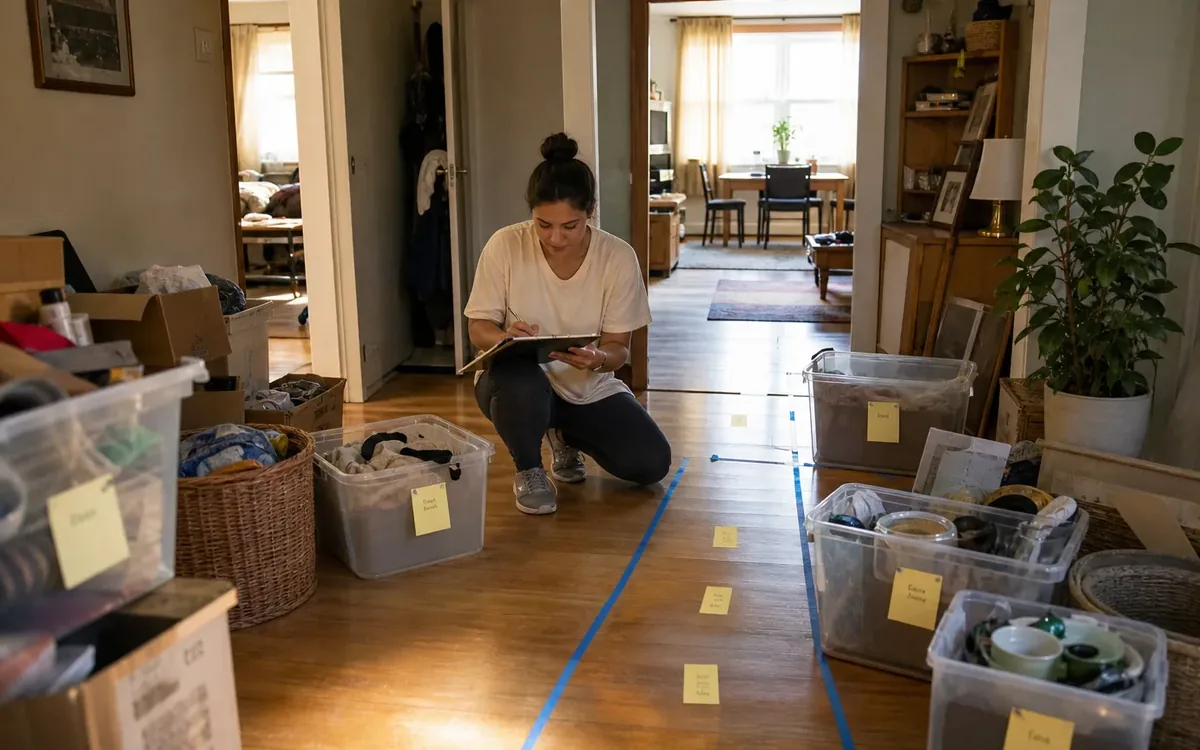
- Sorting zones for keep, donate, sell, store, and discard decisions
- Sequencing rooms or exterior areas
- Items that require a separate specialist or disposal route
- Coordination with household members and other providers
- Records of visible removal work
The team should work from decisions made by the authorized household representative. It should not decide ownership, declare an item abandoned, interpret the code, or guarantee that removed materials resolve the case.
The responsible professional or authority decides
- Whether the cited condition violates an applicable rule
- What evidence or correction is acceptable
- Whether a permit is required
- Whether a deadline may be changed
- Whether a reinspection is required
- Whether the property has achieved compliance
- Legal rights, appeals, hearings, fines, or enforcement consequences
- Structural, electrical, plumbing, environmental, or other technical conclusions
A licensed or otherwise qualified contractor handles work within that provider’s field. An appraiser determines value for an appraisal assignment. A real-estate professional advises on listing and transaction matters. An inspector evaluates conditions within the inspection scope. Each role should remain separate from ordinary contents removal.
How do you turn the notice into an actionable sequence?
Use the following six-step sequence to keep the project tied to the deadline.
-
Verify the document. Confirm that the address, responsible party, cited conditions, and contact details are correct. Direct errors or procedural questions to the issuing office.
-
Document the starting condition. Take dated photos or video without moving items first. Capture wide views and relevant details. Keep the original notice and correspondence together.
-
Mark each task by responsibility. Label it household, cleanout team, contractor, inspector, attorney, real-estate professional, or authority. Do not give technical repairs to a contents-removal crew.
-
Resolve ownership and retention questions. Identify documents, medication, valuables, photographs, keys, firearms, financial records, and potentially disputed property before bulk removal begins.
-
Sequence physical work. Clear necessary access first, then address items connected to cited conditions. Schedule specialist work separately where required.
-
Confirm the official closeout process. Follow the notice or the authority’s instructions for photos, receipts, contact, inspection, or other verification. Cleanup completion and official case closure are not the same event.
Assign one household contact to communicate decisions. Conflicting instructions from relatives, tenants, owners, or representatives can halt sorting and expose disputed property to removal.
What should stay out of the general removal stream?
A code-related cleanup can involve materials that should not be mixed with ordinary household contents. Isolate questionable items and contact the appropriate provider or authority for instructions.
Potentially separate categories include:
- Paint, chemicals, fuels, pesticides, and unknown liquids
- Propane cylinders, batteries, and compressed containers
- Medical sharps, medication, and biological material
- Firearms, ammunition, and controlled items
- Refrigerants, certain electronics, and regulated components
- Asbestos-suspect or lead-related materials
- Documents containing personal or financial information
- Items subject to ownership disputes or legal holds
- Materials requiring municipal, county, facility-specific, or contractor-controlled disposal
Do not infer disposal rules from appearance alone. Requirements can vary by material and receiving facility. The household or project lead should verify acceptance with the appropriate waste facility, environmental authority, contractor, or other responsible provider.
Similarly, storage is a household decision made with a storage provider. Contractor repairs are arranged with qualified contractors. Appraisals are performed by appropriate appraisers. None of those outcomes should be treated as included merely because a cleanup is underway.
Coordinate cleanup, repairs, and access without overlap
Many deadline projects involve more than contents removal. A contractor may need open access to a wall, utility area, porch, outbuilding, or yard. An inspector may need to observe conditions without stored belongings blocking the view. Plan handoffs instead of placing every provider on-site at once.
A useful coordination sheet should identify:
- Areas that must remain accessible
- Utilities that must remain on or be handled by an authorized provider
- Gates, keys, alarms, pets, and parking restrictions
- Areas where work must stop pending professional review
- Materials reserved for a contractor or inspector
- Completed areas that should not be refilled
- The person permitted to approve changes in scope
Avoid allowing cleanup to conceal a suspected structural or safety condition before it is evaluated. Contents can sometimes be moved to create access, but demolition, repair, disconnection, remediation, and technical testing belong to qualified professionals operating within their scopes.
If the property may be sold, a real-estate professional can advise on market preparation and transaction priorities. That advice is separate from the authority’s compliance determination. A house can look ready for the market and still have an open case, or it can satisfy a cited cleanup condition without being ready to list.
How should you document completed cleanup?
Maintain a project file rather than relying on memory or text-message fragments. The authority determines what documentation it accepts, but orderly records can make follow-up easier.
Consider retaining:
- The original notice and envelope, if relevant
- Written clarification from the responsible office
- Before and after photos from matching viewpoints
- A task log tied to each cited area
- Receipts or weight tickets supplied by disposal providers
- Contractor invoices and permit records, when applicable
- Donation or storage records, when relevant
- Dates and summaries of calls or site visits
- Names and roles of people who gave instructions
- Copies of materials submitted to the authority
Photos should show context. A close-up of an empty patch may not establish which room or exterior area was addressed. Take a wider image, then supporting detail images.
Do not alter photos or describe them as proof of compliance unless the authority accepts them that way. They are records of visible work. The official determination remains with the responsible office.
Prepare a fallback plan before the deadline becomes critical
Unexpected barriers may include disputed ownership, unsafe access, severe weather, unavailable contractors, rejected disposal items, or a newly discovered repair. Identify those barriers as soon as possible and notify the proper party rather than quietly changing the scope.
If completion may be affected, contact the office named on the notice and ask about its process. Do not assume that a phone call, partial cleanup, contractor booking, or good-faith effort changes the deadline. Only the authority can explain what it will recognize.
Keep alternative choices narrow:
- Prioritize conditions explicitly listed in the notice
- Move retained possessions only to a location approved by the household
- Use storage only after confirming access, cost, and terms with the provider
- Pause around hazards or disputed contents
- Escalate technical questions to the relevant professional
- Record incomplete items and the reason they remain
This approach protects the main objective: addressing the cited condition without creating avoidable loss, unsafe work, or confusion about who approved what.
South Carolina coordination considerations
Clutter Cleaner of South Carolina is physically located in Mount Pleasant and serves households across South Carolina, with Charleston as its primary market. The enforcing authority, process, and applicable rules depend on the property’s location and the type of notice. Statewide service availability does not mean that procedures are uniform across municipalities, counties, associations, courts, or agencies.
Use the contact information printed on the notice rather than assuming that a different office has jurisdiction. If the property is rented, inherited, jointly owned, under contract, or involved in litigation, determine who has authority to direct cleanup before work starts.
For discussion of practical code-related removal and coordination, contact Clutter Cleaner of South Carolina at (843) 972-7020. Questions about legal obligations, interpretation, inspections, permits, fines, or case closure should go to the responsible authority or qualified professional.
Short FAQ
Can a cleanout team guarantee that the property will pass inspection?
No. A team may remove approved contents and help coordinate access, but only the responsible authority or designated inspector determines whether cited conditions have been corrected.
Should everything on the property be removed?
Not automatically. Base the immediate scope on the notice, household decisions, safety needs, and professional instructions. Broad removal can waste resources or dispose of property that should have been retained.
Can belongings be placed in storage to meet the deadline?
The household may choose storage and contract separately with a storage provider. Whether relocating items addresses a cited condition is a question for the responsible authority. Avoid moving a problem to another prohibited or unsafe location.
Who handles repairs discovered during cleanup?
The household should engage an appropriately qualified contractor for repairs. Permit, inspection, and code questions remain with the responsible authority. A cleanout team can discuss access and sequencing but should not make technical findings outside its role.
What if family members disagree about an item’s disposal?
Set the item aside and resolve authority or ownership before removal. If the dispute involves an estate, court order, tenancy, or other legal issue, seek advice from the appropriate legal professional or responsible representative.
Is an appraisal part of code deadline cleanup?
No. If value must be established for insurance, tax, probate, sale, or another formal purpose, the household should engage an appropriate appraiser. Informal sorting decisions should not be represented as formal appraisal conclusions.



