

Before selling a home, check for possible smoke or fire damage by reviewing its history, visually inspecting safely accessible areas, and documenting odors, staining, and damaged materials. Do not assume that a clean-looking room is damage-free or that every dark mark is soot. Suspicious findings need evaluation by the appropriate professional before anyone makes safety, repair, or disclosure decisions.
Quick answer: Look for unusual smoky odors, dark deposits, heat distortion, and records of past fires or smoke incidents. Photograph what you see, note the location and conditions, and avoid disturbing suspect materials. An inspector or qualified specialist should assess damage; your real-estate professional or attorney can help address sale disclosures.
For South Carolina households, fireplace use and incidents associated with storms can raise questions about smoke residue. The useful starting point is evidence, not an assumption about the cause. This guide focuses on identifying and recording concerns before home-sale preparation changes what is visible.
What signs suggest smoke or fire damage before a sale?
Smoke and heat can leave different kinds of evidence. Some signs are obvious, such as charred wood. Others are less clear, including a lingering odor or discoloration around a vent. A household walkthrough can identify questions, but it cannot determine whether a building is safe or establish the extent of damage.
Look for these signs from a safe position:
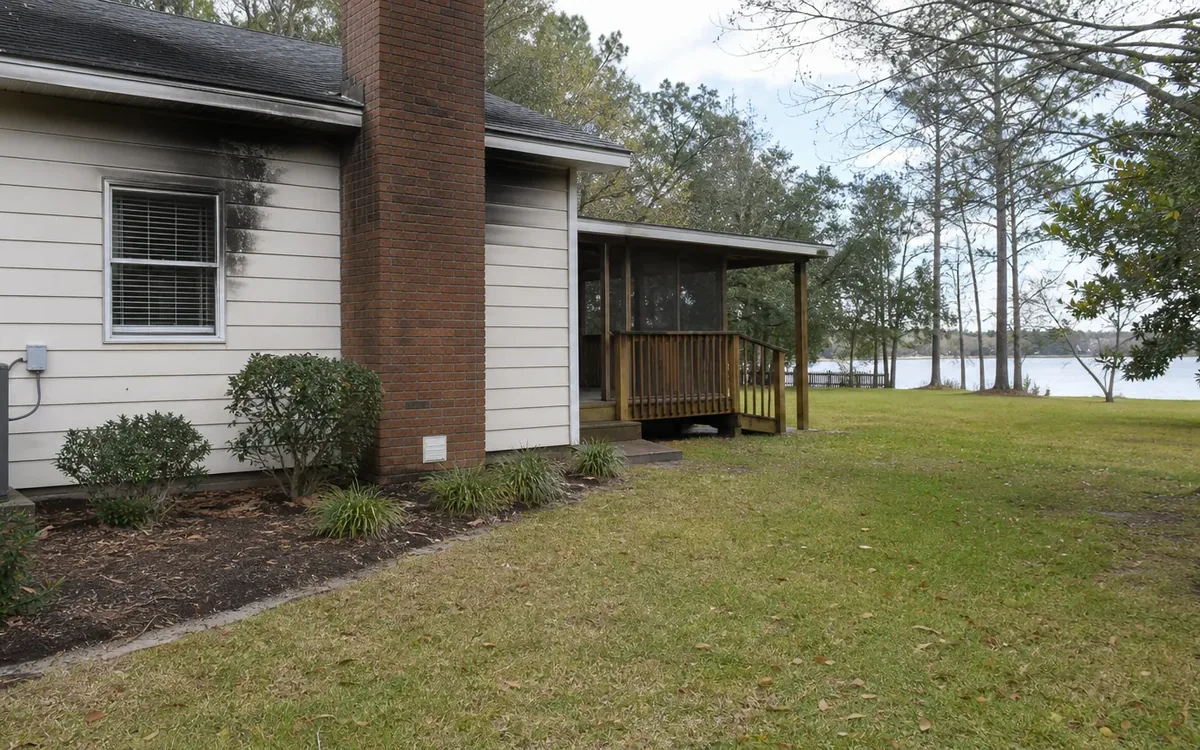
- Black, gray, or brown deposits on walls, ceilings, trim, and nearby objects.
- Dark streaks around vents, light fixtures, or wall and ceiling junctions.
- Blistered paint, warped trim, melted plastic, or visibly scorched materials.
- A smoke-like odor in rooms, closets, upholstered items, or stored belongings.
- Unexplained differences between adjacent surfaces, including isolated new paint.
- Staining near a fireplace, stove, chimney connection, or past incident location.
Treat these as observations rather than conclusions. Dust, moisture-related staining, cooking residue, and other conditions can resemble smoke deposits. Fresh paint may reflect ordinary decorating rather than concealment. Record the finding without assigning a cause you cannot verify.
For help organizing access and preparation questions, review code compliance support for home transitions. Practical coordination does not replace an inspection or an official determination of compliance.

Start with the home’s history, not a cleaning product
Before moving belongings or washing surfaces, gather what the household already knows. Ask owners, executors, or other authorized decision-makers about fires, fireplace problems, smoke entering the home, and related repairs. Distinguish personal recollections from written records.
Useful records may include:
- Reports connected to a known incident, if available.
- Insurance correspondence or claim documents held by the owner.
- Contractor invoices identifying the affected areas and completed work.
- Inspection reports, permit records, or related correspondence.
- Photographs taken before, during, or after repairs.
- Fireplace, chimney, heating, or electrical service records.
Missing paperwork does not prove that damage exists. Likewise, a repair invoice does not establish that every affected component was evaluated. Note what each document actually says and where information is incomplete.
For an inherited property, organizing possessions may reveal documents tucked into desks or filing cabinets. The guide on how estate cleanouts work provides broader context for sorting and decision-making. Keep the smoke-damage review separate so useful evidence is not discarded with ordinary household papers.
Where should you look without disturbing the property?
Use a visual walkthrough of safely accessible spaces. Start with the reported incident area, if known, and then note conditions in adjoining rooms. Smoke can move beyond its source, but a household walkthrough should not attempt to trace hidden pathways.
Pay attention to visible surfaces around:
- Fireplace surrounds, mantels, and nearby ceilings.
- Kitchen walls, cabinets, and the area around cooking appliances.
- Doorways connecting a suspected source area to other rooms.
- Visible supply and return grilles, without removing them.
- Closets and cabinets that you can open safely.
- Stored textiles, furniture, and boxes near affected spaces.
Do not remove outlet covers, dismantle appliances, open wall cavities, or lift damaged flooring to investigate. Leave attic, crawlspace, roof, and chimney access to someone qualified when access or conditions are uncertain.
If you encounter active smoke, unusual heat, sparking, a gas odor, or an alarm, stop the walkthrough and leave the area. Contact emergency responders or the relevant utility as appropriate. Listing preparation is never a reason to continue around an active hazard.
Even without an immediate emergency, visible charring, unstable materials, or suspected electrical damage calls for professional evaluation before belongings are moved nearby.
How do you document findings without guessing at the cause?
Create a simple room-by-room record. Its purpose is to preserve observations and make professional questions easier to answer, not to produce a damage assessment.
For each concern, record:
- Location: Identify the room and exact surface or object.
- Observation: Describe the color, pattern, odor, or visible change.
- Conditions: Note whether windows were open or heating and cooling were operating.
- Photographs: Take an overall room view and a closer view from a safe position.
- Known history: Reference relevant documents or clearly labeled recollections.
- Follow-up question: State what needs evaluation and by whom.
Use neutral wording. “Dark streak above living-room fireplace” is more useful than “dangerous soot contamination” when no specialist has evaluated it. “Smoke-like odor in hallway closet” is more accurate than declaring that the whole house has smoke damage.
Keep original photographs and label copies consistently. Avoid filters that alter color or contrast. Photograph belongings in place before authorized movement when doing so is safe.
An odor note is subjective, so identify who noticed it and under what conditions. The absence of an odor during one visit does not establish that there is no issue. Avoid repeatedly handling or smelling suspect materials to test them.
Separate building concerns from belongings
A scorched chair and a scorched wall create different questions. The household may be able to decide what to retain among ordinary possessions, while the building condition requires an appropriately qualified evaluator.
Keep separate records for:
- Building surfaces and systems: Walls, ceilings, flooring, wiring, fixtures, and visible ventilation components.
- Personal property: Furniture, clothing, books, artwork, and stored household goods.
- Documents: Incident records, insurance papers, invoices, and photographs.
- Unresolved items: Objects awaiting ownership, safety, insurance, or value decisions.
Do not treat a sentimental or valuable object as disposable merely because it has an odor. A household can flag it for review, but an appraiser determines value within their expertise. An insurer may also need information before an item is altered or discarded.
Temporary storage is a separate household and provider choice. Ask a storage provider about acceptance requirements for items with suspected smoke contamination. Moving an item elsewhere does not resolve its condition and may transfer odors to other belongings.
Disposal is also a separate decision. Applicable handling requirements and facility acceptance should be checked before suspect materials are sent to a waste provider.
Who should evaluate the findings before listing?
Match the question to the professional rather than asking one provider to settle everything. A home inspector may identify concerns and recommend further evaluation, but specialized questions can require other expertise.
Depending on the findings, the responsible owner may discuss:
- Structural concerns with a qualified structural professional.
- Wiring, outlets, and heat-exposed components with a qualified electrician.
- Fireplace or chimney concerns with an appropriate chimney professional.
- Heating and cooling concerns with a qualified HVAC professional.
- Smoke residue or affected materials with a qualified assessment specialist.
- Repair scope with the relevant contractor after evaluation.
Permit requirements, required inspections, and compliance determinations belong with the responsible local authority and relevant professionals. A cleanout or move team cannot certify structural safety, determine code compliance, or approve completed repairs.
Real-estate professionals can help the seller understand transaction expectations. An attorney can address legal obligations or uncertainties. An appraiser handles valuation questions within the assignment’s scope.
Provide the same observation record to each relevant professional. Ask for written findings that identify what was inspected, what remains uncertain, and whether another evaluation is recommended. Do not summarize a limited inspection as proof that the entire property is unaffected.
Keep home-sale preparation from obscuring evidence
The key issue is sequencing: document and evaluate concerns before cosmetic preparation makes them harder to see. Painting, deodorizing, removing furniture, or replacing finishes can change the evidence available to an inspector or buyer.
This does not mean every routine preparation task must stop. Instead, separate unaffected work from unresolved areas and agree on access limits.
A practical cleanout or move team may discuss:
- Which rooms are available for ordinary sorting or movement.
- Which areas need to remain untouched pending evaluation.
- How to preserve access for inspectors and contractors.
- Which documents and belongings need to stay with the authorized owner.
- How to label items whose destination has not been decided.
The household decides what it wants to keep, subject to ownership rights and any estate or insurance constraints. Contractors decide how to perform authorized work within their expertise. Neither sorting nor removal establishes that an item or room is safe.
Clutter Cleaner of South Carolina is based in Mount Pleasant, with Charleston as its primary market and a service territory covering all of South Carolina. Its home sale preparation, cleanout, move management, and code compliance support services can be discussed in relation to the household’s transition needs. Smoke-damage assessment, remediation, contractor work, storage, and disposal arrangements should be addressed separately with the appropriate providers.
Prepare a clear handoff for the sale
Once evaluations are available, assemble a property file that separates observed concerns, professional findings, and completed work. Include unresolved questions rather than letting them disappear into a general statement that the house was prepared for sale.
A useful handoff includes the observation log, original photographs, available incident records, inspection findings, and documentation of any authorized work. Identify missing records plainly.
Ask your real-estate professional or attorney how information should be handled in the transaction. Do not assume that removing an affected belonging removes a disclosure question. Equally, do not label an uncertain stain as confirmed fire damage.
The goal is a defensible account of what is known, what has been evaluated, and what still needs attention. That helps the household make preparation decisions without asking a cleanout team to make legal or technical judgments.
Short FAQ
Does a smoky smell prove there was a house fire?
No. Odors can have different sources. Record the location and conditions, then seek appropriate evaluation rather than assigning a cause.
Can I clean a suspicious stain before an inspection?
Document it first and ask the evaluator whether it should remain untouched. Cleaning may remove evidence or disturb material that needs assessment.
Does repainting resolve a smoke-damage concern?
No. New paint changes appearance but does not establish the condition of underlying materials or building systems.
Who decides what must be disclosed?
The seller should address disclosure requirements with their real-estate professional or attorney. A cleanout team does not decide legal obligations or certify the property’s condition.



