
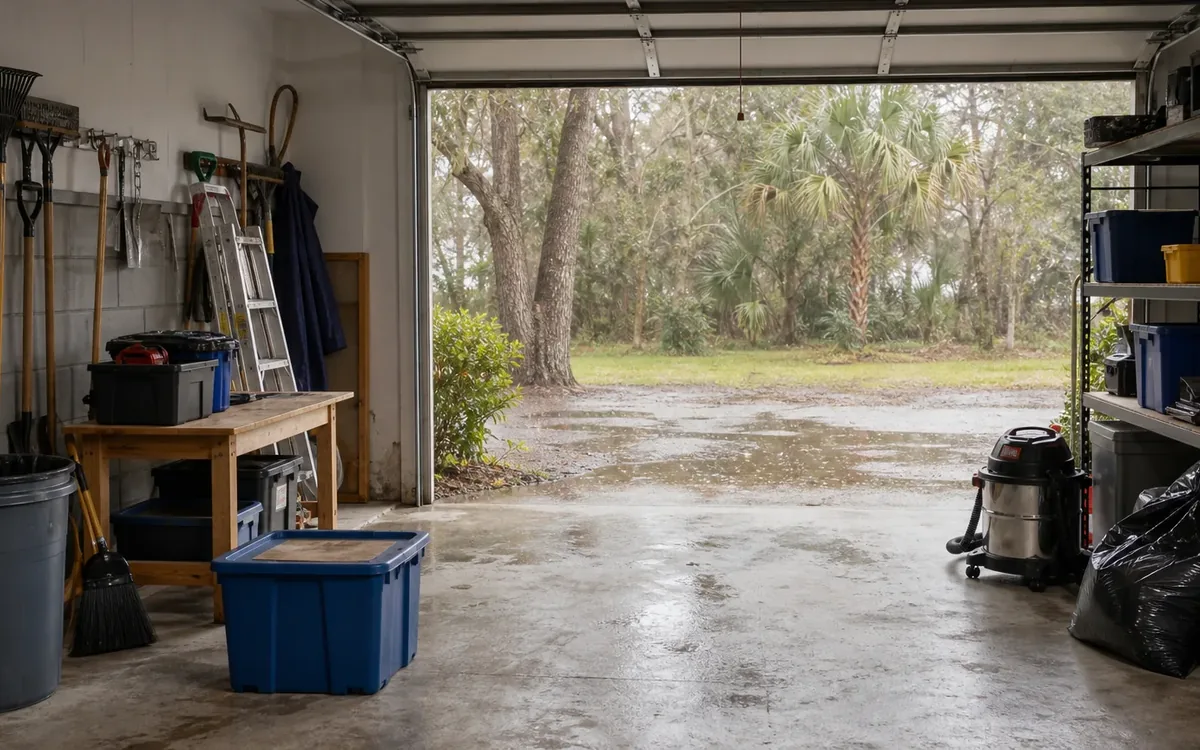
When weather delays a property cleanup, pause exposed work, secure partially sorted belongings where it is safe to do so, and revise the plan around access, weather conditions, and any official requirements. South Carolina rain, heat, or storm conditions may change which tasks are practical, but a scheduling change does not automatically change a compliance deadline.
Quick answer: Separate the immediate safety decision from the revised cleanup schedule. Protect sorted items without creating new hazards, identify work that can safely continue, and tell the cleanup team and any responsible property or compliance contact what changed. Ask the issuing authority about deadline adjustments rather than assuming weather grants an extension.
This guide focuses on interrupted household cleanup, not storm-debris removal. The goal is to preserve sorting decisions, avoid unnecessary handling, and communicate a workable next step without promising a restart before conditions are understood.
What should change first when weather interrupts cleanup?
Start with the part of the plan that depends on outdoor exposure. A driveway sorting area, an uncovered loading route, or belongings staged near an exterior door may become unsuitable even when another part of the property remains usable.
The household can decide which belongings remain priorities and which optional tasks can wait. A practical cleanout or move team may discuss changes to staging, loading, room order, or access. Neither should treat a weather forecast as proof that a work area is safe.
Review the interruption in concrete terms:
- Which task stopped, and where was it happening?
- Are belongings exposed to water, wind, or direct sun?
- Is the route between the building and vehicle still usable?
- Does the pause affect a documented property concern or required correction?
- Is there a safe place to stop without blocking exits or essential access?
If conditions involve standing water near electricity, unstable trees, damaged structures, or other serious hazards, keep people away. The appropriate emergency contact, utility, qualified contractor, or inspecting professional should address those conditions before cleanup resumes.
For a notice-related project, review the role of code compliance support for property cleanup. Coordination can help organize the cleanup response, but the issuing authority retains responsibility for interpreting requirements and accepting corrections.
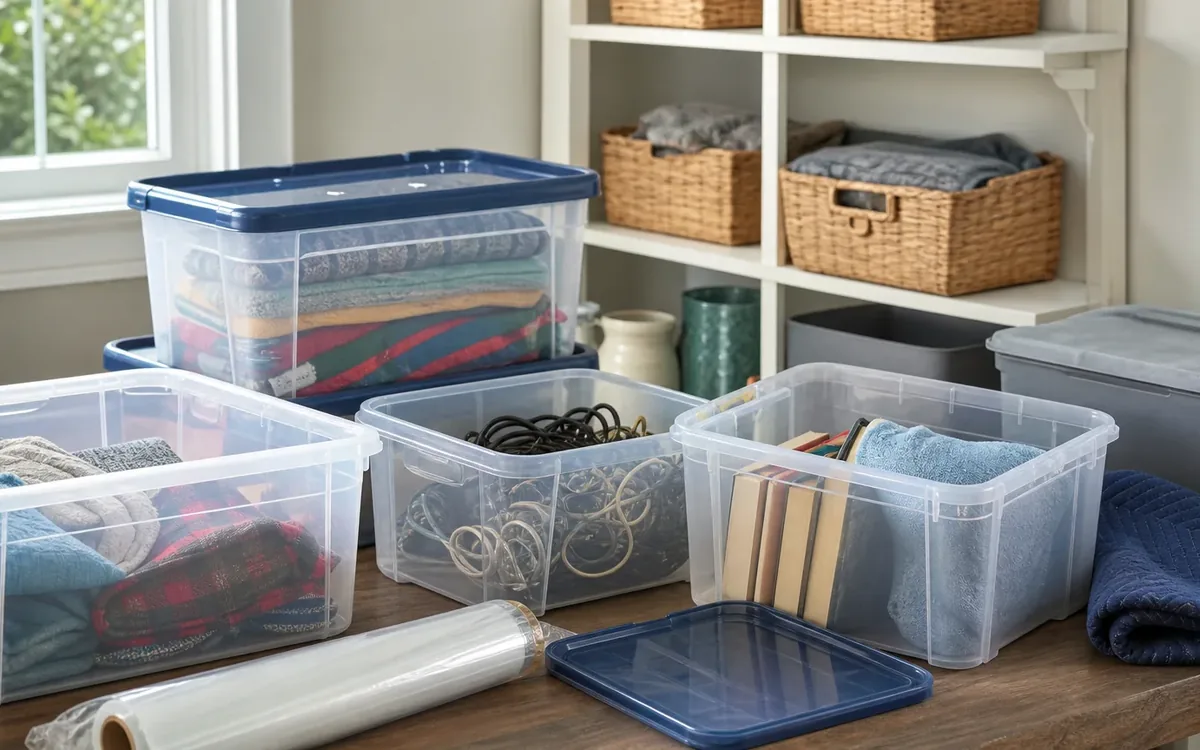
How can you secure partially sorted materials without losing progress?
Weather can blur the distinction between items marked for keeping, donation, sale, or disposal. Preserve those decisions before moving everything into one temporary pile. A protected pile is not useful if nobody can tell what belongs to whom afterward.
If conditions allow safe handling, label containers and record their new locations. Use broad categories that match decisions already made rather than starting a new sorting system during the interruption.
Useful labels include:
- Keep: Name the household member or destination.
- Review: Identify who must approve the decision.
- Sale assessment: Keep separate from items already approved for removal.
- Donation candidate: Subject to the receiving organization’s acceptance.
- Disposal candidate: Subject to appropriate handling and destination requirements.
Choose a dry, stable staging area only if using it does not block doors, stairs, mechanical equipment, or required access. Avoid moving outdoor items into living areas if they are wet, contaminated, or unsafe to handle. Those materials may require a separate assessment.
Covers and containers are household or provider choices, not a guarantee against damage. A loose covering can shift, collect water, or conceal a tripping hazard. Do not attempt to secure belongings outdoors while dangerous conditions are developing.
For an estate project, the guide to how estate cleanouts work provides broader context for sorting and coordination. During a weather delay, keep the focus narrower: preserve existing decisions and record what changed.
Revise the work sequence, not just the calendar
A useful revision identifies the next safe task, rather than simply replacing one date with another. Moving the whole project forward unchanged may recreate the same exposure problem at the next visit.
Separate the remaining work into weather-dependent and weather-independent tasks. Outdoor loading, driveway staging, and movement across exposed ground depend on conditions at the property. Reviewing inventories, confirming ownership decisions, or organizing accessible indoor areas may be possible without continuing outdoor work.
Possible adjustments to discuss include:
- Completing approved indoor sorting before outdoor movement resumes.
- Keeping items in their current rooms instead of staging them outside.
- Changing the loading route if an alternative is safe and permitted.
- Separating uncertain ownership decisions from belongings already cleared for movement.
- Postponing optional presentation work while preserving access to essential areas.
These are discussion points, not promises that indoor work can always continue. Heat, power loss, water intrusion, or an unsafe entrance may make the entire property unsuitable for work.
Avoid using the delay to add unrelated projects without considering their effect. A newly proposed garage reorganization or sale-preparation task may compete for the same protected space needed for sorted belongings. Keep the revised scope tied to the cleanup’s original purpose.
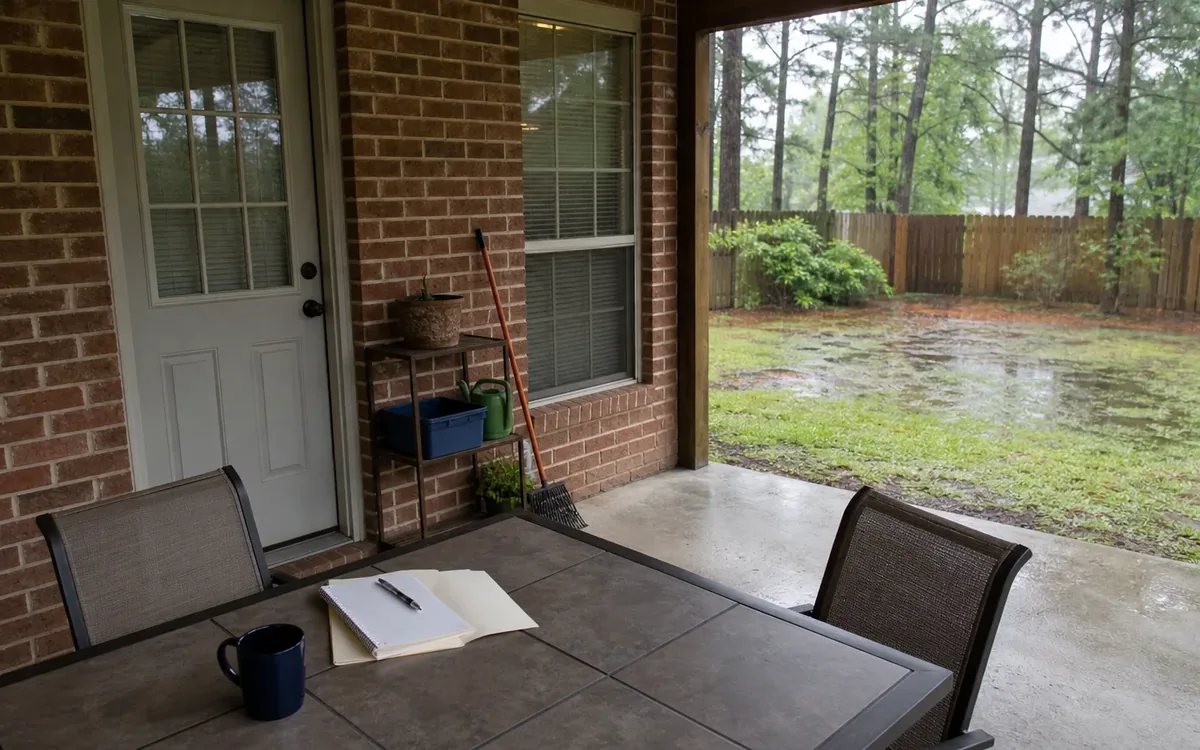
What should you tell a code official or property contact about the delay?
Communicate facts, the effect on the plan, and the next decision needed. A message that only says “the weather was bad” leaves the recipient guessing about what remains unresolved.
If a notice, inspection, sale, or property-management requirement is involved, identify the relevant contact and use the communication method they require. The household or authorized representative should confirm who is permitted to discuss the matter.
A useful update includes:
- The property address and any notice or case reference.
- The specific task interrupted by weather.
- What has been completed and what remains.
- How staged belongings were secured, if applicable.
- Whether access or safety conditions need professional assessment.
- The requested next step, such as guidance on inspection arrangements or an extension request.
For example: “Outdoor loading stopped because the access route became unsuitable. Approved items remain separated in the designated indoor area. The exterior item listed in the notice is still unresolved. Please advise on the process for requesting a deadline adjustment and whether additional documentation is needed.”
Do not describe an extension as approved until the responsible authority confirms it. A contractor’s schedule change, a household email, or a cleanup team’s revised plan does not itself amend an official requirement.
For a property sale, the real-estate professional handles advice about listing strategy and transaction coordination. Contract deadlines and legal consequences belong with the appropriate legal professional, not the cleanup team.
Keep a clear record of the pause and the revised plan
Documentation helps everyone understand the same situation. It is especially useful when several family members, a property representative, and separate providers are involved.
Take photographs only when it is safe and appropriate. Capture the interrupted work area, the remaining materials, and protected staging locations. Respect privacy by avoiding unnecessary photographs of personal documents, valuables, or identifying information.
Keep a simple written record with:
- The task that stopped and the observed reason.
- The location of each sorted category after the pause.
- Any belongings needing further condition review.
- The person authorized to approve removal or movement.
- Messages sent to property contacts or authorities.
- Outstanding questions that must be answered before restarting.
Describe observations rather than making technical conclusions. “Water visible near the doorway” is different from declaring a building safe, diagnosing a leak, or stating that an item has no damage.
This record is a coordination tool, not proof of compliance or a professional inspection. An authority may require a particular form of documentation. Ask what is needed instead of assuming photographs alone will satisfy the requirement.
Keep the current plan separate from outdated versions. A shared note identifying the active staging area and unresolved decisions can prevent someone from removing an item based on instructions issued before the weather delay.
Check conditions before confirming a restart
A clear sky does not necessarily mean the original plan is ready to resume. The property may still have wet surfaces, softened ground, damaged access features, or belongings whose condition has changed.
Before confirming the next work session, discuss the actual route and staging conditions with the team. Identify who will check the property and how concerns will be reported. Do not ask a household member to enter a hazardous area merely to provide a photograph.
The restart review should consider:
- Safe entry and exit for people carrying items.
- Stable surfaces along the planned movement route.
- Adequate room for sorting without blocking essential access.
- Suitable indoor conditions if work will move inside.
- Any new damage requiring a separate professional.
- Receiving arrangements for items leaving the property.
Heat deserves its own planning discussion. Shifting work indoors does not solve heat exposure if the building is also hot or lacks suitable ventilation. The team should evaluate working conditions and discuss an appropriate adjustment rather than treating the calendar as the deciding factor.
Avoid setting a restart solely around another household commitment. A closing, move, or inspection may create pressure, but it does not make an unsafe route usable. Communicate the conflict so the responsible professionals can address their parts of the plan.
Keep household choices and professional decisions separate
A weather delay can introduce decisions that were not part of the original cleanup. Keep those decisions assigned to the right person rather than allowing temporary arrangements to become permanent by default.
The household or authorized property representative can approve sorting priorities, select belongings to retain, and decide whether to explore separate storage. If estate ownership or authority is disputed, seek legal guidance before approving removal.
Other decisions remain separate:
- Storage: The household chooses whether to engage a storage provider and confirms its conditions, access, and suitability.
- Contractor work: A qualified provider evaluates repairs or damage within its scope.
- Appraisals: An appropriate appraiser assesses value when a formal valuation is needed.
- Disposal: Confirm the destination and applicable handling requirements with the relevant provider or authority.
- Inspection and compliance: The responsible professional or authority determines whether requirements have been met.
A practical cleanout or move team may discuss how these choices affect space, handling, and coordination. That does not mean storage, repairs, appraisals, or specialized disposal are included or guaranteed.
Clutter Cleaner of South Carolina provides code compliance support, estate cleanouts, downsizing and organizing, auctions and estate sales, move management, and home sale preparation across South Carolina. Its physical business location is Mount Pleasant, with Charleston as its primary market. To discuss an interrupted cleanup plan, call (843) 972-7020 and explain the remaining work, current access conditions, and any official notice involved.
Short FAQ
Does bad weather automatically extend a cleanup deadline?
No. Ask the issuing authority about its process and obtain confirmation of any approved change. Continue to distinguish the team’s schedule from the official requirement.
Should everything outside be moved indoors?
Not automatically. Consider safe handling, available space, moisture, contamination, and access. Protecting belongings should not create an indoor hazard or block an exit.
Can a cleanup team decide whether the property is safe after a storm?
A team can identify concerns affecting its work. Structural, electrical, inspection, and other specialized determinations belong with the appropriate qualified professional or authority.
What is the most useful next step after a delay?
Update the active plan: record where sorted items are located, identify the unresolved task, and confirm who must approve the next action. Then discuss a restart based on actual conditions.



