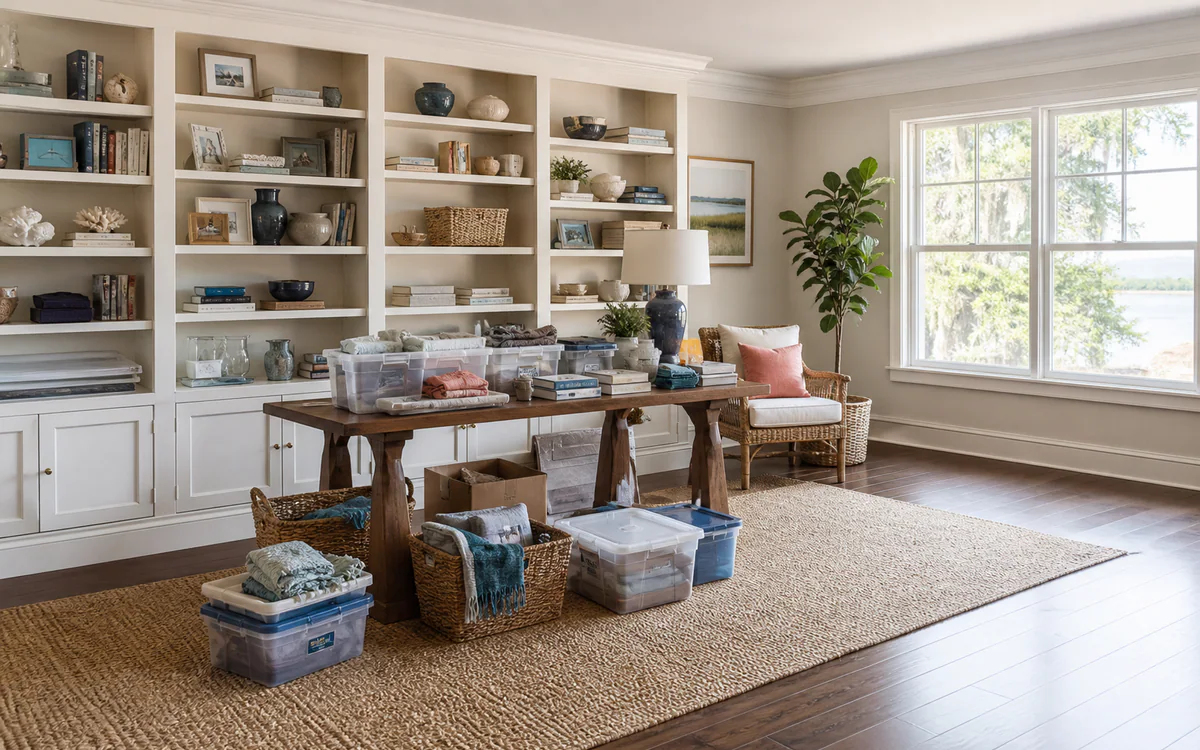
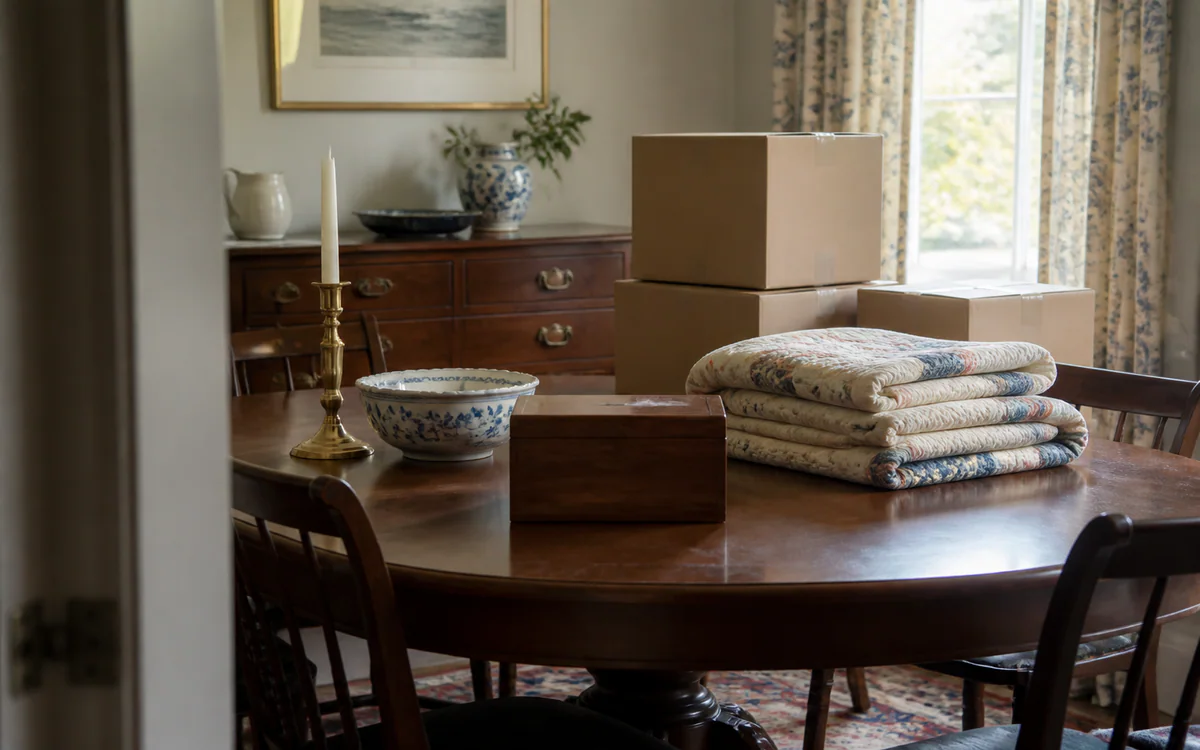
What is the best way to clean out my deceased parents’ house? Begin with the people and paperwork, not the belongings. Confirm who can direct the work, protect records and requested keepsakes, and give the family a documented way to review decisions before anything leaves the home.
Quick answer: Secure the house, confirm decision authority, and make a no-removal discovery pass. Protect documents, valuables, devices, photographs, and requested keepsakes. Then sort one small area at a time into clearly labeled review groups. Pause disputed items and verify each sale, donation, recycling, or specialty destination.
What is the best way to clean out my deceased parents’ house?
Start with home care and wait on final choices. Name the person in charge. List each room and keep key items safe. Sort in short blocks. Give the family time to review, then walk through the full home. For the related service scope and planning steps, review our estate cleanout service options and estate cleanout sorting workbook.
The first visit can feel emotionally urgent, but it should not become an unplanned removal day. Check doors, windows, visible leaks, refrigeration, pets, plants, medications, and other immediate property needs. Gather loose keys and note who has copies. These actions protect the home without deciding who owns its contents.
A calm first sorting session
Pick one small spot with good light and a clear path. A hall shelf, linen closet, or set of kitchen drawers can work. Do not start with old photos, a desk full of papers, or the room that holds the most grief.
Set out four boxes. Mark them keep, ask, hand off, and approved to leave. The ask box is key. It gives the group a safe place for items that need more thought. Nothing in that box should leave the home.
Name one person to write. That person logs each box and any item put on hold. Name one person to take photos when the person in charge says yes. Too many phones and too many lists lead to mixed facts.
Read the plan out loud before hands touch a drawer. Say who can make a choice. Say which rooms are in the scope. Point out the safe path, break area, first aid kit, and exits. If there is a leak, odd smell, loose wire, pest, or weak floor, stay out of that zone.
Open one drawer at a time. Check each pocket, small case, book, and file. Keys can hide in a coat. Cash may sit in an old card. A ring may be in a pill box. Slow work can stop a small item from leaving by mistake.
Use plain labels. Write the room, date, box number, and next step. “Mom’s things” is too broad. “Front room, box 4, family must check” is clear. Put the same box number in the log.
Stop the session before the group is worn out. Leave time to close each box and clear the floor. Count keys. Put papers and small items back in the safe zone. Lock the home. Send one short note that says what was done and what still needs a choice.
At the next visit, read that note first. Check each hold. Make sure no box was moved by a guest or other worker. Then pick the next small zone. This pace may feel slow at first, but it helps the family keep trust in the plan.
Walk through the property before opening boxes. List bedrooms, closets, cabinets, attic spaces, garages, sheds, vehicles, and storage units that may fall within the project. Note locked areas and do not force access. Photograph general conditions only with the authorized person’s approval.
Create a secure review space for documents and small property that could be lost. Common examples include wills, court notices, tax files, deeds, titles, insurance papers, identity records, financial correspondence, jewelry, photographs, devices, and family-requested items. Limit access to the people who need it.
Ask family members for written requests early. Specific descriptions are more useful than broad instructions. “The handwritten biscuit recipe in the red tin” gives sorters a real target. A request does not prove ownership, but it keeps an important object from being swept into a general category.
Work in contained zones. Complete one dresser, cabinet, or closet before opening the next. Use labels that describe current status rather than pretending every decision is final:
- Estate control
- Family review
- Potential sale
- Potential donation
- Recycling review
- Professional question
Keep an inventory number on anything valuable, disputed, titled, unusual, or personally important. Record its description, where it was found, current status, and who can approve the next step. A photograph can help relatives review remotely.
The sorting decision workbook helps organize decisions and follow-up. It does not replace a will, court direction, appraisal, or legal advice.
What is the best way to clean out an estate?
A good estate cleanout starts with the person in charge. Make the site safe. List what is there, let the family review key items, and agree on each next place. Do the work. Then ask the person in charge to check the result. Related South Carolina planning tools include our estate cleanout service options and estate cleanout sorting workbook.
Hold a short kickoff meeting before the first sorting session. Name the decision owner, project contact, approved helpers, and advisers. Decide how questions will be communicated and how long uncertain objects will remain in review. Put these agreements in the same folder as the inventory.
Use more than one pass through each room. The first looks for records, valuables, devices, medications, and requested keepsakes. The second groups ordinary household goods. The third examines uncertain or damaged items and confirms destinations. Multiple passes reduce the chance that a letter or small heirloom remains inside an ordinary container.
Do not invite a buyer or schedule a broad pickup before family review is complete. Once property leaves the home, recovering it may be difficult. If a sale is appropriate, the authorized person should understand who sets prices, what fees apply, how transactions are recorded, and what happens to unsold goods.
Donation also needs confirmation. Organizations differ in what they accept, and local capacity changes. Ask the actual receiving location about condition, size, pickup rules, and excluded categories. Never promise the family that every usable item will be accepted.
Sensitive materials need specialty guidance. Medicines, chemicals, firearms, fuel, medical equipment, and devices containing data should not travel with ordinary household goods. Keep them isolated, label the question, and consult the proper authority or qualified provider.
Clutter Cleaner of South Carolina offers Estate Cleanouts. The written scope should state what practical help is included. The company is not acting as an attorney, tax adviser, appraiser, auctioneer, or clinical provider.
How much does it cost to have an estate cleaned out?
Estate cleanout cost varies with the approved scope, amount and condition of property, sorting needs, access, labor, supplies, and confirmed destinations. A written estimate should explain assumptions, inclusions, exclusions, and how changes are approved. No responsible article can quote an unseen house. To turn this answer into a practical plan, compare estate cleanout service options with the estate cleanout sorting workbook.
Square footage alone is a weak measure. A small downtown Charleston home may have tight stairs, limited parking, and decades of papers. A larger suburban property may contain fewer belongings and easier access. Decision readiness and property conditions affect the work as much as room count.
Give each provider the same description. Identify in-scope rooms, access limits, already sorted areas, items requiring special review, target timing, and what the family wants to handle itself. Then compare the full scope along with the final line.
Ask direct questions:
- Does the service begin before or after family sorting?
- Who supplies boxes, labels, and protective materials?
- Who confirms donation or recycling acceptance?
- What happens when a disputed item is discovered?
- Which materials are excluded from the work?
- Is the final walkthrough included?
Do not reduce the budget by an estimated sale value. Online asking prices do not establish a likely transaction, and some property may not sell within the family’s schedule. If value matters, use a qualified appraiser or other suitable expert and keep completed transaction records.
The authorized person should retain contracts, invoices, receipts, and sale records. These may be relevant to estate administration or tax guidance. The IRS information for a deceased person is an official federal starting point, but it does not answer every cost or record question.
An estimate is useful when the family can tell exactly what it buys. Ask for clarification before signing if the scope relies on undefined terms such as “complete cleanout” or “everything included.”
Who is responsible for cleaning up after a death?
Responsibility depends on who has legal authority for the home and estate, along with any court instructions, will, trust, lease, or ownership agreement. Confirm the authorized decision-maker before work begins. Family members and service providers can help, but they should not assume authority from access alone. For additional planning context, see estate cleanout service options and the estate cleanout sorting workbook.
Start by gathering the will, court notices, property records, lease information, insurance messages, and contact details for the estate’s advisers. Ask an appropriate South Carolina probate attorney or court resource when the documents do not make the decision role clear.
Separate decision authority from hands-on help
The authorized person may approve access, spending, sale or release decisions, and provider scopes. Relatives can inventory, tell the stories connected to belongings, and request items. A cleanout team can sort, label, pack, and coordinate approved work. These roles should be written down.
Use one choice channel so workers do not receive conflicting instructions. When relatives disagree, stop the affected item and record the question. Do not ask the crew to vote, choose sides, or decide who owns it.
Property care may continue while an unrelated legal question is reviewed. Work in clearly approved areas, protect source records, and use holds for anything connected to the open issue. This keeps the home stable without turning urgency into unauthorized removal.
At each handoff, record the item or area, person who approved it, provider, date, and next location. The authorized representative should receive the final inventory, invoices, receipts, keys, and open-question list.
For relatives who live outside South Carolina, agree on one secure review method before sorting starts. Send small, labeled groups instead of a stream of room photos. Each request should name the item, room, proposed next step, and date an answer is needed. Keep unanswered groups in a protected area. This gives distant relatives a fair way to participate without forcing the crew to wait on every ordinary box.
Before the home is handed back, walk every room, closet, cabinet, outbuilding, and storage area. Match remaining holds to the inventory. Return keys and end temporary access. The final note should state what moved, what stayed, who received each approved handoff, and which questions still belong with the authorized representative or adviser.
How do you divide personal belongings after death?
Divide belongings only after confirming who has authority and whether estate instructions, a will, court process, or family agreement controls the decisions. Create a complete inventory, place disputed items on hold, and record each approved handoff. A cleanup company should organize the process, not decide ownership. The next steps connect to our estate cleanout service options and estate cleanout sorting workbook.
Start by naming the authorized decision-maker and the people who should receive updates. Possession of a key does not settle who may remove property. If authority or legal rights are unclear, pause and ask the estate’s attorney or appropriate court resource before belongings leave the home.
Build one shared inventory
List the item, room, current status, person requesting it, decision source, and next location. Photographs can help relatives review groups from a distance, but keep account numbers, health information, and other private records out of shared galleries.
Use simple statuses:
- Named in instructions
- Family request pending
- Approved handoff
- Sale or appraisal question
- Approved release
- Legal review needed
Do not let the first person at the house take an item because nobody objected quickly. Silence is not approval. Put the item in a protected hold area and record the question.
When several people want the same item, use the process chosen by the authorized person and advisers. That may involve a written family agreement, appraisal, rotation, draw, or another method. The cleanout team can label and store the item while the decision remains open.
For ordinary goods approved to leave, the EPA’s reuse and recycling guidance offers broad routes to consider. Confirm that a buyer, charity, recycler, or disposal program will accept the item before it moves.
Keep memory and ownership decisions separate
A photograph, scanned letter, or recorded story can preserve meaning when the family agrees that an object will not stay. These options can ease a difficult choice, but they do not replace consent or decide who owns the original.
Work in short sessions and begin with a room that has few known disputes. Anyone should be able to pause a box when a document, key, valuable, or family item appears. Label the hold, note who should answer, and continue with another approved group.
Keep each box tied to its room of origin. Add the date, status, and destination. A label such as “old things” leaves too much room for error. “Hall closet, family review, ask Jordan” tells the next person what must happen.
End each visit with time to close boxes, clear pathways, count keys, store protected items, and send a brief update. At the next visit, read that note before anyone starts. This routine helps relatives see that holds and handoffs were respected.
When your family is ready to discuss practical support, call Clutter Cleaner of South Carolina at (843) 972-7020 or use the estimate form. The first conversation can define the home, decision roles, and approved work without forcing the most personal choices.