
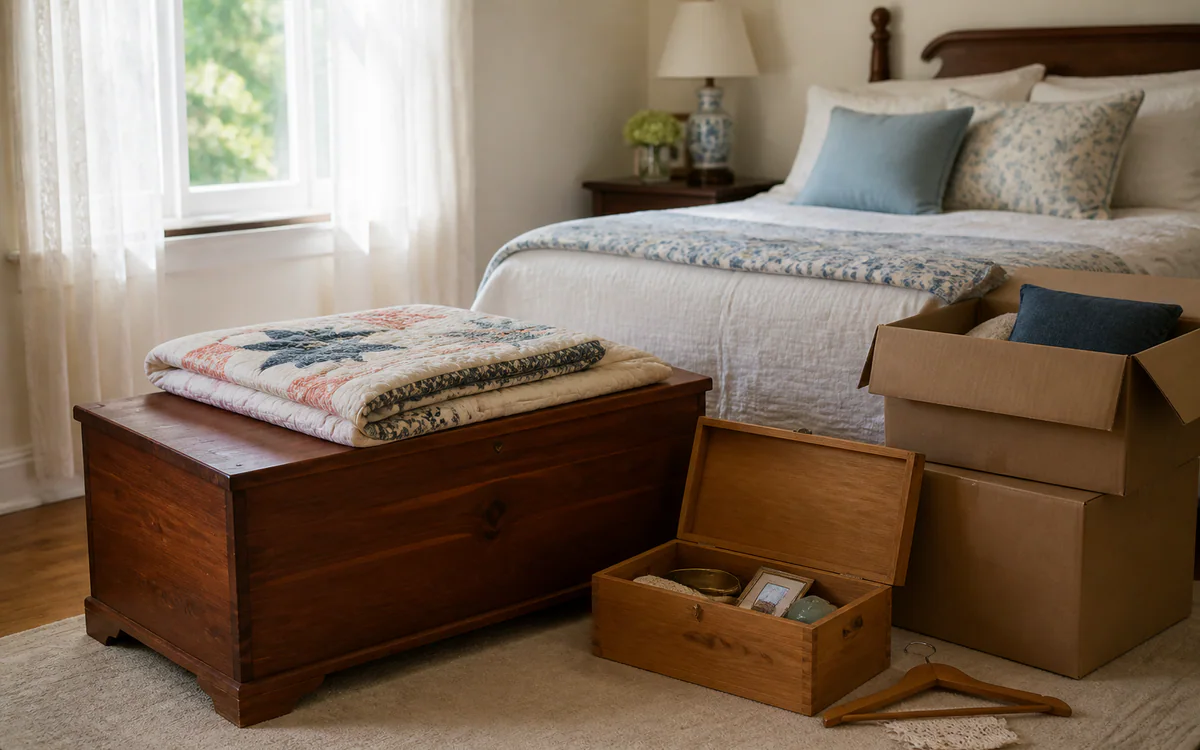
How to clear out a deceased estate starts with authority, not boxes. Confirm who may direct the work, secure the home, and protect documents, valuables, and requested keepsakes before sorting ordinary household goods. A careful sequence makes the project easier to explain and less likely to create family conflict.
Quick answer: Confirm legal authority and urgent property needs first. Inventory the home, secure sensitive items, gather family requests, and sort one defined area at a time. Nothing uncertain should leave. Record approved destinations, use qualified specialists where needed, and complete a final walkthrough with the authorized person.
How to clear out a deceased estate?
Clear out a deceased estate by naming the authorized decision-maker, stabilizing the property, documenting its contents, and separating sensitive items before general sorting. Use clear destination labels, pause disputed decisions, and verify every outside provider. The final approval belongs to the person legally directing the estate. For the related service scope and planning steps, review our estate cleanout service options and estate cleanout sorting workbook.
Begin with a planning call or meeting. Identify who has keys, who can authorize access, who needs updates, and which adviser handles legal or tax questions. Family relationships do not by themselves establish authority. If the paperwork or probate status is unclear, stop before property is removed and seek appropriate South Carolina guidance.
The first property visit should be a survey. Check doors, windows, visible leaks, food, pets, plants, medications, and other conditions that may need prompt attention. Note locked rooms, outbuildings, vehicles, and storage spaces. Do not open a sealed area or move titled property simply to make the inventory look complete.
Create a secure holding area for high-priority review. Typical candidates include wills and court papers, identity documents, tax records, deeds, titles, keys, financial correspondence, photographs, jewelry, devices, and requested family objects. Access to that area should remain limited to approved people.
Then divide the project into small zones. A bathroom cabinet, one wall of a garage, or a single bedroom closet gives the group a finish line. Label each item or container with its current status:
- Keep under estate control
- Family review
- Potential sale
- Potential donation
- Recycling review
- Qualified-provider question
These labels are not final destinations until the authorized person approves them. A question category protects the family from guessing. It is especially useful for unfamiliar papers, signed objects, collections, locked containers, and property that someone may contest.
The estate cleanout planning checklist can organize rooms, roles, access details, and follow-up. Keep it with the inventory so each work session begins from the same information.
How to clean out a deceased estate?
Clean out a deceased estate in measured passes: protect records and valuables, identify keepsakes, sort useful goods, then review uncertain or damaged items. Keep a decision log and close each completed zone. A slower first pass often prevents expensive or painful recovery attempts later. Related South Carolina planning tools include our estate cleanout service options and estate cleanout sorting workbook.
Choose a session length that respects the family’s energy. Grief can make ordinary choices unusually tiring. Two focused hours may produce better decisions than an entire day of open boxes. Set a stop time, plan a break, and leave the space stable enough that someone can return without redoing the work.
Ask close family members for written requests before the general sort. Include descriptions rather than vague categories. “Blue recipe box in the kitchen” is easier to find than “Grandma’s things.” A request is not an ownership decision, but it tells sorters what deserves special review.
Use a visible question table or clearly marked containers. Never mix them with items approved to leave. Add a note stating the question, the person who can answer it, and the date for follow-up. This keeps uncertainty from spreading across the whole house.
Be deliberate with paper. Open folders and envelopes only within the family’s approved process. Do not discard documents based solely on age. Tax, property, insurance, employment, military, medical, and estate records can have different retention needs. A qualified legal or tax professional should guide the specific estate.
Treat digital belongings as records, too. Phones, computers, external drives, cameras, printers, smart-home devices, and online accounts can contain private data or photos. Do not sell, donate, recycle, or reset them until the authorized person has addressed access and data handling.
At the end of every session, update the log. Record finished rooms, items held for review, approved destinations, receipts collected, and questions assigned. Close and date packed containers. That routine prevents helpers from interpreting an old pile as a new instruction.
Clutter Cleaner of South Carolina provides Estate Cleanouts. Its role and scope should be set in writing for the project. Appraisal, auction, legal advice, tax guidance, regulated materials, and other specialty needs may require separate qualified providers.
How much does it cost to have an estate cleaned out?
The cost to have an estate cleaned out depends on the approved tasks, volume and type of belongings, amount of sorting, property access, labor, supplies, and verified destinations. Request a written estimate after the scope is understood, then compare inclusions and exclusions rather than headline numbers. To turn this answer into a practical plan, compare estate cleanout service options with the estate cleanout sorting workbook.
No single house size determines the work. A modest Charleston property with crowded storage, narrow stairs, or years of records may take careful planning. A larger home with approved destinations and open access may involve fewer decisions. The condition and readiness of the contents matter alongside square footage.
Describe the same scope to every provider. Ask whether the estimate covers planning, sorting support, packing, moving within the home, coordination with receiving organizations, and final walkthrough. Ask what happens when the team finds an unlisted space, questionable material, or item that needs another professional.
Do not assume saleable property will pay for the cleanout. An asking price online is not a completed sale. Timing, demand, condition, provider terms, and family approval can all affect the result. Keep potential sale proceeds separate from the service budget until a transaction is complete and recorded.
Ask who is responsible for destination confirmation. A donation organization may decline furniture, appliances, medical equipment, building materials, or damaged goods. Recycling rules also vary by local program. Costs and schedule can change when a planned destination is not actually available.
Keep proposals and invoices with the estate records. The IRS page for a deceased person provides official federal information about certain tax responsibilities. It does not determine the appropriate cleanout cost or answer every record question for a specific estate.
The most useful estimate is one the family can audit. It should identify the property, agreed work, assumptions, exclusions, and approval process for changes. If a number is not connected to a scope, ask for clarification before work begins.
Can I sell items during a clean out?
Estate items may be sold only after the authorized person approves and any legal, family, appraisal, or estate holds are resolved. Inventory each item or group, protect records and valuables, choose an appropriate sale route, and document what left, when, through whom, and for what recorded amount. For additional planning context, see estate cleanout service options and the estate cleanout sorting workbook.
Do not let a sale table become the first sorting step. Review wills, court instructions, written wishes, and family requests with the appropriate adviser. Put disputed property, titled items, sensitive records, jewelry, firearms, medicines, and anything needing appraisal into separate holds.
Choose the sale path after the inventory
Different items may fit an estate sale, auction, specialty dealer, consignment shop, or direct family purchase. Ask each provider what it accepts, how it values goods, which fees apply, who controls pricing, how unsold items are handled, and what records the estate receives.
Photograph distinctive items and note maker’s marks without claiming a value. A cleanout provider should not present itself as an appraiser unless that role is separately verified and included. The authorized representative decides whether professional valuation is needed.
Keep sale proceeds and records under the control of the authorized person. The cleanout team can label, group, and prepare approved items, but it should not settle disputes or distribute money.
Items that do not sell still need a plan. Return them to owner review, identify another approved route, or keep them protected until the next choice is made. Do not treat an unsold item as automatic permission to discard it.
What is the best way to clean out my deceased parents’ house?
The best way to clean out a deceased parent’s house is to separate property protection from permanent decisions. Confirm authority, preserve records and requested keepsakes, and sort in short, documented sessions. Give family members a fair review path while keeping legal and practical deadlines visible. The next steps connect to our estate cleanout service options and estate cleanout sorting workbook.
Start with the objects most likely to disappear in general handling. Photographs, letters, recipes, jewelry, military papers, religious items, keys, and small heirlooms can hide in ordinary drawers. A careful discovery pass should happen before broad packing or outside pickups.
Let each close family member submit a priority list. Set a reasonable response date based on the estate’s real needs, not an arbitrary rush. If two people request the same object, move it to dispute review rather than giving it to whoever arrived first.
Preserve stories where the object cannot stay. A photograph, scan, short audio memory, or written note can make it easier to share meaning among several relatives. Memory preservation does not determine ownership, but it can open more respectful options.
Match destinations only after approval. Confirm buyer or sale-provider terms in writing. Check a donation location’s current acceptance rules. For ordinary reusable and recyclable materials, the EPA’s household reuse and recycling guidance offers a broad starting point, while local programs determine actual acceptance.
Do not treat distress as obstruction. A person may need to pause when a room brings back vivid memories. Move to a neutral task, hold the difficult items safely, and return later. If grief is disrupting everyday functioning or safety, compassionate support from a qualified professional may be appropriate.
End with two walkthroughs when possible. The first checks closets, drawers, cabinets, attic access, garage edges, and behind doors. The second lets the authorized person compare the property with the inventory and written scope. Record any exceptions before keys or possession change.
Make the first day small on purpose. Walk the home with a pad. Mark each room and key. Set up the hold spot. Test the labels on one shelf. Stop and fix the plan if two people read the same label in two ways.
Keep a clean path from each work zone to the door. Do not set a box on a stair or block a hall. Place full boxes on one side and open work on the other. The next person should be able to tell what is done at a glance.
Write plain facts on each box. Add the room, date, status, and name of the person who gave the “yes.” Do not use “stuff” or “misc.” A box may sit for a week. Its note should still make sense when the team comes back.
Set a stop time before the day starts. End new sorts with time left to close boxes, put tools away, count keys, and lock the home. Send one short note to the group. List what is done, what is on hold, and who has the next task.
In Charleston, SC, heat and rain can change a work day. So can a tight lane, gate, shared lot, or set lift time. Check the rules for that home. Have water and a safe place to take a break. Do not let a rush raise the risk of a fall or a bad choice.
Use a call sheet with three lines: home care, family choice, and legal or tax help. Put a name by each line. If one person fills all three roles, that is fine. The crew still needs to know which kind of answer it seeks.
When a new find comes up, take a photo if allowed and add a short note. Put the item in the hold zone. Do not start a long group talk in the hall. The work can move to a new spot while the right person checks the facts.
For help defining the practical cleanout scope, call Clutter Cleaner of South Carolina at (843) 972-7020 or use the estimate form. A first conversation can focus on the home, the family’s priorities, and the questions that should remain with other professionals.